
Reviewed · NAMIB DESERT TOURS
Swakopmund: Moon Valley and Namib Desert Welwitschia Tour
Desert plants tell surprising survival stories. This four-hour trip from Swakopmund combines the eroded canyons of Moon Valley with the rare Welwitschia mirabilis, while a small group and live English-speaking guide keep the outing personal. I especially like the focus on botany and geology, plus the chance to spot springbok, ostrich, birds, chameleons, and beetles along the way.
I also like that the tour explains how desert plants can serve medicinal and nutritional purposes, including their value to Indigenous people of Southern Africa. The main caution is simple: wildlife sightings are not guaranteed, and walking takes place on uneven desert ground, even though the amount of walking is limited.
In This Review
Five things to know before you go
- Moon Valley is the visual centerpiece: Ancient canyons and eroded badlands create the tour’s best photo stop.
- Welwitschia gets proper attention: You learn why this unusual desert plant matters, rather than simply stopping for a quick photograph.
- The group is limited to two people: That gives you a better chance to ask questions and keep the pace comfortable.
- The tour looks beyond scenery: Your guide discusses desert flora, fauna, geology, geography, medicinal uses, and food value.
- Wildlife requires patience and luck: Springbok, ostrich, klipspringer, birds, chameleons, and beetles may appear, but no sighting is promised.
Swakopmund is known for its access to the Namib Desert, but you do not need a full-day expedition to get a close look at its geology and plant life. This four-hour tour gives you a focused introduction to the desert west of town, with enough time for explanation, photographs, and wildlife watching without taking over your entire day.
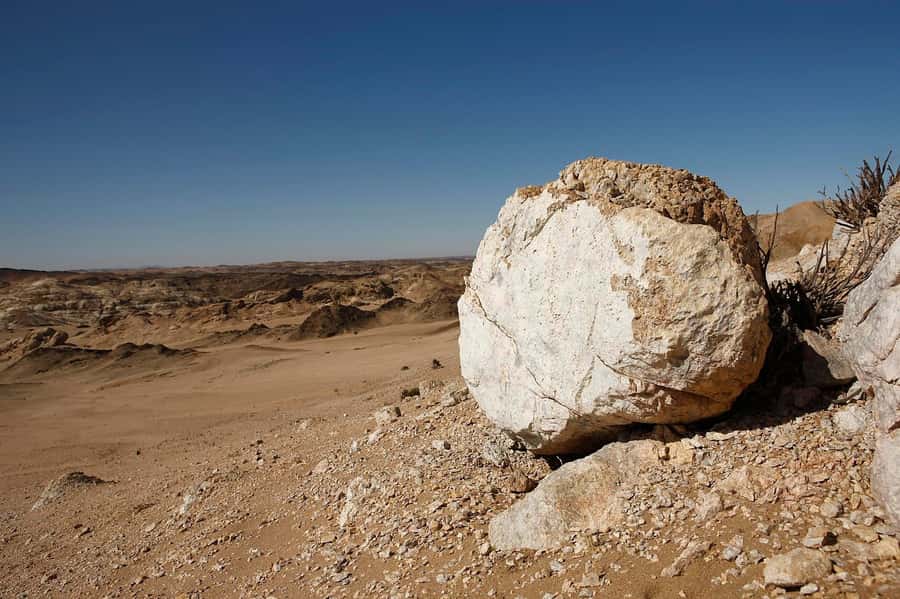
The Moon Valley area is made up of deeply eroded canyons and bare ridges. The formations were shaped millions of years ago, and the guide uses the setting to explain how these badlands came to look so unusual. You are not just looking at dry hills. You are seeing a record of long geological change.
I like the way this changes the pace of a standard sightseeing stop. Instead of taking a photograph, getting back into the vehicle, and moving on, you have time to ask why the ground looks the way it does. That is particularly useful if you enjoy geology, geography, or natural history.
The name Moon Valley is well chosen. The terrain feels stark and distant from ordinary town life, with eroded shapes and muted desert colors giving the area an almost otherworldly appearance. Still, keep expectations realistic. This is not a strenuous hike or a large national park safari. It is a short guided outing built around close observation.
Pickup is included from any hotel or guesthouse in Swakopmund. That makes the tour easy to fit into a morning or afternoon plan, though you need to check availability for the exact starting time.
If you are staying in Airbnb-style accommodation, pickup is not provided at the property. You instead meet at the Desert Explorers parking area and look for the Charly’s Desert Tours vehicle. That detail matters, so confirm it before the day of the tour and allow time to reach the meeting point.
The maximum group size is two participants. That is unusually intimate for a guided desert trip and one of the clearest reasons the $57 price can offer good value. You are not sharing the guide with a large crowd, and questions about plants or geology should be easier to handle.
The guide speaks English. Two guides associated with the experience, Ernst and Frank, have been praised for clear explanations, strong knowledge of the area, and a visible affection for Namibian nature. If your booking confirms one of them, you can expect the tour to be especially discussion-focused.
A small group does not guarantee a private custom itinerary. The stated route includes a viewpoint, a lesser-known stop described as a secret stop, and the return to Swakopmund. The advantage is more personal contact, not unlimited freedom to redesign the trip.
The viewpoint is the main scheduled photo stop. Here you can take in the ancient canyons and ask the guide to explain the forces that formed them. The open setting gives you a clear sense of how broad and exposed the Namib Desert can be.
I would give this stop your full attention rather than treating it as a quick picture break. The strongest part of the Moon Valley experience is the combination of view and explanation. The formations are attractive on their own, but the story of their formation gives the scene more meaning.
The guide also helps connect the bare rock to the life around it. At first glance, the area can appear empty. Look more carefully and you may find plants adapted to scarce water, birds moving through the open space, or small creatures close to the ground.
Walking is minimal, but the surface is uneven. Wear stable shoes and expect a little careful stepping rather than a paved path. The tour is not suitable for wheelchair users, and anyone with balance or mobility concerns should consider that limitation before booking.
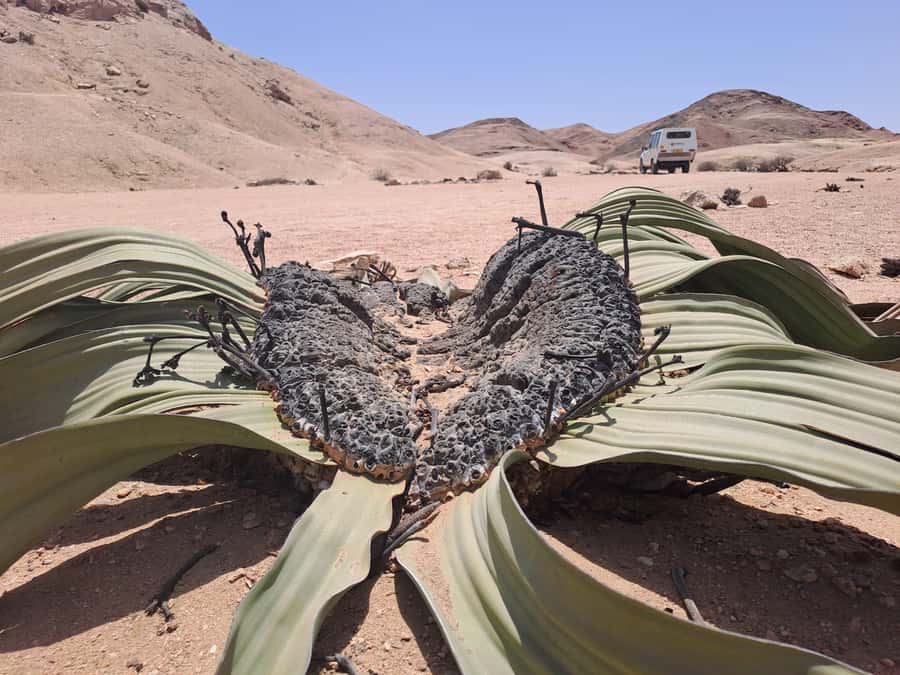
The Welwitschia mirabilis is the botanical star of the outing. It is a unique desert plant, and the guide explains its survival strategies and unusual place in the Namib environment.
The value here is context. A plant that might otherwise look like a strange bundle of leaves becomes a subject tied to climate, water scarcity, local knowledge, and the wider desert food chain. The tour encourages you to notice how much life can persist in conditions that seem hostile.
You also learn about the medicinal and nutritional uses of desert-adapted plants. This is one of the more meaningful parts of the experience because it links botany with human history. Desert flora was not simply scenery for the Indigenous people who once moved through Southern Africa. Plants could provide food, remedies, and practical resources.
The guide also discusses the value of native flora and how people understood and used it. You should not expect a formal plant-identification course, but you will come away with a better sense of why desert vegetation deserves attention.
Frank has been singled out for explaining the Welwitschia particularly well, along with the geology and geography of the area. Ernst has also been praised for explaining plants and showing strong care for the country and its natural world. Those details suggest that the quality of the guide is central to the experience.
The tour includes wildlife spotting, but this is not a guaranteed-animal excursion. Your guide may help you look for springbok, ostrich, klipspringer, Swallow-tailed Bee-eater, Karoo Chat, chameleons, and beetles.
The variety is more interesting than a simple large-animal checklist. Springbok and ostrich are easy to appreciate at a distance, while chameleons and beetles reward slower observation. Birds such as the Swallow-tailed Bee-eater and Karoo Chat add movement and color to an otherwise spare setting.
Keep your expectations sensible. The desert does not operate on a sightseeing schedule, and no wildlife sightings are promised. If you need guaranteed animals, this is not the right excursion. If you enjoy scanning the ground, shrubs, and open sky with a guide who can point out small signs of life, the uncertainty becomes part of the appeal.
The guide explains how plants and animals cope with heat, dryness, and limited resources. That connection makes the wildlife portion stronger than simply spotting an ostrich and moving on. You begin to see the desert as a functioning habitat rather than an empty expanse.
Bring patience, especially if you are hoping for smaller creatures. Chameleons and beetles can be easy to miss, and the guide may need time to locate them. The limited group size should help because you will not be competing with a busload of people for a view.
The outing begins with pickup in Swakopmund and continues to the guided desert area. The route includes the Moon Valley viewpoint, a photo stop with sightseeing and interpretation, a further stop for more guided exploration, and the return to town.
Four hours is a good length for this subject. You get enough time to understand the geology and plants, but the trip remains manageable if you have other plans in Swakopmund. It can fit well beside a town walk, a meal, or another activity, although you should leave a buffer around the scheduled time since the exact departure options depend on availability.
The tour is best understood as a guided field lesson with scenery. You spend time looking, listening, and asking questions rather than covering a long distance on foot. That makes it suitable for people who want substance without a demanding hike.
Because the route is short, the quality of interpretation matters. A quiet drive through desert terrain would not justify the price on its own. The value comes from learning what you are seeing, particularly at Moon Valley and around the Welwitschia plants.
Mineral water is included. That is a small but useful touch in a dry environment, though you should still dress for sun and bring any personal items you need for a few hours outdoors. The supplied information does not specify shade, weather protection, or a meal, so do not expect those to be included.
At $57 per person, this tour sits in a reasonable range for a four-hour guided outing, particularly with pickup and a group limited to two people. You are paying for transport from Swakopmund, local interpretation, a guided visit to Moon Valley, wildlife searching, plant education, and water.
The small group is the strongest value point. A guide can spend more time answering your questions about the Welwitschia, medicinal plants, or geological formations. For two people with a serious interest in nature, that personal attention can be worth more than a cheaper trip with a large group.
The price is less compelling if you only want a quick desert photograph. Moon Valley is visually appealing, but the tour is built around learning. I would book it if you care about geology, botany, geography, or the way people and wildlife adapt to dry conditions.
There is also no guarantee of wildlife. That does not make the price unfair, but it changes how you should judge the experience. Think of animals as a bonus, while the scenery and guided explanation are the core product.
I would recommend this experience to you if you like natural history and prefer a guide who explains details rather than rushing from one viewpoint to another. It is especially well suited to visitors curious about desert plants, Indigenous uses of flora, and the relationship between geology and living systems.
It also suits photographers who want a striking setting without committing to a full day in the desert. The viewpoint gives you a clear photo opportunity, while the plant stops offer more unusual subjects than standard scenic overlooks.
Families and casual sightseers can enjoy it too, but the value depends on attention span and interests. Younger children who need constant activity may find the plant explanations slow. Older children with an interest in animals, unusual plants, or rock formations may appreciate the chance to search for chameleons, beetles, and birds.
The tour is not appropriate for wheelchair users. It includes minimal walking, but the terrain is uneven, so you should also think carefully about your own comfort with rough ground. The small group does not remove the physical limits of the site.
Wear shoes that feel secure on uneven ground. You do not need serious hiking equipment, but sandals or smooth soles may make short walks less comfortable.
Keep your eyes open at several levels. Look toward the ridges for ostrich and springbok, across the open air for birds, and down near plants and rocks for chameleons and beetles. The desert rewards slow looking.
Ask questions. The tour has real substance when you engage the guide about how plants survive, what they were used for, and how the Moon Valley formations developed. Guides Ernst and Frank have both been praised for clear, detailed explanations, so take advantage of that knowledge if one is leading your trip.
Confirm your meeting point if you are in Airbnb-style accommodation. Hotel and guesthouse pickup is included, but Airbnb pickup is not. The meeting point is the Desert Explorers parking area, where you should look for the Charly’s Desert Tours vehicle.
The tour can be canceled for a full refund up to 24 hours in advance, and you can reserve now while paying later. Those terms help if your Swakopmund schedule is still changing, but you should still check the available starting times before committing.
Book it if you want a compact, well-explained introduction to the Namib Desert rather than a simple drive past dry scenery. The best reasons are the excellent focus on plants, the unusual Welwitschia, Moon Valley’s eroded canyons, and the chance to work with a guide in a group of only two.
Skip it if guaranteed wildlife, extensive hiking, or wheelchair access is essential. Animal sightings are uncertain, walking surfaces are uneven, and the experience depends more on interpretation than action.
For most nature-minded visitors with four hours to spare in Swakopmund, the $57 cost is fair. You will see a memorable part of the desert, learn why its plants matter, and leave with a better understanding of how life persists in one of the world’s driest places.
FAQ
Other drives through the moon landscape:
- Welwitschia Tour from Swakopmund
★ 4.5 · 20 reviews - Sandwich harbour and Welwitschia Tour
★ 5.0 · 13 reviews - Shore Excursion – Flamingos ,Dune7,Welwitschia, Moonlandscape,Oasis,Swakopmund.
★ 5.0 · 8 reviews
How long is the Moon Valley and Welwitschia tour?
The tour lasts four hours, including pickup in Swakopmund, the guided stops, and the return to town.
What does the tour cost?
The listed price is $57 per person.
Is hotel pickup included?
Yes. Pickup is included from hotels and guesthouses in Swakopmund.
More of the Namib beyond this run:
- Cruise liner Special: Swakopmund and Namib Desert Highlights
★ 4.5 · 14 reviews - NAMIB DESERT TOURS, Full-Day and Half-Day Tours from Swakopmund, Namibia
★ 5.0 · 11 reviews - Cruise liner special: Swakopmund and Namib Desert Highlight Tour
★ 4.5 · 5 reviews - Full-Day Tour in Namib Desert from Swakopmund, Namibia
★ 5.0 · 3 reviews
Where do Airbnb guests meet the tour?
Pickup is not available from Airbnb-style accommodation. Those guests meet at the Desert Explorers parking area and should look for the Charly’s Desert Tours vehicle.
What language is the tour offered in?
The live tour guide speaks English.
How many people are in the group?
The group is limited to two participants.
Is the tour suitable for wheelchair users?
No. The tour is not suitable for wheelchair users because it includes minimal walking on uneven desert terrain.
Written up most recently in Swakopmund
- Walvis Bay Shore Excursion: Flamingos, Dune 7, Swakopmund★ 5.0 · 3 reviews
- 7 Days-Desert adventure, Swakopmund & Etosha Lodging Tour★ 5.0 · 2 reviews
- 06 Days Etosha, Swakopmund and Sossusvlei | Guided Lodge★ 5.0 · 2 reviews
- Seal Kayaking at Pelican Point from Swakopmund★ 5.0 · 8 reviews
- Swakop River Valley & Spitzkoppe Full Day 4×4 tour from Walvis Bay★ 5.0 · 3 reviews
- Walvisbay Dune 7 and Swakopmund Town Half Day Guided Tour★ 4.0 · 4 reviews
- Private Half Day Coast Tour of Walvis Bay and Swakopmund City★ 4.0 · 6 reviews
- Unforgettable Half Day Adventure, Explore Sandwich Harbour★ 5.0 · 3 reviews
Namib Desert Tours, compared.
Cruise liner Special: Swakopmund and Namib Desert Highlights
Read our review →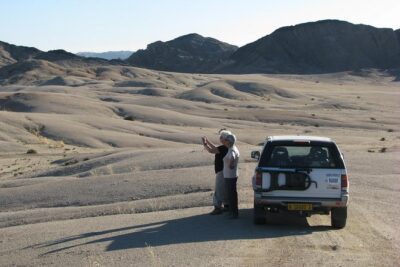
NAMIB DESERT TOURS, Full-Day and Half-Day Tours from Swakopmund, Namibia
Read our review →Cruise liner special: Swakopmund and Namib Desert Highlight Tour
Read our review →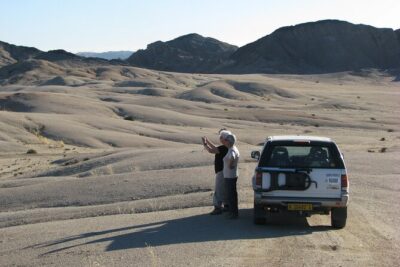
Full-Day Tour in Namib Desert from Swakopmund, Namibia
Read our review →Browse the lists this tour appears in