
Reviewed · DUNE & SANDBOARDING TOURS
From Swakopmund: Living Dunes Experience
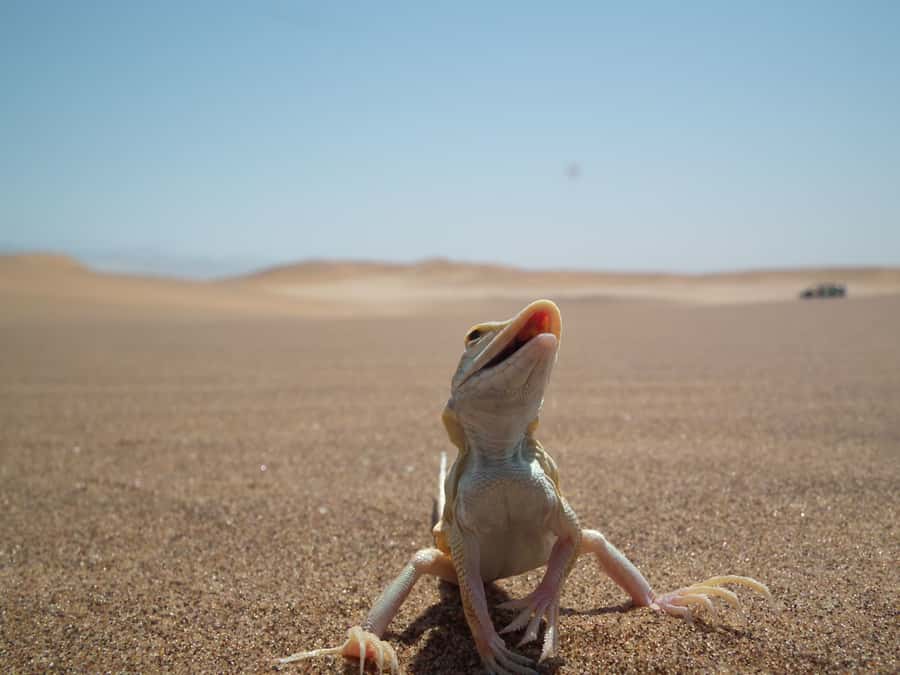
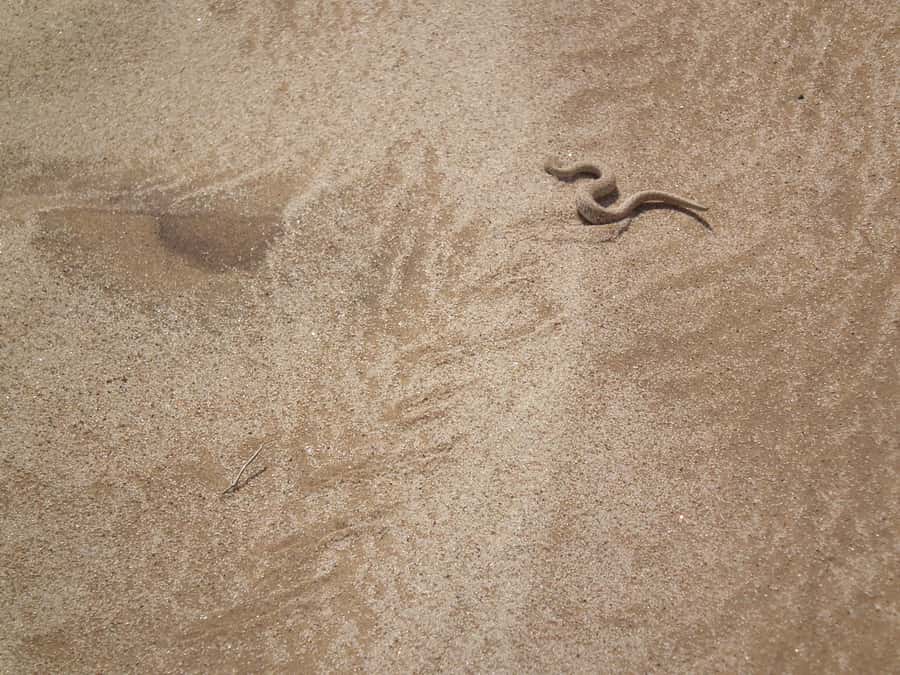
The dunes are alive if you know where to look. This 210-minute outing from Swakopmund turns a stretch of sand into a search for Palmato geckos, sand-diving lizards, tok-tokkie beetles, snakes, spiders, scorpions, and chameleons. I like the close look at Namibia’s smaller wildlife, and I like that the guides explain how these animals survive with almost no water.
I also like the mix of walking, wildlife tracking, scenic driving, and a short dune drive at the end. The main drawback is simple: this is not an easy stroll. Walking through soft sand can be demanding, and the activity is not suitable for people with mobility impairments. Your sightings will also depend on the animals being active and the guide finding their tracks.
In This Review
- Key points to know before booking
- Why the coastal dunes are worth your time
- Leaving Swakopmund for the dune belt
- The secret stop and the search for small wildlife
- Desert adaptations explained in plain language
- What the walking portion feels like
- Photo opportunities without chasing the animals
- The short dune drive adds a change of pace
- Timing, transport, and the value of $61
- What the guide can make or break
- Who should book this experience
- Should you book the Living Dunes Experience?
- FAQ
- Where does the Living Dunes Experience take place?
- How long does the tour last?
- Is hotel pickup included?
- What language is the tour offered in?
- What animals might I see?
- Are animal sightings guaranteed?
- Is the dune drive included?
- Is food included?
- What should I bring?
- Is the tour suitable for people with mobility impairments?
Key points to know before booking
- The wildlife is tiny but remarkable: The search focuses on desert creatures that are easy to miss without a trained eye.
- Guides make the experience: Johnny, Björn, and Immanuel have been praised for clear explanations, humor, care with the animals, and strong spotting skills.
- You get more than a walking tour: Hotel pickup, a guided search, scenic stops, and a short dune drive are included.
- The tour lasts 3.5 hours: That gives you enough time to slow down and look closely instead of rushing from one sight to the next.
- The setting is just outside Swakopmund: You reach the coastal dune belt quickly, with only a short vehicle transfer at the start and end.
- Bring sun protection: Sunscreen and a hat are listed as essentials. Still mineral water is provided, but food is not.
Why the coastal dunes are worth your time
Swakopmund is often used as a base for bigger wildlife outings, but the coastal dunes offer a different kind of nature experience. You are not scanning the horizon for elephants or antelope. You are looking down, watching for a line in the sand, a small movement, or a creature that seems to vanish in front of you.
The ancient Namib has an unusually high number of species found nowhere else. That makes this outing valuable even when the animals are modest in size. A tok-tokkie beetle may not have the drama of a lion, but its way of collecting moisture from coastal fog is a fine lesson in desert survival.
I like this style of wildlife tour because it rewards patience. You learn to read tracks and small marks in the sand. The guide is not simply pointing at animals. The guide is showing you how to notice them.
That makes the experience a good fit for curious adults, families with older children, photographers, and anyone who has already seen enough large-animal safari footage. It is also a useful change of pace during a stay in Swakopmund, where the coast and dunes can otherwise blur into one scenic backdrop.
More Dune & Sandboarding Tours in Swakopmund
- Swakopmund: Desert Dunes Quad Biking with Optional Sandboard
★ 4.9 · 590 reviews - Sandwich Harbour Adventure: Seals and Sandwich harbour dune drive
★ 5.0 · 165 reviews - Living Desert Eco Dune Tour
★ 5.0 · 113 reviews
Leaving Swakopmund for the dune belt
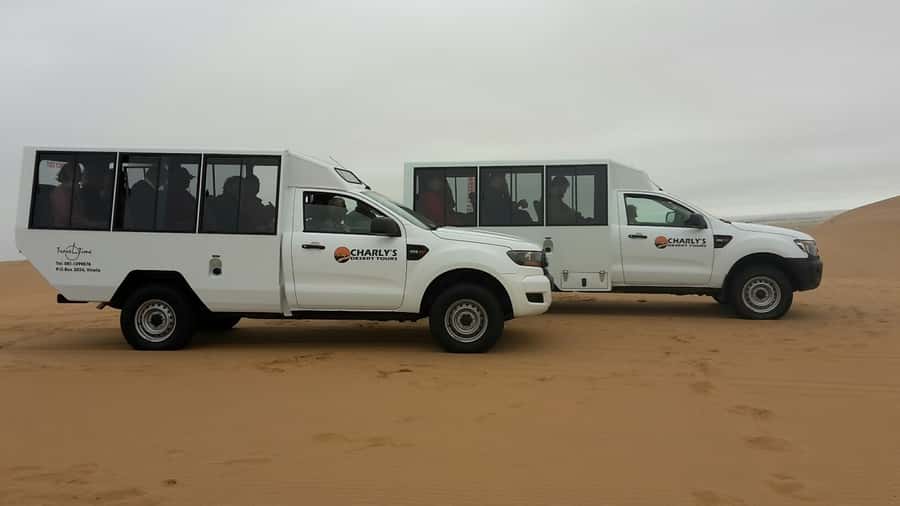
Pickup is included from your accommodation in Swakopmund. The first vehicle transfer is listed as about five minutes, so you do not lose much of the morning or afternoon getting out of town.
As you travel toward the dunes, you can begin watching the scenery change. The urban edge gives way to the coastal dune belt, where the sand becomes the main feature and small animal tracks become more important than distant views.
The drive is practical rather than a long excursion. That is good news if you have limited time in Swakopmund. You spend most of the three and a half hours in the area where the activity happens, not sitting in a vehicle.
Your guide also gives a safety briefing before the walking and wildlife search begin. Listen closely. Soft sand, sun, and heat can make a short walk feel tougher than expected, especially if you are not used to walking on dunes.
The secret stop and the search for small wildlife
The central part of the outing takes place at a dune location described as a secret stop. The appeal is not a named monument or a large attraction. It is the chance to explore a quieter stretch of the coastal dunes with someone who knows what to look for.
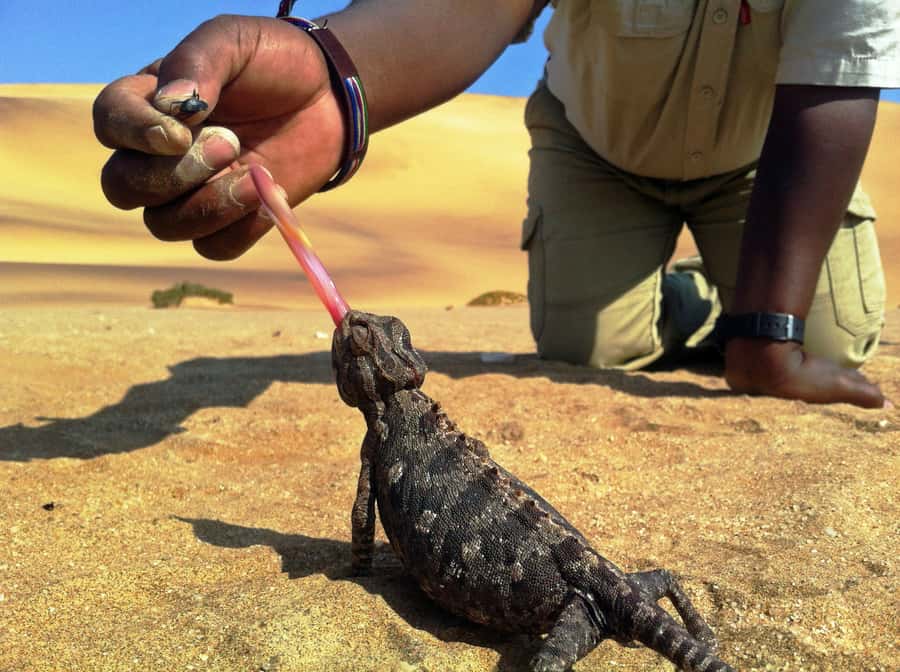
To an untrained eye, the sand can look empty. Your guide may search for tracks, burrows, marks, or movement before revealing an animal. The process is part of the fun. You are not simply handed a list of sightings. You are shown how to look.
Possible finds include:
- Palmato geckos
- Sand-diving lizards
- Tok-tokkie beetles
- Sidewinder snakes
- Spiders
- Scorpions
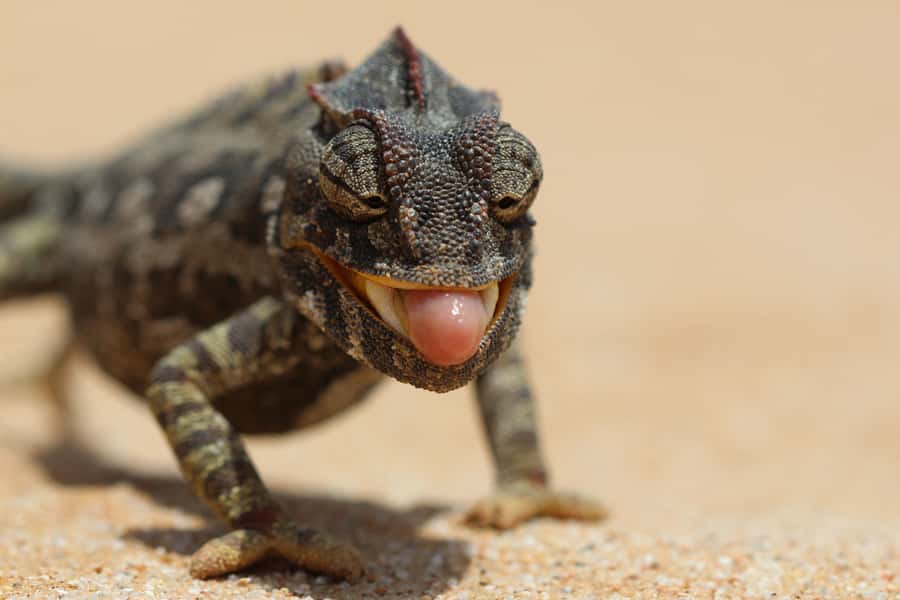
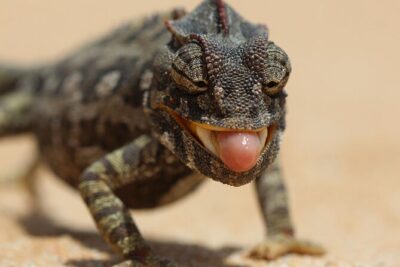
- Chameleons
The wording matters here. These are animals you will search for, not a guaranteed checklist. Desert wildlife is unpredictable, and no guide can promise every species on every departure. The quality of the experience depends partly on your guide’s skill and partly on what is active that day.
The strongest praise has gone to the guides’ ability to locate the Small Five. Johnny has been praised for finding small animals, explaining them carefully, and handling the creatures with care. Immanuel was singled out for finding four of the Small Five while keeping the outing funny and engaging. Björn has also been praised for giving clear explanations and showing a great deal.
Guide availability may vary, but those comments point to the feature that matters most: the guide’s eyes, patience, and respect for the animals.
Desert adaptations explained in plain language
The tour is not just a hunt for photo subjects. It explains how life works in one of the driest places on earth.
You might learn how animals cope with heat, limited water, loose sand, and fog. The tok-tokkie beetle is a particularly memorable example because it is famous for fog-basking. Its presence shows how coastal moisture can support life even where rain is scarce.
The lizards and geckos offer another useful lesson. Their bodies and behavior help them manage the harsh conditions. A sand-diving lizard, for example, is adapted to move through loose sand, which is a very different challenge from walking on firm ground.
The guides also help you identify tracks. This changes the way you see the dunes. A faint line is no longer just a mark made by wind. It may show where something moved, sheltered, or searched for food.
I value this teaching because it continues after the tour. The next time you see a patch of undisturbed sand, you may look for signs instead of assuming nothing lives there.
Off the sand entirely, for a change:
- Walvis Bay: Marine Big 5 Luxury Catamaran Tour
★ 4.8 · 1,012 reviews - Walvis Bay and Sandwich Harbour Tour
★ 4.8 · 483 reviews - Scenic Sandwich Harbour Tour
★ 5.0 · 277 reviews - Scenic Desert Tour by Bike
★ 5.0 · 165 reviews
What the walking portion feels like
The walking section is the heart of the experience, but it is also the part that requires the most effort. Sand shifts under your feet, and the terrain is not designed for easy rolling access. The activity is specifically not suitable for people with mobility impairments.
You should wear practical clothing and protect yourself from the sun. Sunscreen and a hat are listed as items to bring. Still mineral water is included, which is helpful during a three-and-a-half-hour outing, but food is not included.
The pace appears to be built around searching and explanations rather than covering a great distance. That is a strength. Wildlife tracking works best when you stop, listen, and let the guide inspect the sand.
Do not book this expecting a relaxed viewpoint with minimal walking. You will need to get out into the dunes and pay attention. If you enjoy close observation, the effort is part of the reward. If you want only a scenic drive, another activity may suit you better.
Photo opportunities without chasing the animals

The dunes give you strong photo subjects even before you find wildlife. Sand ridges, open views, animal tracks, and the changing shapes of the coastal belt all provide useful frames.
The small creatures can be more difficult to photograph. They may blend into the sand, move quickly, or appear only briefly. Your guide’s ability to find them gives you a better chance than wandering alone, but you should still keep expectations realistic.
The best photographs may come from the details: a gecko against the sand, a beetle in a patch of light, or a track leading toward a burrow. A phone can work for scenery, while a camera with a close-focus setting may be more useful for small animals. No special camera equipment is included, so bring whatever you already use.
Be prepared to watch rather than touch. The care shown toward the animals is one of the experience’s most appealing features. The point is to observe desert life without disturbing it.
The short dune drive adds a change of pace
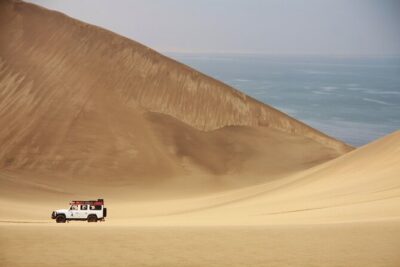
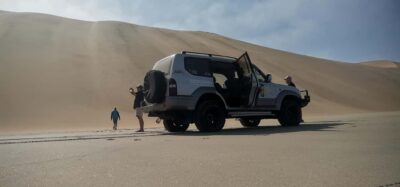
After the wildlife portion, the outing finishes with a short drive over the dunes. This gives your legs a break and adds a more energetic end to the tour.
The drive is not the main reason to book. The animal search and guide commentary are the real value. Still, the vehicle section helps round out the experience by showing the dunes from a faster, wider perspective.
You get scenic views on the way and a little more variety than a walking-only tour. If you like a modest burst of excitement after a careful wildlife search, this is a welcome finish. If you are looking for a long, high-speed sand-driving adventure, the description does not promise that. Think of it as a short finale, not a separate major attraction.
Timing, transport, and the value of $61
The price is $61 per person. For that amount, you receive hotel pickup and drop-off in Swakopmund, an English-speaking live guide, still mineral water, the guided dune search, and the short dune drive.
I consider that fair value if you care about interpretation and close wildlife observation. You are paying for access to the dunes, but also for the guide’s ability to spot animals that you would probably miss alone. That skill is the difference between seeing an empty pile of sand and understanding a living desert.
The outing lasts 210 minutes, or three and a half hours. The main dune stop takes about three hours and fifteen minutes, with roughly five minutes of driving at the start and fifteen minutes on the return. Exact timing can depend on the departure schedule and route, so check availability when booking.
Food is not included. Since the tour is under four hours, that is not a major problem for most people, but you should plan around it. Water is provided, yet bringing sunscreen and a hat is your responsibility.
Free cancellation is available up to 24 hours before the activity for a full refund. You can also reserve now and pay later, which helps if your Namibia plans are still changing.
What the guide can make or break
A small-wildlife outing depends heavily on the person leading it. The best guide does more than point at a lizard. The guide explains what you are seeing, keeps the group safe, and treats the animals carefully.
That is where the strongest feedback sits. Johnny has been described as highly skilled at finding the small wildlife, careful with the animals, and funny without letting the humor take over. Immanuel has been praised for combining competence with a lively manner and for finding four of the Small Five. Björn has received strong praise for clear explanations and for showing a great deal during the outing.
The repeated theme is not simply that the guides find animals. It is that they make the desert understandable. That matters because the creatures are often small and well camouflaged.
The tour is offered in English. If you are comfortable following explanations in English, you should be able to get the full educational value of the trip.
Who should book this experience
I would choose this tour if you like wildlife in all its forms, including beetles, reptiles, and other small creatures. It is especially suitable if you want to understand how animals survive rather than simply collect a few photographs.
It also suits you if your Swakopmund schedule includes only a half-day window. The pickup area is local, the drive is short, and the total duration leaves room for other plans.
Families can enjoy the search, but the walking conditions deserve attention. Children who like spotting games may have fun, while very young children or anyone who struggles on soft sand may find it tiring.
I would think twice if your main goal is a long dune-driving session, a meal, or large wildlife. None of those is the focus. This is a patient, guide-led look at animals that many people would walk past without noticing.
Should you book the Living Dunes Experience?
Book it if you want a thoughtful, unusual nature outing from Swakopmund. The best part is not speed or spectacle. It is learning that the dunes are full of life and seeing how an experienced guide reveals it.
The price is reasonable for the included transport, water, guide, and three-and-a-half-hour program. The main conditions are that you must be comfortable walking on sand, wearing sun protection, and accepting that wildlife sightings can vary.
If that sounds like your kind of adventure, this is an easy activity to recommend. It gives you a closer look at Namibia than a standard scenic drive, and it may leave you scanning every patch of sand for tracks long after you return to town.
FAQ
Where does the Living Dunes Experience take place?
The activity takes place in the coastal dune belt just outside Swakopmund, in Namibia’s Erongo region.
How long does the tour last?
The experience lasts 210 minutes, or about three and a half hours.
Is hotel pickup included?
Yes. Pickup and drop-off are included from your accommodation in Swakopmund.
What language is the tour offered in?
The live tour guide provides the experience in English.
What animals might I see?
The search may include Palmato geckos, sand-diving lizards, tok-tokkie beetles, sidewinder snakes, spiders, scorpions, and chameleons.
Are animal sightings guaranteed?
No specific sightings are guaranteed. The tour involves searching for desert creatures, and the animals you find can vary.
Is the dune drive included?
Yes. A short dune drive takes place after the wildlife portion of the experience.
Is food included?
No. Food is not included, although still mineral water is provided.
What should I bring?
Bring sunscreen and a hat for protection from the sun.
Is the tour suitable for people with mobility impairments?
No. The activity is listed as unsuitable for people with mobility impairments because the experience includes walking in the dunes.
Written up most recently in Swakopmund
- Walvis Bay Shore Excursion: Flamingos, Dune 7, Swakopmund★ 5.0 · 3 reviews
- 7 Days-Desert adventure, Swakopmund & Etosha Lodging Tour★ 5.0 · 2 reviews
- 06 Days Etosha, Swakopmund and Sossusvlei | Guided Lodge★ 5.0 · 2 reviews
- Seal Kayaking at Pelican Point from Swakopmund★ 5.0 · 8 reviews
- Swakop River Valley & Spitzkoppe Full Day 4×4 tour from Walvis Bay★ 5.0 · 3 reviews
- Walvisbay Dune 7 and Swakopmund Town Half Day Guided Tour★ 4.0 · 4 reviews
- Private Half Day Coast Tour of Walvis Bay and Swakopmund City★ 4.0 · 6 reviews
- Unforgettable Half Day Adventure, Explore Sandwich Harbour★ 5.0 · 3 reviews
Dune & Sandboarding Tours, compared.
Desert Dunes Quad Biking with Optional Sandboard
Read our review →
Sandwich Harbour Adventure: Seals and Sandwich harbour dune drive
Read our review →
6-Day Dunes and Wildlife Accommodated Safari from Windhoek
Read our review →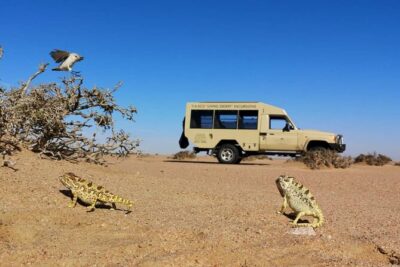
swakopmund city tour dune 7 pink lake pink flamingos
Read our review →
9 Day Canyons, Dunes & Wildlife Camping and Lodge Safari
Read our review →Browse the lists this tour appears in