
Reviewed · DUNE & SANDBOARDING TOURS
9 Day Canyons, Dunes & Wildlife Camping and Lodge Safari
Namibia rewards the curious and the patient. This 9-day small-group safari links Etosha’s wildlife with the Namib Desert, Sossusvlei, the Fish River Canyon, and the Atlantic coast, giving you a strong first look at the country without having to arrange every transfer, meal, campsite, and park visit yourself. I especially like the mix of lodge rooms and camping, plus the chance to meet Himba and Damara people along the way. The main tradeoff is simple: Namibia is huge, so several days include long hours in the safari vehicle.
I also like the small maximum group size of 10, since that makes it easier to hear your guide and settle into a friendly group rhythm. Guides such as Gideon, Kennedy, Greg, Taimi, and others have been praised for their care, humor, flexibility, and practical experience. This is a budget-minded trip, not a luxury safari, so expect shared rooms, basic camps, early starts, and a fair amount of dust.
In This Review
- Key points at a glance
- Starting in Windhoek and heading north
- Etosha gives you wildlife and wide-open space
- Damaraland, Himba culture, and the Skeleton Coast road
- Swakopmund offers a useful pause
- Sossusvlei and Dead Vlei are worth the early alarm
- Aus and the desert horses
- Lüderitz, Diaz Point, and a possible wild horse sighting
- Fish River Canyon and a night beneath the stars
- What the $2,568.47 price really covers
- Comfort, food, and the pace of the road
- Who should book this Namibia safari?
- FAQ
- Where does the tour start?
- Where does the tour end?
- How long is the safari?
- How many people can join the group?
- Is pickup available?
- How many nights are spent camping?
- Is a sleeping bag provided?
- Are meals included?
- Are drinks included?
- Are optional activities included?
- Is travel insurance included?
- Can I book a flight from Windhoek on the final day?
Key points at a glance
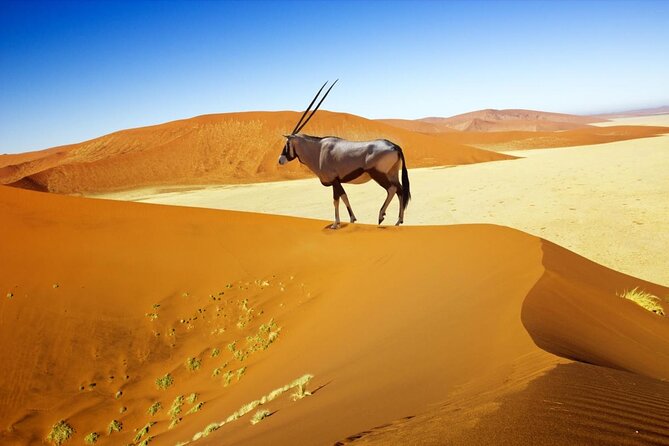
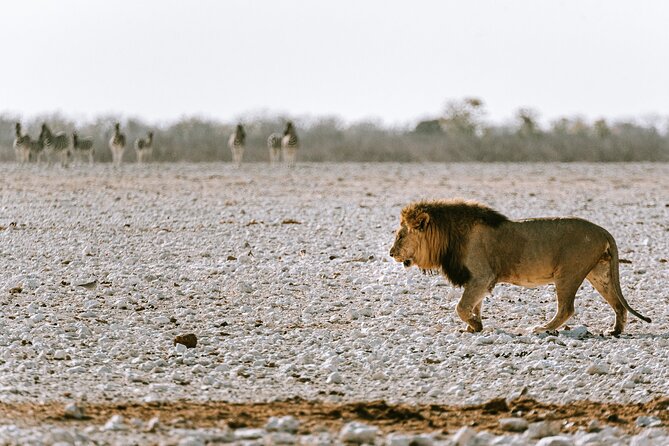
- Etosha wildlife viewing: One afternoon and one full day of game drives offer chances to see elephants, lions, rhinos, leopards, and other animals.
- A memorable camping pattern: Five nights under canvas are balanced by three nights in accommodation, with guides preparing most meals over campfires.
- Dune 45 at sunrise: The early climb gives you cool temperatures, soft light, and some of Namibia’s finest scenery.
- Kolmanskop’s desert ruins: The abandoned diamond town makes a striking stop near Lüderitz.
- A broad southern route: You cover Etosha, Damaraland, Swakopmund, Sossusvlei, Aus, Lüderitz, Fish River Canyon, and the Quiver Tree Forest.
- Good value for an organized trip: At $2,568.47 per person, transport, food, park activities, camping gear, accommodation, and guiding are included, but not sleeping bags, drinks, snacks, insurance, or optional activities.
Starting in Windhoek and heading north
The trip begins at Chameleon Backpackers in Windhoek at 7:00 a.m. A short pre-departure meeting helps everyone understand the plan before you set off. Pickup and drop-off are available within Windhoek city limits, and airport transfers are included, which removes one of the less interesting chores at the beginning or end of a Namibia trip.
The first stop is Otjiwarongo after roughly three hours on the road. This is your chance to buy drinks, snacks, and last-minute supplies. Take advantage of it. Drinks and snacks are not included, and there will be plenty of time in the vehicle later.
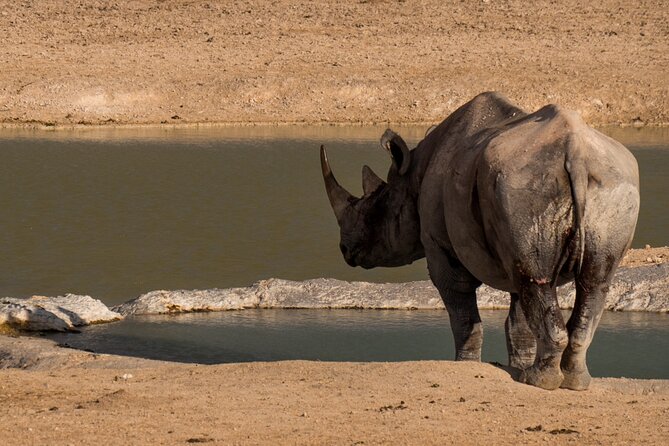
The road then reaches Etosha National Park, with arrival at Andersson Gate around 2:00 p.m. You spend the afternoon on a game drive toward Halali. This first wildlife session is useful because it gets you into the park quickly, rather than wasting the afternoon at a lodge.
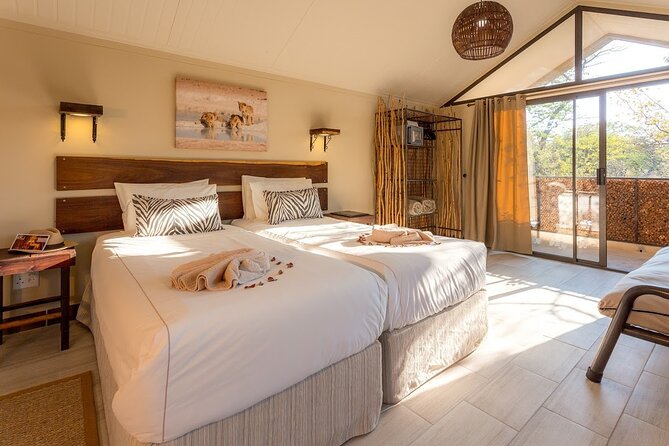
Halali accommodation is in twin-share rooms. After dinner, I would make time for the floodlit waterhole. It is one of the best practical features of a national park camp, since you can watch quietly without bouncing around in the vehicle. The park’s water sources attract wildlife, though no sighting is guaranteed.
More Safaris in Windhoek
- 6-Day Dunes and Wildlife Accommodated Safari from Windhoek
★ 5.0 · 123 reviews - 12 Day Classic Namibia Camping Safari
★ 5.0 · 77 reviews - 3 Day Sossusvlei Budget Camping Safari
★ 5.0 · 62 reviews
Etosha gives you wildlife and wide-open space
Day two begins with breakfast, packing, and a morning game drive. The focus is on predators, but you may also see elephants, rhinos, lions, leopards, and other Etosha animals. Your guide’s skill matters here. The strongest reports about the trip single out guides such as Gideon for knowing where to look and for keeping the pace comfortable.
The route crosses the Etosha Pan, the dry, pale basin that gives the park its name. It is not a conventional sightseeing stop with lots of buildings or activity. Instead, its value is the scale. The open salt pan makes you feel how dry and exposed this part of Namibia can be.
After a picnic lunch inside the park, you continue game viewing toward Okaukuejo and leave shortly before sunset. The evening is spent at Etosha Village. The day is long, and the combination of early driving, heat, and wildlife watching can leave you tired. That is normal on safari. The reward is more time in the park, where patience often matters more than a packed list of guaranteed sightings.
Damaraland, Himba culture, and the Skeleton Coast road
Day three is a long vehicle day through rural Namibia. This is one of the tour’s weaker points if you dislike long transfers, but it also gives you a better sense of the country beyond its headline sights.
In Damaraland, you have an opportunity to meet Damara people and support a small roadside shop. Later, near Uis, you visit a small Himba settlement for about an hour. The stop is intended to help you learn about Himba life and customs in a local setting, rather than only seeing Namibia through park gates and hotel grounds.
Approach this visit with courtesy. Listen first, ask before taking photographs, and remember that you are entering a living community, not a museum display. The experience is brief, but it adds cultural context to a trip otherwise dominated by scenery and wildlife.
After a resupply stop in Uis, the route crosses the Namib Desert toward the coast. A stop at the Zeila Shipwreck provides a stark photo opportunity on the shore. You then reach Swakopmund late in the afternoon and stay at Hotel A La Mer, across from the beach and close to restaurants.
Dinner is at your own expense that night. This is a useful break from the group meal routine, but you should budget for it. The hotel night also gives you a proper bed before the tour returns to camping.
Swakopmund offers a useful pause
The morning in Swakopmund is deliberately slower. You can sleep later, enjoy breakfast, or book an optional activity. Sandboarding and quad biking are specifically offered, giving you a chance to add some action to a trip that otherwise centers on driving, walking, and wildlife viewing.
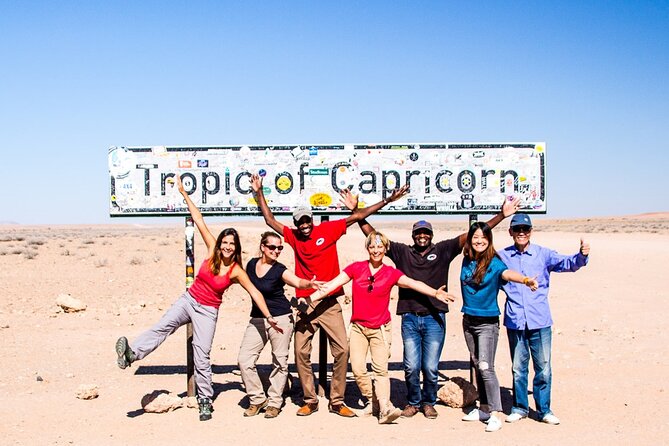
You leave no later than 11:30 a.m. The route passes through the Namib Desert and Kuiseb Pass, crosses the Tropic of Capricorn, and stops at Solitaire for a snack and leg stretch. Solitaire is a practical roadside pause, not a major attraction, but after several hours in the vehicle, that distinction hardly matters.
By late afternoon, you reach the campsite at Sesriem. You set up your tent, swim if you wish, and watch the sun lower over the desert. There is a pool and bar, while dinner is prepared by your guide.
An early night is wise. The next morning starts before dawn, and the desert is best seen in the cool light of early day. Five camping nights are included in the trip, with equipment provided except for your sleeping bag. The setup is designed for people with moderate physical fitness, not for anyone seeking a hotel-style holiday every night.
More Dune & Sandboarding Tours in Windhoek:
- 3 Days Amazing Red Dunes of Sossusvlei | Private Guided Tour
★ 5.0 · 10 reviews - Swakopmund: Desert Dunes Quad Biking with Optional Sandboard
★ 4.9 · 590 reviews - Sandwich Harbour Adventure: Seals and Sandwich harbour dune drive
★ 5.0 · 165 reviews - Living Desert Eco Dune Tour
★ 5.0 · 113 reviews
Sossusvlei and Dead Vlei are worth the early alarm
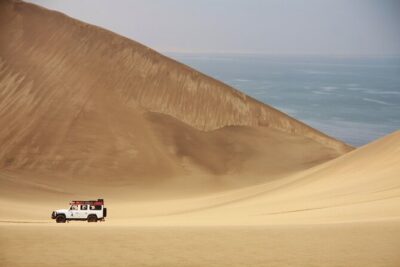
Day five is the visual centerpiece for many people. You leave before sunrise and travel along an ancient river bed between high dunes. The first major stop is Dune 45, where you can climb toward the top to watch the sun rise.
The climb is physically demanding because loose sand gives way under your feet. You do not need to reach the highest point to enjoy it, and the group can spread out according to fitness. Bring water, wear sturdy shoes, and protect your camera from sand.
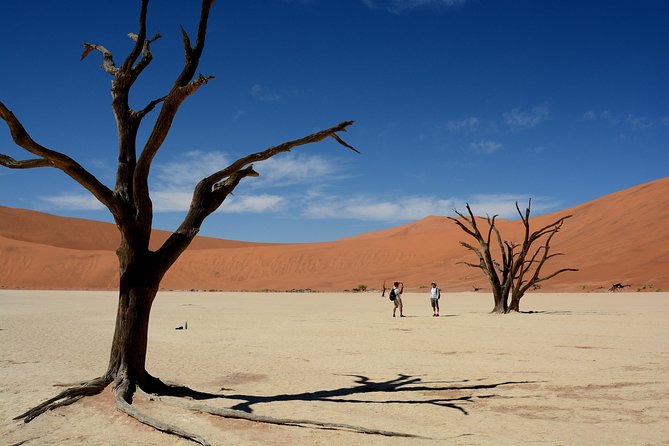
After breakfast, the route continues into the Sossusvlei area. You explore on foot before moving to Dead Vlei, the famous dry clay basin with bleached trees and huge orange dunes behind it. The cracked ground and dead camel thorn trunks create a scene unlike anything in Etosha or along the coast.
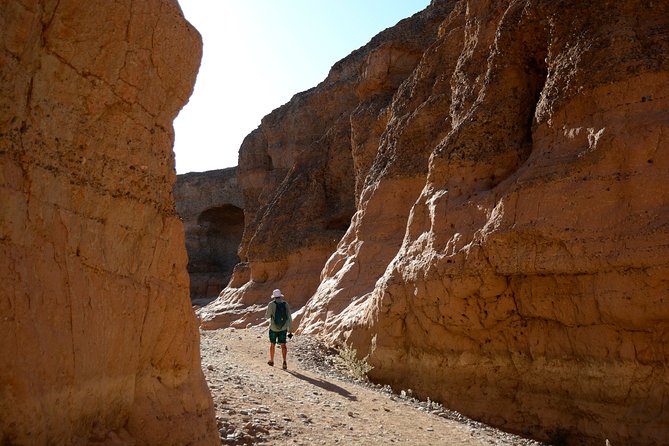
The timing is important. Early light gives the dunes shape and color, while midday brings harsh heat. The schedule sensibly returns you to Sesriem around lunch for swimming or a siesta. Later, you visit Sesriem Canyon, a smaller but worthwhile geological stop where you can walk into the narrow rock formation.
This day includes several walks, heat, sand, and an early start. It is one of the tour’s most rewarding days, but it is not a passive sightseeing excursion.
Aus and the desert horses
On day six, you pack up after a relaxed breakfast and leave by about 9:00 a.m. The route heads south through the Namib Rand area toward Klein Aus, a small outpost surrounded by dramatic desert scenery.
You camp at Klein-Aus Vista’s Desert Horse Campsite. After setting up, you have free time for one of the short hiking trails. The setting is especially good for sunset, with the Aus Mountains providing a strong backdrop.
Dinner is cooked by your guide over an open fire. This is the kind of simple routine that makes the camping portion work: drive, set up, walk a little, watch the light change, then eat together outside. It is not polished, but it is sociable and closely tied to the setting.
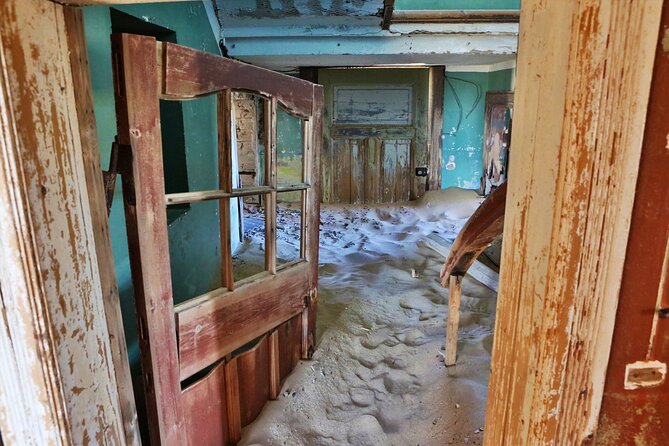
The next day includes an early breakfast and a drive to Kolmanskop, about 15 kilometers outside Lüderitz. This abandoned diamond town grew rapidly during the 1910 boom and once had luxury homes, a bowling alley, and the Southern Hemisphere’s first X-ray machine. After the diamond rush ended, people left, and desert sand began filling the buildings.
The guided visit helps explain why the ruins look the way they do. You can photograph doorways, rooms, and sand-filled interiors, but the real interest is the contrast between former wealth and present silence.
Lüderitz, Diaz Point, and a possible wild horse sighting
After Kolmanskop, you continue to Lüderitz, a small Atlantic town with colorful colonial-style buildings and a rocky coastal setting. The visit is shorter than the stop at Kolmanskop, but it changes the mood again. Namibia’s southern route is full of sharp contrasts: dry inland mountains, abandoned mining towns, and cold ocean air.
At Diaz Point, you stop at the site of the original Diaz Cross. The visit is brief, but it connects the coast to the early European exploration of the region.
On the return journey to Aus, keep watch for the wild horses of the Namib Desert. Their origins remain uncertain, and sightings are not assured. If you see them, treat it as a bonus rather than a promised event.
You return to the same Klein-Aus Vista campsite for another sunset and another guide-prepared dinner. Repeating the camp location is practical. It means you are not packing and unpacking twice in different places, though some people may prefer a new hotel or campsite each night.
Fish River Canyon and a night beneath the stars
Day eight starts early as you leave Aus and head east. The main stop is Hell’s Bend viewpoint at Fish River Canyon, one of the world’s largest canyons. From the lookout, you see the enormous cut made by erosion and movements in the earth’s crust over millions of years.
The stop lasts about an hour. That is enough for the main view, photographs, and a short explanation, but not for a canyon hike. If you dream of spending several days walking into the canyon, this tour is not designed for that. It provides a scenic viewpoint as part of a wider route.
After lunch, you continue to the Quiver Tree Forest Rest Camp near Keetmanshoop. Around 250 quiver trees grow here, with some estimated to be 200 to 300 years old. The trees are Namibia’s national tree, and the forest has been a national monument since 1995.
The final night is spent camping under the stars, with dinner prepared by your guide. This is a strong location for ordinary night-sky watching and photography. Special permits are not included for night photography, so check what is required before planning serious camera work.
On the final morning, you can sleep later and enjoy breakfast before visiting Giants Playground. The dolerite rocks appear to have been stacked by hand, making this a short, easy geological stop with a memorable name.
The drive back to Windhoek passes through Mariental and Rehoboth, with arrival in the late afternoon. Do not schedule a flight for this day. Road conditions, stops, and the sheer distance can make the return time uncertain.
What the $2,568.47 price really covers
The price is strong for a nine-day trip covering so much ground. It includes eight breakfasts, seven dinners, nine lunches, transport in a custom-built safari vehicle with a pop-up roof, camping equipment, park activities, accommodation, guiding, tap water, and airport transfers.
You are paying for convenience as much as sightseeing. Someone else handles the route, vehicle, park entry arrangements, campsite setup, shopping stops, and most meals. That can be valuable in Namibia, where distances are large and independent planning takes time.
Still, the package is not all-inclusive in the resort sense. You need to bring or rent a sleeping bag. Drinks, bottled water, alcohol, snacks, travel insurance, and optional Swakopmund activities cost extra. One dinner in Swakopmund is also at your own expense.
The twin-share arrangement keeps the cost down. It also means you should be comfortable sharing rooms and camping space with another person. The group limit of 10 is small enough for personal contact with the guide, but group chemistry still matters. One unhappy experience described a poor match with companions, a reminder that shared tours involve people you did not choose.
Comfort, food, and the pace of the road
The accommodation mix is sensible. Lodge nights provide beds and showers at the start, during the Etosha section, and in Swakopmund. Camping then puts you closer to the desert, sunsets, fires, and stars.
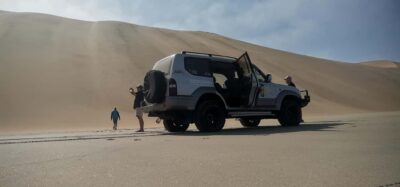
The vehicle is a custom safari model with a pop-up roof. That design is useful in Etosha because it gives you a higher viewing position, though it does not remove the long driving days. Pack light, keep essentials close, and bring a warm layer for early mornings.
Food is one of the tour’s praised features. Guides prepare seven dinners and nine lunches, including picnic-style meals and open-fire cooking. The included tap water helps, but mineral water and other drinks are not supplied. If you have dietary needs, confirm them before booking because the supplied information does not specify how special diets are handled.
The physical demand is moderate. You should be able to handle tent camping, walking around Sossusvlei and Dead Vlei, climbing sandy dunes if you choose, and getting in and out of the vehicle repeatedly. The tour does not require a high level of athletic ability, but it is not suited to someone wanting a fully restful schedule.
Who should book this Namibia safari?
I would choose this trip if you want the main southern and central Namibia highlights in one organized journey. It suits solo visitors who like meeting people, couples who do not mind shared arrangements, and first-time visitors who want a guide to handle the practical work.
It is especially good for you if your priorities are wildlife, desert scenery, photography, campfire meals, and variety. Several people who joined alone found strong friendships within the group, which is one of the pleasures of a small camping safari.
I would hesitate if you want luxury, private rooms, short driving days, or deep time in one region. You will spend many hours on the road, and the schedule is full because it tries to connect Etosha with the far south in only nine days.
The 4.7 rating from 23 reviews and 91 percent recommendation suggest a strong record, with repeated praise for guides, food, organization, and the combination of camping and lodges. The occasional poor experience points to the limits of a budget group trip, especially shared accommodation, changing guide teams, and group compatibility.
For me, the best reason to book is the range: lions in Etosha, sunrise on Dune 45, sand-filled rooms at Kolmanskop, the Fish River Canyon, and quiver trees under the stars. You will not see every corner of Namibia, but you will come away with a memorable cross-section of the country.
FAQ
Where does the tour start?
The tour starts at Chameleon Backpackers on Ferry Street in Windhoek at 7:00 a.m.
Where does the tour end?
The tour returns to Windhoek and ends at the meeting point or your accommodation within Windhoek city limits.
How long is the safari?
The experience lasts approximately nine days.
How many people can join the group?
The maximum group size is 10 people.
Is pickup available?
Yes. Pickup and drop-off are offered within Windhoek city limits, and airport transfers are included.
How many nights are spent camping?
The package includes five nights of camping and three nights of accommodation.
Is a sleeping bag provided?
No. Camping equipment is included except for the sleeping bag.
Are meals included?
Yes. The package includes eight breakfasts, seven dinners, and nine lunches.
Are drinks included?
Tap water is included. Mineral water, soft drinks, alcohol, and snacks are not included.
Are optional activities included?
No. Optional activities in Swakopmund, such as sandboarding or quad biking, are at your own expense.
Is travel insurance included?
No. Personal travel insurance is not included.
Can I book a flight from Windhoek on the final day?
No flights are recommended on the final day because the return drive reaches Windhoek in the late afternoon and may be affected by road conditions and timing.
More Wildlife in Windhoek
- Wildlife and Landscape Tour- full-day (7hours) from Walvis Bay
★ 5.0 · 5 reviews
More Camping Safaris out of Windhoek
- 6 Day Sand, Sea & Etosha Budget Camping Safari
★ 5.0 · 36 reviews - 7 Day Southern Namibia and Sossusvlei Camping Safari
★ 5.0 · 26 reviews - 9 Day Etosha, Skeleton Coast and Sossusvlei Camping and Lodge Safari
★ 5.0 · 21 reviews - 7 Day Northern Namibia and Skeleton Coast Camping Safari
★ 5.0 · 19 reviews
Written up most recently in Windhoek
- Windhoek: Okapuka Game Ranch Guided Tour★ 5.0 · 2 reviews
- Windhoek: Katutura Township Tour with Local Guide★ 3.5 · 3 reviews
- Windhoek : Cheetah walk Experience★ 4.6 · 8 reviews
- Windhoek: City & Township tour. Vehicle, guide, kapana★ 4.2 · 4 reviews
- Windhoek City Tour★ 3.5 · 7 reviews
- Knight Vibes: Bars, Shebeen, Clubs Crawl Windhoek★ 5.0 · 3 reviews
- Predator Encounter: Half-Day Carnivore Feeding Windhoek★ 4.0 · 5 reviews
- Discover the Routes of N/a’an ku sê.★ 4.0 · 6 reviews
Dune & Sandboarding Tours, compared.
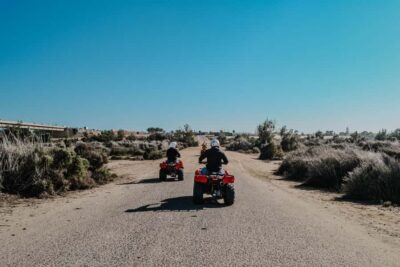
Desert Dunes Quad Biking with Optional Sandboard
Read our review →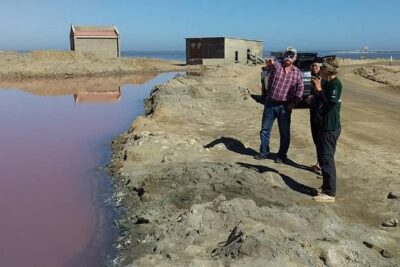
Sandwich Harbour Adventure: Seals and Sandwich harbour dune drive
Read our review →
6-Day Dunes and Wildlife Accommodated Safari from Windhoek
Read our review →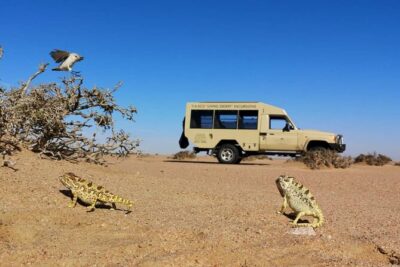
swakopmund city tour dune 7 pink lake pink flamingos
Read our review →Browse the lists this tour appears in