
Reviewed · WELWITSCHIA & MOON LANDSCAPE TOURS
Moonlandscape & Welwitschia Drive
Namibia gets strange in the best way. This half-day drive from Walvis Bay packs several of the region’s most unusual sights into about five hours: flamingo-filled wetlands, towering sand, ancient plants, eroded rock, and a historic seaside jetty. I like the small group of no more than eight people, and I like that the route reaches places you would not see by simply staying around the port.
The strongest part is the long visit to the Moon Landscape and Welwitschia Valley, where the scenery changes from river valley to bare rock and then to scattered desert plants. The possible drawback is the pace: with Dune 7, the lagoon, the desert, and Swakopmund Jetty all included, some stops are brief rather than leisurely.
In This Review
- Key points to know before booking
- Why this five-hour route works
- Starting beside Walvis Bay Lagoon
- Dune 7 and the quick sand stop
- Entering the Moon Landscape through the Swakop River Valley
- Welwitschia Valley and Namibia’s strange survivor
- A final walk on Swakopmund Jetty
- Guides, group size, and the human side
- How the price compares with the experience
- Who should book this tour?
- Final verdict: a strong half-day choice
- FAQ
- How long does the Moonlandscape & Welwitschia Drive last?
- Where does the tour start and finish?
- Is hotel pickup available?
- How many people can join the tour?
- What animals can I see at Walvis Bay Lagoon?
- Are admission tickets included?
- Can I cancel for a full refund?
Key points to know before booking
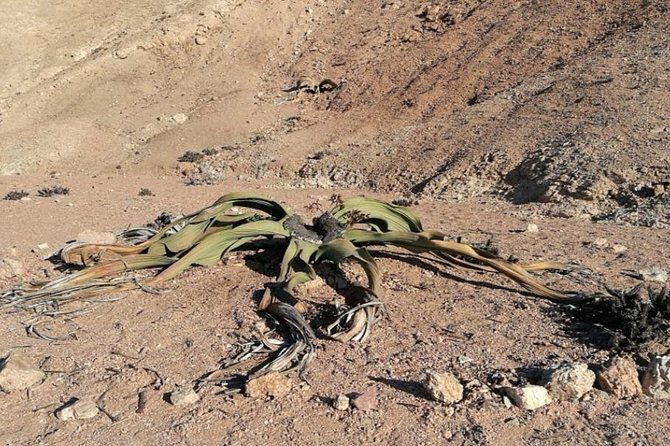
- Ancient Welwitschia plants: See the remarkable desert plants that can live for centuries in one of Namibia’s harshest regions.
- Moon Landscape drive: Spend about three hours around the Swakop River Valley, eroded rock formations, and Welwitschia Valley.
- Dune 7 stop: Take a short look at one of the best-known dunes near Walvis Bay, with about 20 minutes scheduled here.
- Bird-rich Walvis Bay Lagoon: Watch for flamingos, pelicans, avocets, Damara terns, and migrant water birds.
- Swakopmund Jetty: Finish with a 30-minute walk and sea view from the restored wooden-and-steel landmark.
- Personal guiding: Jenifer and Christopher have both been praised for friendly, informative service, with Jenifer also arranging a memorable champagne lunch in the desert.
Why this five-hour route works
The appeal here is variety. You are not spending the whole morning looking at one type of desert scenery. Instead, the route moves through wetland, dune, river valley, bare rock, unusual vegetation, and coastal town.
That variety matters in Walvis Bay. The area can look stark at first, but it changes quickly once you leave the waterfront. One moment you are watching birds beside the lagoon. Later, you are looking over wind-shaped dunes or driving through rock that resembles a rough version of the moon’s surface.
The small-group format helps. With a maximum of eight people, you should have a better chance of hearing the guide and asking questions than you would on a large coach. It also makes short photo stops easier to manage. This is still a timed tour, though, so you should not expect to set your own pace at every stop.
The price is $144.54 per person. That is not the cheapest way to see the area, but it covers a wide route in roughly half a day, includes the Moon Landscape area, and offers round-trip transport from Walvis Bay arrangements. If you are visiting from a ship or have limited time in town, the value improves because you can see several major sights without arranging separate transport.
The tour is booked an average of 84 days ahead, which suggests that you should reserve early if your schedule is fixed. Free cancellation is available up to 24 hours before the start time, giving you some breathing room if your plans change.
Other drives through the moon landscape:
- Shore Excursion – Flamingos ,Dune7,Welwitschia, Moonlandscape,Oasis,Swakopmund.
★ 5.0 · 8 reviews - Welwitschia Tour from Swakopmund
★ 4.5 · 20 reviews - Sandwich harbour and Welwitschia Tour
★ 5.0 · 13 reviews
Starting beside Walvis Bay Lagoon
The Walvis Bay Lagoon is a fitting first look at the region. It is one of southern Africa’s most important wetlands and supports Great and Lesser flamingos, Damara terns, pelicans, avocets, and many migrant water birds.
You may find the lagoon especially rewarding if you enjoy photography. The open water, pale sand, birds, and distant desert create clean, uncluttered views. Flamingos are the obvious draw, but do not focus only on them. Pelicans and avocets add different shapes and movement, while the smaller Damara terns show why this wetland matters beyond its postcard appearance.
The lagoon also gives useful context for the rest of the tour. Walvis Bay is not only a desert port. It is a meeting point between the Atlantic coast and one of the driest regions on earth. Seeing the wetland before heading inland makes that contrast clear.
The supplied schedule does not give a fixed duration for this stop, so the exact amount of viewing time may depend on the day’s timing and conditions. If bird photography is your main goal, mention that to your guide early. A short stop can still be worthwhile, but you may need to balance birdwatching with the rest of the route.
Dune 7 and the quick sand stop
Dune 7 is about six kilometers by road from Walvis Bay, just off the C14. It is a familiar local picnic spot, although the sand has gradually covered parts of the picnic area. A few palm trees sit in the lee of the dune, offering a small patch of shade in an otherwise bare setting.
The planned stop lasts about 20 minutes, and admission is free. That tells you how to approach it: this is a photo and orientation stop, not a long dune hike. You can take in the scale of the sand, look for the palms, and capture the contrast between the soft dune and the open desert.
I would not book this tour expecting a long session of climbing dunes. The itinerary gives you enough time to see Dune 7, but not enough for a slow ascent, extended sandboarding, or a picnic. Its value comes from fitting a well-known Walvis Bay sight into the wider route without requiring a separate outing.
Wear shoes that can handle sand, and protect cameras and phones from dust. The tour specifically notes dust allergies, so anyone sensitive to airborne sand should plan accordingly.
Entering the Moon Landscape through the Swakop River Valley
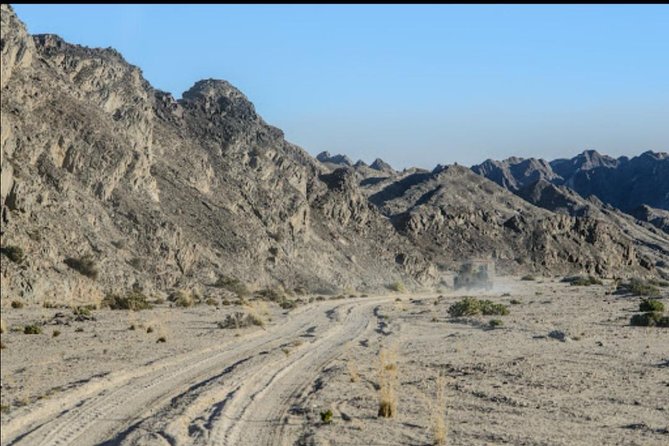
The main part of the tour begins as you leave the coastal area and drive through the Swakop River Valley toward the Moon Landscape. This is where the scenery becomes more severe and unusual.
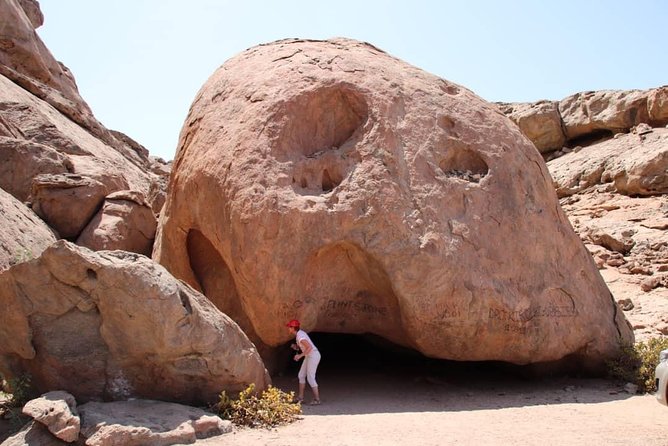
The Namib is among the oldest deserts in the world, and its wind-shaped terrain gives the route its dramatic character. Wind and erosion have worn down mountains and exposed layers of rock, creating a broad, broken valley with a surface that can look almost lunar.
The name is not just a marketing flourish. The area really does have a stripped, otherworldly appearance, with little softness in the rock and wide views across an arid valley. The appeal is strongest when you take time to notice texture: ridges, folds, exposed stone, and subtle changes in color.
This is the portion where a good guide adds real value. Jenifer has been praised for being friendly, entertaining, and well informed about the area, while Christopher received praise for punctual pickup and a memorable drive through the desert. The route is much more meaningful when someone explains what you are seeing instead of treating the rock as a quick photo backdrop.
The Moon Landscape portion is scheduled for about three hours and includes the visit to Welwitschia Valley. That is the heart of the experience, so the tour gives it far more time than Dune 7 or the jetty. You should still expect driving between viewpoints and short stops rather than a long walk through one compact site.
Other things running from Walvis Bay:
- Walvis Bay: Marine Big 5 Luxury Catamaran Tour
★ 4.8 · 1,012 reviews - Walvis Bay and Sandwich Harbour Tour
★ 4.8 · 483 reviews - Walvis Bay: 4×4 Desert Excursion to Sandwich Harbour Bay
★ 4.8 · 446 reviews - Walvis Bay: Sandwich Harbour Half-Day 4×4 Scenic Excursion
★ 5.0 · 426 reviews
Welwitschia Valley and Namibia’s strange survivor
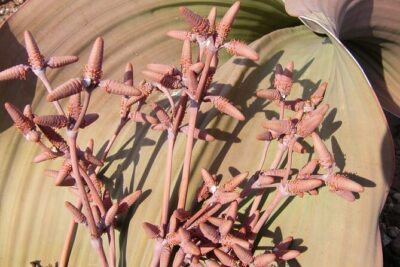
Welwitschia plants are among the most distinctive forms of desert life. They look low, broad, and untidy, with long leaves spread across the ground. In a place that appears nearly lifeless, these plants show how much adaptation can happen below the surface and over a very long period.
Thousands of welwitschia plants are scattered through the valley. The stop lets you see them in their natural setting rather than in a garden or display. That setting is important: the plants make sense when viewed against the dry soil, open rock, and almost complete lack of conventional greenery.
You may find the plants less immediately dramatic than the dunes. They do not tower over you, and their muted colors can be easy to miss from a moving vehicle. Take a little time to look closely. Their age, survival, and unusual form are what make them special.
This is also a good place for a guide to connect the plants with the desert climate. The tour description promises a stop to view these fascinating specimens, but it does not provide a specific walking distance or a detailed talk schedule. Expect the guide to shape the visit according to conditions and timing rather than a formal museum-style presentation.
For photographers, Welwitschia Valley offers a different kind of subject from the lagoon and dunes. Use the plants as foreground details, then include the wide rock valley behind them. The result can show scale without relying on a crowded viewpoint.
A final walk on Swakopmund Jetty
The last listed stop is Swakopmund Jetty, about 30 minutes. This is a pleasant change after hours of desert scenery, giving you an open view over the Atlantic and a chance to stretch your legs.
The jetty began as a wooden structure commissioned in 1905. It was extended in 1907, then replaced with a steel structure beginning in 1912. After years without major repairs, it closed to pedestrians in 1983. Fundraising and restoration eventually allowed it to reopen in October 2006.
You do not need to be a history enthusiast to enjoy the stop. The jetty is practical as well as scenic. It has long been used by anglers and people taking a walk, and its position over the water gives you a clear view back toward Swakopmund.
Thirty minutes is enough for a stroll and photographs, but it is not enough for a full exploration of Swakopmund. If you want cafés, shops, or more time in town, you will need to arrange that separately or return later. The jetty works best here as a final viewpoint, not as the main purpose of the tour.
Guides, group size, and the human side
The strongest praise attached to this experience concerns the guides. Jenifer is described as friendly, entertaining, and passionate about the area. One particularly memorable detail is a champagne lunch in the desert, although you should confirm whether that is included with your booking rather than assume it is part of every departure.
Christopher was praised for collecting passengers on time at 8:00 a.m. and showing them the flamingos before continuing to Dune 7 and the desert. That is useful if you are arriving by ship or working with a tight port schedule, though you should still confirm the exact pickup arrangement.
The tour has a maximum of eight people. That size is large enough to keep the cost below a private tour while remaining small enough for direct contact with the guide. It also reduces the chance of spending the whole morning waiting for a large group to board and unload.
Pickup is offered, and the stated meeting point is the Walvis Bay Tourism Centre at the corner of Union and 5th Road. The end point is the same meeting point. One review describes the meeting point as easy to reach near a ship, but your own ship schedule and port arrangements should be checked carefully before booking.
Most people can participate, and the tour is near public transportation. The main practical concern is dust. If you have dust allergies, take that seriously and prepare before setting out.
How the price compares with the experience
At $144.54 per person, this tour asks you to pay for access, transport, and a guide rather than for admission-heavy attractions. Dune 7 and Swakopmund Jetty are free stops, while the Moon Landscape portion includes admission.
The value comes from the route. A self-drive visitor would need to plan the lagoon, Dune 7, the inland desert, Welwitschia Valley, and Swakopmund Jetty, while also handling directions and timing. This tour combines them in one outing and keeps the group small.
It is a good fit for you if you have only one day around Walvis Bay, especially if you are visiting from a ship. It is less compelling if you already have a rental car, plenty of time, and a strong interest in spending hours at one site. A private arrangement might suit you better if you want complete control over photo stops.
The 4.9 rating from 10 reviews and 100 percent recommendation signal a strong record, but the sample is small. I would treat the guide praise as the most useful evidence. The exact balance of time, weather, and group preferences can still affect your day.
Who should book this tour?
I would recommend it to photographers, nature enthusiasts, first-time visitors to Walvis Bay, and anyone who wants a broad introduction to the area without committing to a full-day excursion. It is especially useful for people who want both wildlife and desert scenery.
You should also consider it if you enjoy unusual natural subjects. Flamingos are familiar, but Welwitschia plants and the Moon Landscape give the day a more distinctive Namibian identity.
I would hesitate if your priority is a relaxed pace. The route covers a lot, and the 20-minute Dune 7 stop and 30-minute jetty stop leave limited time for wandering. Dust-sensitive visitors should also think carefully about comfort.
Final verdict: a strong half-day choice
Book this tour if you want the most varied introduction to Walvis Bay and nearby Swakopmund in about five hours. The Moon Landscape and Welwitschia Valley provide the main reason to go, while the lagoon, Dune 7, and jetty keep the day varied.
The best booking tip is to confirm pickup, especially if you are arriving by ship, and ask about any special additions such as the champagne lunch. If you want a guide-led look at Namibia’s desert, wetland, and coast without arranging several separate trips, the small group and broad route make the $144.54 price reasonable.
FAQ
How long does the Moonlandscape & Welwitschia Drive last?
The experience lasts approximately five hours.
Where does the tour start and finish?
It starts at the Walvis Bay Tourism Centre at the corner of Union and 5th Road in Walvis Bay, Namibia, and ends back at the meeting point.
Is hotel pickup available?
Pickup is offered, including round-trip transfers from a Walvis Bay hotel. Confirm the exact pickup details when booking.
How many people can join the tour?
The tour has a maximum group size of eight travelers.
What animals can I see at Walvis Bay Lagoon?
The lagoon is home to Great and Lesser flamingos, Damara terns, pelicans, avocets, and many migrant water birds.
Are admission tickets included?
Admission is included for the Moon Landscape portion. Dune 7 and Swakopmund Jetty are listed as free stops.
Can I cancel for a full refund?
Yes. You can cancel at least 24 hours before the local start time for a full refund. Changes or cancellations made less than 24 hours before the start are not accepted for a refund.
Written up most recently in Walvis Bay
- Walvis Bay Shore Excursion: Flamingos, Dune 7, Swakopmund★ 5.0 · 3 reviews
- Walvis Bay: Seal Kayaking Adventure with Brunch★ 4.1 · 3 reviews
- Pelican Point tours,Lagoon tours, Dune7 Adventure★ 4.5 · 6 reviews
- Wildlife and Landscape Tour- full-day (7hours) from Walvis Bay★ 5.0 · 5 reviews
- Swakop River Valley & Spitzkoppe Full Day 4×4 tour from Walvis Bay★ 5.0 · 3 reviews
- Seal Kayaking at Pelican Point from Swakopmund★ 5.0 · 8 reviews
- Full Day Tour Shipwreck Sandwich Harbour Adventure★ 5.0 · 3 reviews
- Sandwich Harbour 4×4 Tours at Walvisbay, Namibia★ 5.0 · 8 reviews
Welwitschia & Moon Landscape Tours, compared.
Shore Excursion – Flamingos ,Dune7,Welwitschia, Moonlandscape,Oasis,Swakopmund.
Read our review →
Browse the lists this tour appears in