
Reviewed · HISTORICAL TOURS
Cultural Tour in Swakopmund
Culture begins beyond the beach. This three-hour Swakopmund tour moves from the town center into local communities, introducing you to Namibian tribes, Herero traditions, a pre-primary school, an informal settlement, herbal practices, and local food. I like the small maximum group of six, which should make conversation easier, and I like the chance to meet people in settings beyond the usual sightseeing route. The main consideration is that the schedule covers many stops quickly, so you should expect a broad introduction rather than long visits at each place.
I also like the practical pickup service, especially if you arrive by cruise ship or have limited time in Swakopmund. The guides, Nanette and Mercia, received special praise for clear communication and flexibility when port arrangements became difficult. The school visit may be the emotional high point, but it also calls for respectful behavior and a willingness to follow local guidance.
In This Review
- Five things to know before booking
- From Swakopmund’s center into local life
- Meeting a Herero woman and hearing about tradition
- The school visit and meeting local children
- Visiting DRC, an informal settlement
- Learning about traditional herbal practices
- A short stop with the Damaranama community
- Walking through the open market
- Trying local foods at the end
- Is $105.48 a fair price?
- Timing, group size, and practical planning
- Who will get the most from this experience?
- Should you book the Cultural Tour in Swakopmund?
- FAQ
- How long does the Cultural Tour in Swakopmund last?
- How many people can join the tour?
- Is pickup available?
- What communities and cultural subjects are included?
- Is the local food tasting required?
- What happens if I need to cancel?
Five things to know before booking
- Six-person maximum: A small group can make cultural conversations more personal and reduce the waiting that often slows larger tours.
- Several communities in three hours: You visit Herero, Damaranama, and other local settings, along with the DRC informal settlement.
- A rare school visit: Time at a pre-primary school and kindergarten gives you a direct connection with local children.
- Pickup is available: This is useful if you are staying in Swakopmund or arriving at the port by cruise ship.
- Food tasting is optional: You can finish with a taste of local foods, but the supplied details do not specify which dishes are served.
- Weather and minimum numbers matter: Poor weather or too few bookings can lead to a new date, another experience, or a full refund.
From Swakopmund’s center into local life
The tour begins with a short drive through central Swakopmund before heading into the township. That change in setting is important. Swakopmund is often presented through its German colonial buildings, coastal streets, and nearby desert activities, but this experience points you toward the people and communities that make up present-day Namibia.
I like this opening because it gives you a quick sense of contrast without spending the entire three hours in a vehicle. The guide explains Namibian culture and different tribes as the tour moves along, giving the later visits more meaning. You are not simply checking off a series of stops. You are being introduced to how several cultural identities sit alongside one another in the Swakopmund area.
The information provided does not give the exact amount of driving between stops, so the pace may vary. Still, the plan is clearly active: expect short visits, brief walks, conversation, and several changes of scene. Wear comfortable shoes and keep your schedule reasonably open, particularly if you are arranging this around a ship departure or another fixed activity.
More Swakopmund days:
- Walvis Bay: Marine Big 5 Luxury Catamaran Tour
★ 4.8 · 1,012 reviews - Swakopmund: Desert Dunes Quad Biking with Optional Sandboard
★ 4.9 · 590 reviews - Walvis Bay and Sandwich Harbour Tour
★ 4.8 · 483 reviews
Meeting a Herero woman and hearing about tradition
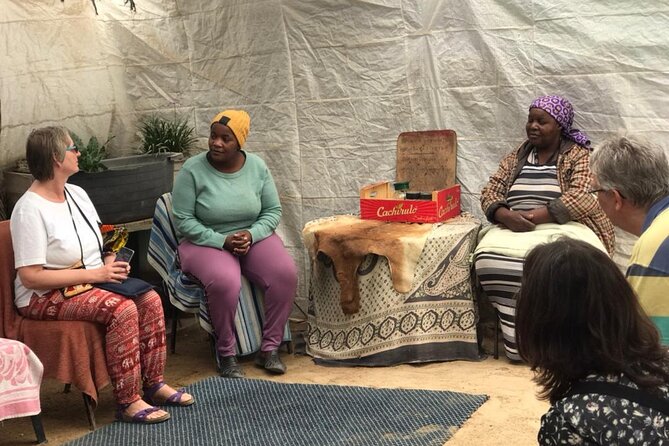
One of the most specific parts of the visit is a stop with a Herero woman who explains Herero culture and religion. This is more useful than a general lecture because it places the subject in a personal setting, with an individual explaining traditions in her own voice.
The value here is the opportunity to ask questions and connect broad cultural information to a person and a community. Herero identity is an important part of Namibia’s social story, and this stop gives you a focused introduction rather than a rushed mention during a drive.
You should approach this part with curiosity rather than expecting a staged performance. The supplied details do not promise costumes, demonstrations, or a formal presentation beyond the explanation of culture and religion. That is worth knowing. The strength of the stop is conversation and context, not a large production.
The small group size should help. With no more than six people, you may have a better chance to hear clearly and ask something without turning the visit into a crowded photo stop. If photography comes up, ask first and follow the guide’s direction.
The school visit and meeting local children
The tour continues to a pre-primary school and kindergarten, where you can interact with the children. This has been singled out as a memorable part of the experience, and it is easy to understand why. A school visit can show you a side of daily life that sightseeing from a vehicle cannot.
The welcome from the children may be warm and energetic, but you should remember that this is their school, not a theme park. Keep your attention on respectful interaction. Follow the guides’ instructions, avoid assuming that every child wants a photograph, and let the staff or guides set the tone.
This stop may be especially meaningful if you want human contact rather than only information about buildings, tribes, or customs. It also gives a practical glimpse of early education in the community. The description does not provide details about school facilities, classroom activities, donations, or the length of the visit, so do not book expecting a formal educational exchange with a detailed program.
I would treat this as a brief, personal encounter within a wider tour. It may become your favorite stop, but the three-hour schedule means the school is one part of a larger route.
Visiting DRC, an informal settlement
The route then visits DRC, described as an informal settlement. This is likely to be one of the most eye-opening parts of the outing because it moves the conversation from cultural identity to living conditions and community life.
A visit like this can correct the polished picture many visitors get from resort areas and central streets. It gives you a chance to see a different side of Swakopmund and to understand that local life is not limited to the town’s tourist center.
At the same time, this is the point where your attitude matters most. Do not treat the settlement as a backdrop for photographs. Listen to the guide, ask questions carefully, and avoid turning poverty into a spectacle. The supplied information does not say exactly what you will see or who you will meet there, so the most responsible expectation is a guided introduction rather than a detailed social research tour.
The stop also makes the tour more balanced. You receive cultural explanations, meet people in everyday settings, and see a community that is often left out of a standard short visit to Swakopmund. That broader view is one reason the price can make sense for someone who wants more than the usual coastal activities.
Other history-led days in Swakopmund:
- City Tour of Historical Swakopmund
★ 5.0 · 8 reviews - Swakopmund Best Cultural Historical Township Tours Namibia
★ 5.0 · 8 reviews - Explorer Historical Private Township Cultural Tours
★ 4.0 · 6 reviews - Half Day Swakopmund Cultural Historical Township Tour
★ 5.0 · 4 reviews
Learning about traditional herbal practices
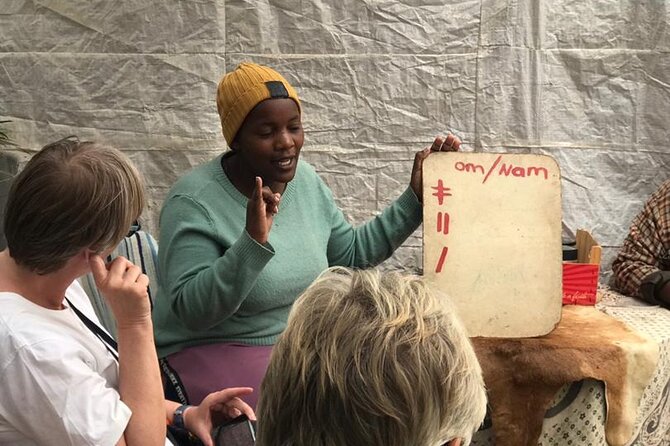
A visit to a traditional herbalist adds another layer to the program. This stop introduces local approaches to plants and healing, though the available information does not specify whether there is a demonstration, a consultation, or a discussion of particular remedies.
That lack of detail is worth keeping in mind. You should see the herbalist as an opportunity to learn about traditional knowledge, not as a substitute for medical advice. Listen to the explanations and ask how the practice fits within local culture and religion, rather than assuming that every remedy is suitable for personal use.
This part of the tour works well beside the Herero cultural discussion. One stop focuses on identity and belief, while the herbalist offers a practical look at knowledge passed through a community. Together, they show that culture is not only clothing, music, or food. It also includes ideas about health, nature, family, and daily decisions.
A short stop with the Damaranama community
The final cultural visit is a pop-in at the Damaranama tribe. The wording suggests a brief stop, so you should not expect a long workshop or a full performance unless the guide explains otherwise on the day.
Even a short visit can be useful when it forms part of a wider comparison. You have already heard about Herero culture, and this stop adds another community to the picture. The tour’s purpose is not to claim that one explanation can represent all of Namibia. Instead, it gives you several points of contact and encourages you to notice differences between groups.
The schedule may feel full by this stage. In three hours, the tour includes a drive, a walk through an open market, several cultural visits, a school, an informal settlement, an herbalist, and food. I would choose this outing for range and personal contact, not for slow, detailed study of one community.
Walking through the open market
The open-market walk gives the tour a simple, everyday stop between the more formal visits. Markets are useful places to notice how people sell goods, interact, and move through daily routines, but the available details do not identify the market or explain what is sold.
You may find this portion helpful for getting your bearings and seeing local commerce at close range. Keep your belongings secure, ask before taking photos, and let the guide explain what is appropriate. If you want to buy something, ask about prices and whether bargaining is expected rather than making assumptions.
Because the walk is part of a fast-moving route, you may not have much time to browse. That is not necessarily a flaw. It keeps the market visit connected to the main cultural purpose instead of turning the tour into a shopping trip.
Trying local foods at the end
The tour can finish with a taste of local foods, but this part is optional. That gives you useful flexibility. You can accept if you are eager to try something new, or decline if you have dietary concerns, allergies, or simply prefer to keep the meal separate.
The exact foods are not named, so I would ask what is being served before agreeing. You should also confirm whether the tasting is included in the $105.48 price or involves an additional charge, since the supplied information does not clarify that point.
Food can be a fitting end to the tour because it turns cultural discussion into a shared experience. Still, do not book this primarily as a food tour. The main value comes from the range of community visits and explanations. The tasting is an optional extra.
Is $105.48 a fair price?
At $105.48 per person, this is not the cheapest way to spend three hours in Swakopmund. The price makes more sense when you consider what is included in the route: pickup, a guide, several community stops, a school visit, and a group limited to six people.
A larger sightseeing vehicle might offer a lower per-person cost, but it would not necessarily provide the same access or conversational feel. Here, the small group is a real part of the value. You are paying for coordination and local introductions, not simply transport around town.
I would compare this price with your other Swakopmund options. If you want desert sports, wildlife, or a scenic coastal drive, this is not the right use of your money. If you have already seen the main sights and want a short cultural experience with personal contact, the price is easier to justify.
The optional food tasting should be clarified before booking. You should also confirm pickup details if you are arriving by cruise ship. One published account describes pickup from the port and flexibility when cruise arrangements became difficult, which is encouraging, but you should still provide your exact arrival information in advance.
Timing, group size, and practical planning
The experience lasts about three hours and accepts a maximum of six people. That small capacity is one of its strongest practical features. It should make it easier to hear the guide, ask questions, and adjust the pace when port or pickup complications arise.
Confirmation is provided at booking, and pickup is offered. Most people can participate, according to the supplied information, but no detailed accessibility information is provided. If you have mobility concerns, ask the provider about the walking portion, market surfaces, school access, and settlement visits before reserving.
The tour requires good weather and a minimum number of people. If weather causes cancellation, you can receive a different date or a full refund. If the minimum number is not met, you can choose another date or experience, or receive a full refund.
Free cancellation is available until 24 hours before the start time. Changes or cancellations made less than 24 hours before the start are not accepted for a refund. The cut-off follows local time, so check the timing carefully if you are booking from another country.
Who will get the most from this experience?
I would recommend this tour to you if you want to meet local people, hear about several Namibian communities, and see parts of Swakopmund beyond the center. It suits first-time visitors who have a short stay and want a focused introduction rather than a full-day excursion.
It also fits cruise passengers, provided the pickup and return timing work with your ship. The report of flexible handling during cruise delays is a useful sign, but you should still allow a safety margin and communicate your port schedule clearly.
Families may appreciate the school visit, though adults should prepare children to behave respectfully around the pupils. The tour can also suit culturally curious couples and solo visitors who prefer a small group.
I would be more cautious if you want a quiet, slow-paced outing. The itinerary covers a lot in three hours. You may leave with a wide view of local culture, but not a detailed understanding of every community or stop.
Should you book the Cultural Tour in Swakopmund?
Book it if you want a compact, people-focused introduction to Swakopmund and value access to several local settings over polished sightseeing. The best reasons are the six-person limit, pickup service, the Herero cultural discussion, and the chance to visit a school, informal settlement, herbalist, market, and Damaranama community in one morning or afternoon.
Think twice if you dislike quick transitions, are uncomfortable with community visits, or mainly want scenery and adventure. Ask ahead about the optional food tasting, walking conditions, and exact pickup timing.
For the right person, this is a worthwhile way to use three hours. It offers a broader picture of Swakopmund, with Nanette and Mercia praised for communication and flexibility. I would book it for cultural range and direct contact, while keeping expectations realistic about the short duration.
FAQ
How long does the Cultural Tour in Swakopmund last?
The tour lasts approximately three hours.
How many people can join the tour?
The experience has a maximum group size of six people.
Is pickup available?
Yes. Pickup is offered, and the experience has also accommodated pickup from the port.
What communities and cultural subjects are included?
The tour includes explanations of Namibian culture and different tribes, a visit with a Herero woman discussing Herero culture and religion, a stop at DRC informal settlement, a traditional herbalist, and a visit with the Damaranama tribe.
Is the local food tasting required?
No. Tasting local foods at the end is optional.
What happens if I need to cancel?
You can cancel up to 24 hours before the start time for a full refund. Cancellations or changes made less than 24 hours before the start are not accepted for a refund.
Written up most recently in Swakopmund
- Walvis Bay Shore Excursion: Flamingos, Dune 7, Swakopmund★ 5.0 · 3 reviews
- 7 Days-Desert adventure, Swakopmund & Etosha Lodging Tour★ 5.0 · 2 reviews
- 06 Days Etosha, Swakopmund and Sossusvlei | Guided Lodge★ 5.0 · 2 reviews
- Seal Kayaking at Pelican Point from Swakopmund★ 5.0 · 8 reviews
- Swakop River Valley & Spitzkoppe Full Day 4×4 tour from Walvis Bay★ 5.0 · 3 reviews
- Walvisbay Dune 7 and Swakopmund Town Half Day Guided Tour★ 4.0 · 4 reviews
- Private Half Day Coast Tour of Walvis Bay and Swakopmund City★ 4.0 · 6 reviews
- Unforgettable Half Day Adventure, Explore Sandwich Harbour★ 5.0 · 3 reviews
Historical Tours, compared.

Half-Day Windhoek City and Township Cultural Tour
Read our review →

Swakopmund Best Cultural Historical Township Tours Namibia
Read our review →

Explorer Historical Private Township Cultural Tours
Read our review →
Half Day Swakopmund Cultural Historical Township Tour
Read our review →Browse the lists this tour appears in