
Reviewed · TOWNSHIP TOURS
Half-Day Windhoek City and Township Cultural Tour
Windhoek reveals more when you leave the center. This three-hour tour combines major city landmarks with a visit to Katutura, local food at Oshetu Community Market, and the Penduka women’s craft project. I especially like the honest contrast between polished central Windhoek and everyday township life, along with the chance to taste kapana and mopane worms rather than simply drive past local neighborhoods. The main consideration is pace: three hours is enough for an introduction, but not enough for long visits at every stop.
I also like that hotel pickup, drop-off, and air-conditioned transport are included in the $37.38 price. Guides such as Shaka, Simon, Raymond, and Joseph have been praised for making the history personal and easy to follow. Still, one serious booking concern deserves attention: a past booking reportedly suffered from a missed pickup and poor phone contact, although the operator apologized and issued a full refund.
In This Review
- Key points at a glance
- Why this short Windhoek tour works
- Christuskirche, Windhoek’s most familiar landmark
- Parliament Gardens and Namibia’s independence story
- Old Fort, Ink Palace, and central Windhoek
- Katutura: seeing Windhoek beyond the center
- Oshetu Community Market and the kapana stop
- Penduka and handmade work by local women
- Guides make the difference
- Transport, group size, and the three-hour pace
- Who should book this Windhoek experience?
- Final verdict: a worthwhile first look at Windhoek
- FAQ
- How long does the Windhoek and Katutura tour last?
- How much does the tour cost?
- Is hotel pickup and drop-off included?
- What transportation is provided?
- Is food included?
- What is the minimum age for the tour?
- How many people can join the tour?
- Can I cancel for a full refund?
Key points at a glance
- Katutura adds the real context: You see a side of Windhoek that a standard downtown walk cannot provide, with explanations of local traditions and different levels of township life.
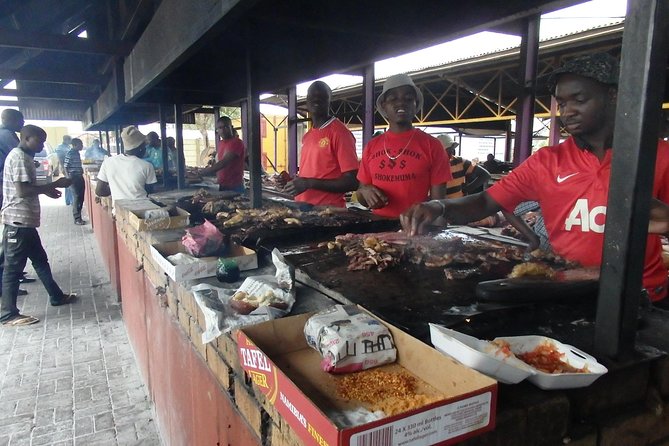
- Kapana is the tasty highlight: Oshetu Community Market offers grilled meat, mopane worms, mealie pap, and other local foods, with tastings included.
- History comes from local guides: Shaka, Simon, Raymond, and Joseph have all been praised for clear explanations and personal stories.
- Penduka supports local women: The workshop shows batik-style fabrics, embroidery, and other handmade products while connecting shopping with employment.
- The tour is compact and easy: Hotel pickup, a climate-controlled minivan, and a maximum group size of 13 make this a practical first look at Windhoek.
- Book with timing in mind: Free cancellation applies only until 24 hours before departure, and three hours means some stops receive only a short visit.
Why this short Windhoek tour works

Windhoek can be tricky to understand in a single glance. The city center presents official buildings, German colonial-era architecture, churches, gardens, and national symbols. A short drive later, Katutura offers a very different picture of how many residents live and how communities preserve food, craft, and social traditions.
That contrast is the heart of this experience. I would not choose it simply as a checklist tour of monuments. I would choose it because the route links Namibia’s political story with present-day culture. You get the names, dates, and independence story, but you also see markets, food, workshops, and neighborhoods.
The tour is listed at $37.38 per person. For that price, you receive transport between stops, a local guide, hotel pickup and drop-off, food tasting, and all taxes and handling charges. That is solid value if you want a broad introduction without arranging several short taxi rides or hiring a private vehicle.
The tradeoff is time. The tour lasts about three hours, and the Christuskirche and Parliament Gardens each receive about 15 minutes. Katutura gets roughly an hour, while the market and Penduka each receive about 30 minutes. You will get an overview, not a slow-paced cultural study.
More City Tours in Windhoek
- Windhoek: City and Township Tour
★ 4.8 · 430 reviews - Windhoek City Tour
★ 5.0 · 113 reviews - Windhoek: City Tour
★ 4.8 · 31 reviews
Christuskirche, Windhoek’s most familiar landmark
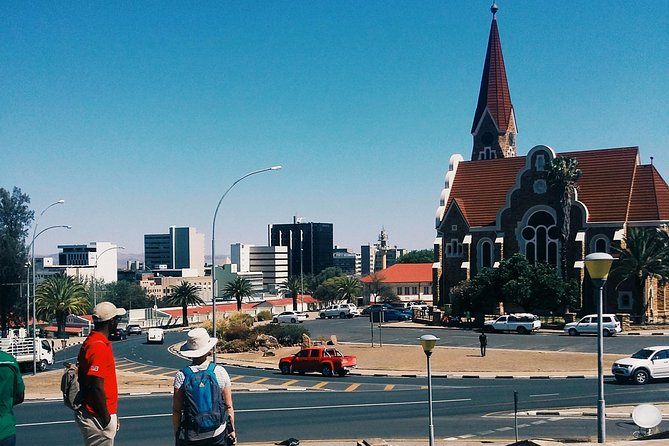
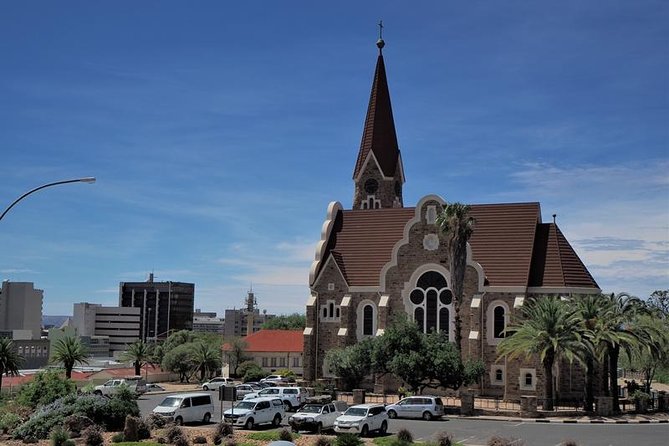
The tour begins at Christuskirche, the Lutheran church many people recognize from photographs of Windhoek. Its distinctive design makes it a useful starting point because it brings together the city’s religious, architectural, and colonial past in one compact stop.
You can look inside if the church is open. That qualification matters. Opening access is not guaranteed, so you should treat the interior as a possible bonus rather than the main reason for booking the tour.
The short stop works best when your guide explains what you are seeing instead of leaving you to take a quick photograph and return to the minivan. Past participants have specifically praised guides for explaining Windhoek’s history in a way that makes the buildings easier to place.
One practical note comes from a less positive experience. A visitor felt uncomfortable when local sellers were positioned near the church and marula fruit key rings were presented in a way that felt pressuring. I would keep a clear boundary if you do not want to buy anything. You can enjoy the church and continue with the tour without making a purchase.
Parliament Gardens and Namibia’s independence story
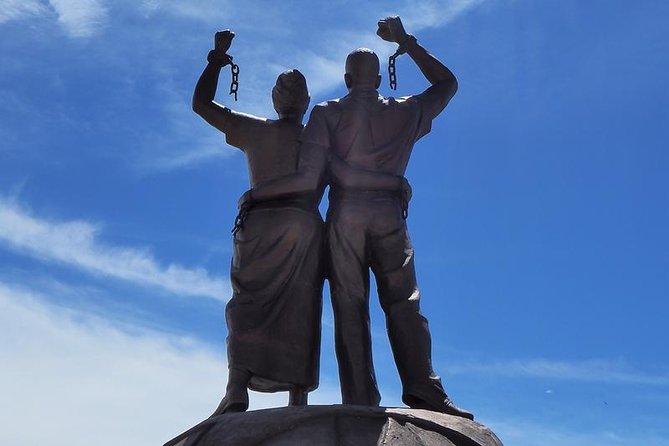
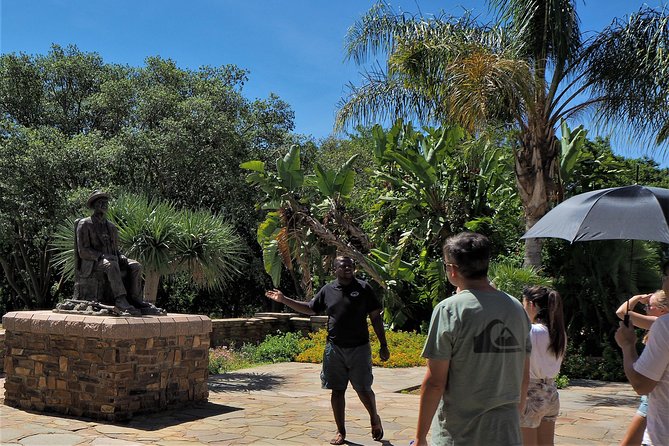
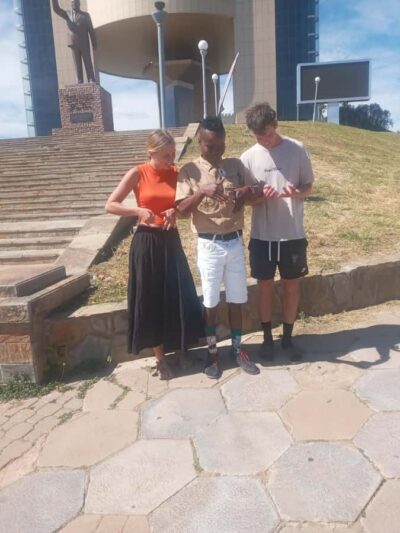
Parliament Gardens is the next formal stop. Its name comes from its location near Parliament House, and the gardens provide a calm setting for a serious part of the tour: Namibia’s political history and the people who fought for independence.
The guide also discusses Dr. Sam Nujoma, Namibia’s founding president, the independence struggle, and the country’s position some years after independence. The discussion includes the roles of Germany and South Africa before independence, so this is not a quick patriotic speech. You should expect an account that includes conflict, foreign control, and the difficult road toward self-government.
Several guides have received praise for this portion of the tour. Shaka is often singled out for his clear explanations of Windhoek. Simon has been described as patient and well informed, while Joseph has made the subject more personal by sharing stories from his childhood and life in Namibia. The guide assigned to your departure may differ, but the repeated praise suggests that the human guide is central to the experience.
The stop is brief, so do not expect a museum-style lesson. If Namibia’s modern politics and independence movement are your main interests, ask questions while you have the chance. The minivan portions between stops also provide useful time for context about the country’s past.
Old Fort, Ink Palace, and central Windhoek
The tour highlights other well-known central landmarks, including the Old Fort and the Ink Palace. The supplied route details do not assign each one a separate timed stop, so the exact amount of time at each may vary.
That is worth understanding before you book. The experience is not a long walking tour with extended interior visits. It is a guided city orientation, using a climate-controlled minivan to connect several points efficiently.
The Old Fort brings military and colonial history into the picture. The Ink Palace, now associated with Namibia’s government, gives you another look at the institutions that shape modern Windhoek. Your guide’s commentary is likely to be more valuable than the amount of time you spend standing at any single building.
The route also advertises views from Lover’s Hill. Since the detailed stop list does not give a separate duration for it, consider the viewpoint part of the wider city drive rather than a guaranteed long photo stop. If city views are important to you, ask the guide how much time is available on the day.
More Township Tours in Windhoek
- Katutura – Classic Township Experience
★ 5.0 · 22 reviews - Windhoek: Katutura Township and City Walking Tour
★ 4.7 · 15 reviews - Katutura Tour – Experience Genuine Namibian Life
★ 5.0 · 11 reviews - Katutura:tours and transport around the townships
★ 3.4 · 6 reviews
Katutura: seeing Windhoek beyond the center
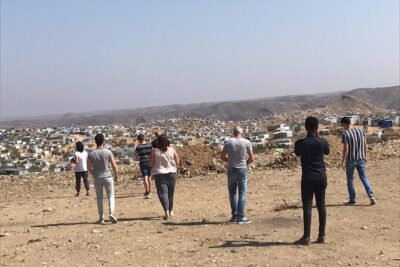
The move into Katutura changes the tone of the tour. The township is described as home to more than half of Windhoek’s residents, and it includes different suburbs and levels of income. That detail matters because Katutura should not be treated as one uniform place.
A good tour here needs respect and context. You are not being taken in merely to look at hardship. The purpose is to understand how communities live, how traditions continue, and how the city’s population reflects Namibia’s broad cultural mix.
The hour allocated to the township gives you enough time to see more than a passing street view. Your guide explains local life and traditions while driving through the area, and personal accounts can make the experience more meaningful. Raymond, for example, was praised for giving a solo participant plenty of attention and explaining both the city and township in detail.
I appreciate the route because it avoids presenting Windhoek as only its clean central monuments. At the same time, you should remain aware that this is a short hosted visit, not an invitation to wander independently through residential areas. Listen to the guide, follow instructions, and treat people and homes with discretion.
Oshetu Community Market and the kapana stop
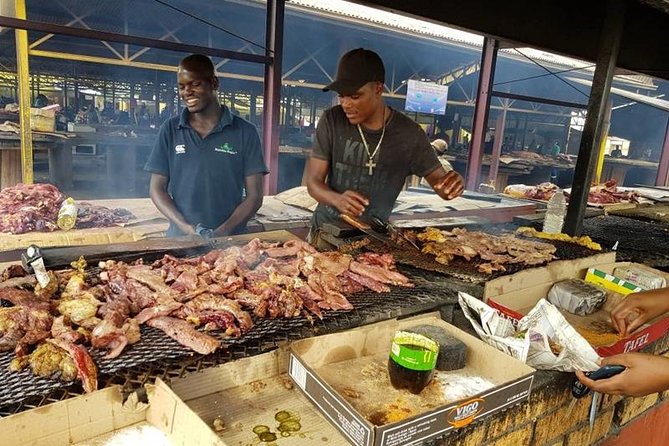
Oshetu Community Market is where the tour becomes most hands-on. You have about 30 minutes to explore the market and sample local foods, including kapana, mopane worms, mealie pap, and other delicacies.
Kapana is grilled meat, often served as a popular street food. The tasting gives you a direct connection to ordinary food culture rather than a polished restaurant version of Namibia. Freshly cooked beef strips were a particular favorite for one participant, and several people singled out the meat tasting as one of the most enjoyable moments.
Mopane worms are a different matter. They are a traditional food for many people in southern Africa, but the texture and appearance can challenge first-time tasters. You do not have to pretend every bite is your favorite. Trying a small portion is enough to make the experience memorable.
Food tasting is included, but drinks are not. Bring money if you want something to drink or decide to buy extra food. The short visit means you should not expect a full market meal, long browsing time, or an extended cooking demonstration.
This stop also helps explain why a township visit is more than a sightseeing drive. Food carries history, family habits, and regional identity. A bite of kapana can tell you something that a plaque outside a government building cannot.
Penduka and handmade work by local women
The final major stop is Penduka, a women’s project created to provide work opportunities. You can see the workshop and look at handmade goods including batik-style fabrics, embroidery, and other local crafts.
I like this stop because it gives the cultural visit a constructive ending. You are not only hearing about social and economic challenges. You are also seeing a project built around skills, income, and creative work.
Penduka is a good place to buy a useful souvenir if you want one. Handmade textiles and embroidery carry more meaning than a generic airport trinket, and your purchase can support the project directly. The stop lasts about 30 minutes, so you have time to browse, but not necessarily enough time for a long conversation with everyone working there.
The market and Penduka were repeatedly praised as favorite parts of the tour. That makes sense. Both places invite you to interact with Namibia through food and craft, not just through sightseeing.
Guides make the difference
This tour depends heavily on the guide. The vehicle gets you around, but the guide connects Christuskirche, Parliament Gardens, Katutura, the market, and Penduka into one understandable story.
Shaka has been praised for his explanations of Windhoek and its history. Simon is described as friendly, patient, smooth behind the wheel, and good at answering questions. Joseph has been remembered for personal stories and a relaxed sense of humor. Raymond provided especially detailed attention when only one person had booked.
Those details matter if you are deciding between a bare-bones city transfer and a guided cultural experience. You are paying for interpretation as much as transport.
The guide name is not guaranteed, and one report refers to two guides named Simon, so you should not book solely because you hope for one specific person. Still, the repeated praise for several guides is a strong sign that the operator has people who can make the subject accessible.
Transport, group size, and the three-hour pace
Transport is by air-conditioned minivan, with hotel pickup and drop-off included. In Windhoek’s dry climate, that is more than a minor comfort. You can move between central Windhoek, Katutura, the market, and Penduka without worrying about arranging each leg yourself.
The maximum group size is 13. That is large enough to offer some social energy but small enough for a guide to answer questions. Solo visitors can fit in comfortably, and one solo booking reportedly received full attention even without a larger group.
The tour is near public transportation, and most people can participate. The minimum age is five, with children required to travel alongside an adult. No special accessibility details are provided, so you should ask the operator directly if you have mobility needs or require a specific vehicle setup.
At 15 minutes per church and garden stop, one hour in Katutura, and half an hour each at the market and Penduka, the schedule is tight but logical. You see the city, understand the political story, enter the township, eat something local, and finish with crafts.
Who should book this Windhoek experience?
I would recommend this tour to first-time visitors who have only a short stay in Windhoek. It gives you a useful framework for the city before you continue into Namibia, especially if you are joining a longer safari afterward.
It also suits solo visitors. Hotel pickup, a small group setting, and a local guide remove much of the effort involved in organizing a city outing alone.
Families with children aged five and older can consider it, though adventurous food tasting and the serious history discussion may suit older children best. The short duration helps prevent the day from becoming tiring.
I would be less enthusiastic if you want long museum visits, detailed architecture tours, or a leisurely market morning. This is an introduction with several stops, not a slow examination of one neighborhood.
The experience has a 4.7 rating from 187 ratings, with 95 percent recommending it. That is a strong record, but it does not erase the one serious service failure involving a missed guide and unanswered phone calls. The operator accepted responsibility and offered a full refund, which is encouraging, but I would still confirm pickup details before departure.
Final verdict: a worthwhile first look at Windhoek
Book this tour if you want Windhoek explained through both its official center and its everyday communities. The best elements are the local guides, the Katutura visit, the kapana tasting, and the Penduka workshop.
At $37.38, the inclusion of transport, hotel pickup, food tasting, and guiding makes the cost reasonable. Just keep your expectations in line with the three-hour format. You will see many pieces of Windhoek, but you will not linger long at all of them.
I would choose it early in a Namibia trip, then use what you learn to decide where you want to spend more time. Confirm the pickup, keep an open mind at the market, and do not feel obliged to buy crafts or souvenirs. For a compact, thoughtful introduction to Windhoek and Katutura, this is a good choice.
FAQ
How long does the Windhoek and Katutura tour last?
The tour lasts approximately three hours.
How much does the tour cost?
The listed price is $37.38 per person.
Is hotel pickup and drop-off included?
Yes. Hotel pickup and drop-off are included.
What transportation is provided?
Transport between the attractions is provided in an air-conditioned minivan.
Is food included?
Yes. Food tasting is included, with examples such as kapana, mopane worms, and mealie pap. Drinks are not included.
What is the minimum age for the tour?
The minimum age is five. Children must be accompanied by an adult.
How many people can join the tour?
The tour has a maximum group size of 13 people.
Can I cancel for a full refund?
Yes, if you cancel at least 24 hours before the experience starts. Cancellations made within 24 hours are not refunded, and changes within that period are not accepted.
More Historical Tours in Windhoek
- From Walvis Bay: Sandwich Harbour World Heritage Site
★ 4.8 · 134 reviews - City Tour of Historical Swakopmund
★ 5.0 · 8 reviews - Swakopmund Best Cultural Historical Township Tours Namibia
★ 5.0 · 8 reviews - Etosha National Park: Himba Village Cultural Tour
★ 4.5 · 6 reviews
Written up most recently in Windhoek
- Windhoek: Okapuka Game Ranch Guided Tour★ 5.0 · 2 reviews
- Windhoek : Cheetah walk Experience★ 4.6 · 8 reviews
- Windhoek: City & Township tour. Vehicle, guide, kapana★ 4.2 · 4 reviews
- Windhoek: Katutura Township Tour with Local Guide★ 3.5 · 3 reviews
- Windhoek City Tour★ 3.5 · 7 reviews
- Knight Vibes: Bars, Shebeen, Clubs Crawl Windhoek★ 5.0 · 3 reviews
- Predator Encounter: Half-Day Carnivore Feeding Windhoek★ 4.0 · 5 reviews
- Discover the Routes of N/a’an ku sê.★ 4.0 · 6 reviews
Township Tours, compared.
Katutura Tour – Experience Genuine Namibian Life
Read our review →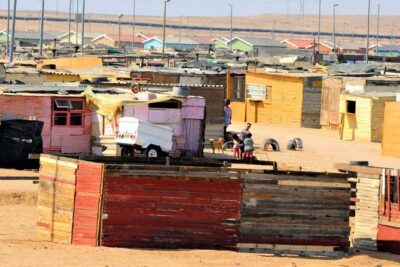
Swakopmund Best Cultural Historical Township Tours Namibia
Read our review →
Local Guided Walvisbay & Swakopmund Township Experience Day Tour
Read our review →Browse the lists this tour appears in