

Reviewed · TOWNSHIP TOURS
Half Day Swakopmund Cultural Historical Township Tour
Swakopmund has another story to tell. This three-hour private tour takes you beyond the seaside center into Mondesa and the Democratic Resettlement Community, where local guides explain township life, Namibia’s tribal cultures, and the area’s past. I like the personal guiding and the chance to eat traditional food in a local bar or restaurant. I also like that hotel pickup and drop-off are included, which makes the morning simple.
The main point to consider is that this is a walking and community-based experience, not a polished sightseeing circuit. You should expect ordinary streets, local businesses, translation help, and direct contact with daily life. The tour requires a moderate level of fitness, and the non-refundable booking policy means you need to be sure of your plans.
In This Review
- Key points at a glance
- Why this tour changes your view of Swakopmund
- Walking through Mondesa with a local guide
- Mondesa, the DRC, and the story of change
- Food, drinks, and the local welcome
- Learning about Damara, Herero, Ovambo, and Ovahimba culture
- What the three-hour schedule feels like
- How the price compares with the experience
- Who should book this Mondesa tour?
- Final call: book it for context, not spectacle
- FAQ
- Where does the tour take place?
- What time does the tour start?
- How long does the tour last?
- Is hotel pickup included?
- Is food included?
- Is this a private tour?
Key points at a glance
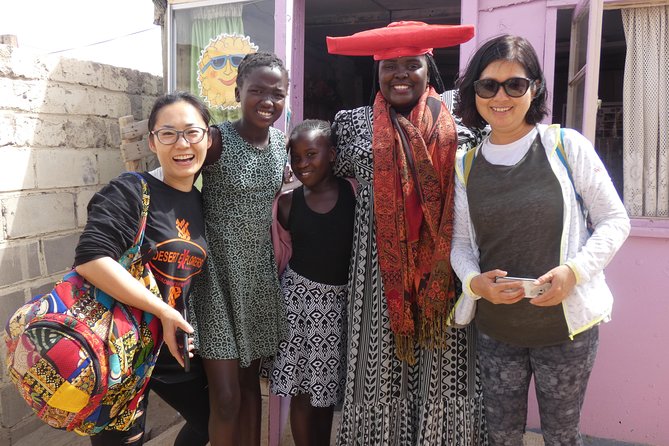
- Mondesa and the Democratic Resettlement Community: See two important Swakopmund communities while learning how they developed over time.
- Local guides with personal insight: Guides such as Nande, Theo, and Constance explain the area, introduce cultural traditions, and help translate.
- Traditional food tasting: Try local dishes and, if available during your visit, foods such as mopane worms and locally brewed beer.
- A people-first experience: Walk the streets, visit local places, and meet community members instead of staying only in the main tourist center.
- Damara, Herero, Ovambo, and Ovahimba culture: Get an introduction to several Namibian peoples and their traditions in one short outing.
- Private tour with hotel pickup: Your group takes part on its own, with a 10:00 am start and return to the meeting point.
Why this tour changes your view of Swakopmund
Swakopmund is easy to read as a German colonial seaside town, with orderly streets, old buildings, cafes, and shops aimed at visitors. That is only one part of the place. Mondesa and the Democratic Resettlement Community show you the modern social story that sits beyond the center.
I like this tour because it treats the township as a community rather than a backdrop. The focus is on people, language, food, family life, and local memory. Your guide explains how Mondesa and the DRC developed, then helps you understand the different groups who live in and around Swakopmund.
That approach matters. A quick drive past a township tells you almost nothing. Walking the streets, hearing children at play, smelling food prepared outdoors, and stopping at a local bar or restaurant gives you small details that a standard city tour misses. The experience is still short, but it gives you a more honest sense of the town.
The tour is also a good fit if you want cultural context before visiting other parts of Namibia. You will hear about Ovambo, Damara, Herero, and Ovahimba people, along with the idea of Ubuntu, a term connected with shared humanity and community. You will also learn a little of the local click language and practice saying Uuharapo.
More Township Tours in Swakopmund
- Swakopmund: Mondesa Township Day Tour Experience
★ 3.8 · 25 reviews - Local Guided Walvisbay & Swakopmund Township Experience Day Tour
★ 3.5 · 8 reviews - Swakopmund Best Cultural Historical Township Tours Namibia
★ 5.0 · 8 reviews
Walking through Mondesa with a local guide

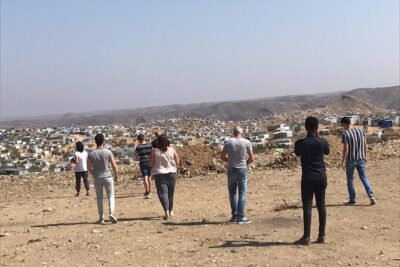
The tour begins with pickup in Swakopmund at 10:00 am, followed by a short transfer into the communities. The exact route can vary, but the central stop is the Mondesa area, where your guide leads you through the streets and explains what you are seeing.
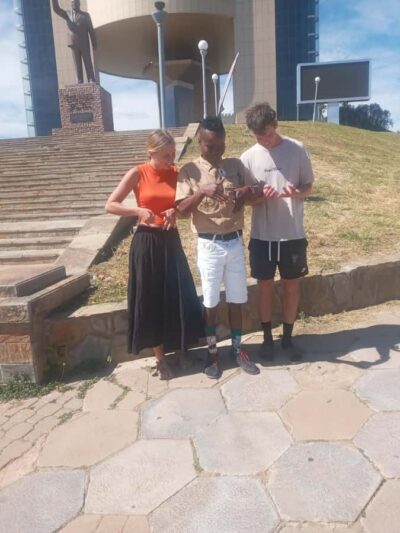
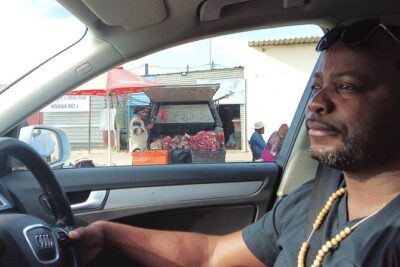
This is where the guide makes the largest difference. Nande Junia is connected with Explorer Tours and has been praised for clear communication and a strong ability to explain local life. Theo has also guided this experience, giving detailed explanations of Mondesa and the DRC. Constance is another guide associated with the tour and is described as especially good at explaining Namibia’s culture.
The guide is not simply pointing out buildings. You can expect help with social and historical context, as well as translation when you meet local people. That is important because a visitor cannot always tell what a place means, how it is used, or how to ask questions politely.
A guide also helps prevent the tour from turning into uncomfortable sightseeing. Your host can explain when it is appropriate to take photographs, how to greet people, and how to understand the setting without treating the community like a museum exhibit. The supplied description stresses warmth, friendliness, and humanity, but you should still approach the visit with respect and an open mind.
The main limitation is that the tour description does not give a fixed list of every street or building. If you want a precise architectural route or a long timeline of Swakopmund’s history, this may feel light. Its strength is direct contact and explanation, not a packed checklist of monuments.
Mondesa, the DRC, and the story of change
A major part of the experience is learning how Mondesa and the Democratic Resettlement Community developed over the years. Your guide explains the difference between the two areas and places them within the wider growth of Swakopmund.
This gives the tour more substance than a simple neighborhood walk. You are not only seeing where people live today. You are learning how communities formed, how residents were affected by past policies, and how the town changed over time.
The DRC is especially useful for understanding modern settlement patterns. The name refers to a resettlement community, and the tour uses the area to explain how people and neighborhoods developed beyond Swakopmund’s historic core. The available details do not promise a full academic account, so I would treat this as an accessible introduction rather than a specialist history lesson.
One of the strongest features is the guide’s personal storytelling style. A previous tour description praised a guide who narrated the development of Mondesa and the DRC with the confidence of someone who had lived close to the story. That kind of delivery can make a dry subject much easier to follow.
You may also stop at a local market or see an extensive display of local goods. The exact market details are not fixed in the published plan, so ask your guide what is operating on the day. Markets can be active places, but they can also change with weather, opening hours, and local schedules.
Food, drinks, and the local welcome
Food is not an extra here. Traditional food tasting and a two-course lunch or dinner are included, along with bottled water. The tour also includes a visit to a local restaurant and bar, giving you a chance to eat in a setting used by residents rather than in a hotel dining room.
I consider the meal a strong part of the $51.29 price. A three-hour private tour with transport, a guide, food tasting, a two-course meal, and water offers fair value, especially if you are traveling with a small private group and want more than a basic transfer.
The menu is not specified, so you should not book expecting one particular dish. The description does mention local mopane worms and locally brewed beer, which may be part of the food and drink experience. Availability can vary, and you should tell the operator about dietary needs before the tour if that applies to you.
Mopane worms are a familiar food in parts of southern Africa, but they may be outside your comfort zone. You do not need to approach the tasting as a test of bravery. Try what interests you, ask how it is prepared, and listen to the explanation. The point is to understand local food habits, not to collect the strangest snack possible.
The restaurant or bar stop also gives you a natural chance to speak with your guide and local residents. Conversation often reveals more than a formal explanation. You can ask about language, family traditions, work, food, and the differences among Namibia’s cultural groups.
Off the sand entirely, for a change:
- Walvis Bay: Marine Big 5 Luxury Catamaran Tour
★ 4.8 · 1,012 reviews - Swakopmund: Desert Dunes Quad Biking with Optional Sandboard
★ 4.9 · 590 reviews - Walvis Bay and Sandwich Harbour Tour
★ 4.8 · 483 reviews - Scenic Sandwich Harbour Tour
★ 5.0 · 277 reviews
Learning about Damara, Herero, Ovambo, and Ovahimba culture
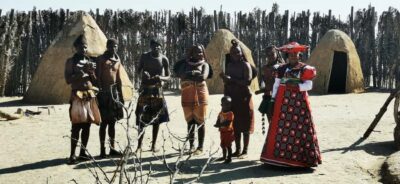
The tour introduces several of Namibia’s major cultural groups, including Ovambo, Damara, Herero, and Ovahimba people. That is a lot to cover in three hours, so expect a broad introduction rather than an in-depth study of each tradition.
The Damara and Herero focus is particularly useful because both communities are important to Namibia’s cultural story, yet many short Swakopmund visits provide little context. Your guide can explain differences in language, customs, and identity, helping you avoid treating all Namibians as one group.
The reference to the Ovahimba people adds a wider national perspective. You are not being taken to a remote Himba settlement, and the tour does not promise a full cultural performance. Instead, you receive an introduction to the people and traditions your guide considers important to understanding Namibia.
Language is another appealing part of the tour. You may learn to say Uuharapo and hear about the click language. This is a small detail, but it can change how you interact with people. Even a simple greeting shows that you are interested in more than taking pictures.
Your guide’s translation support is valuable here. Cultural terms do not always have a direct English equivalent, and a local guide can explain meaning, tone, and context. I would encourage you to ask questions, but keep them respectful and avoid expecting one person to speak for an entire ethnic group.
What the three-hour schedule feels like
The tour starts at 10:00 am and lasts about three hours. That makes it easy to fit into a day in Swakopmund. You can take the morning tour and still have the afternoon free for other activities, or use it near the start of your stay to get a better sense of the town.
Hotel pickup and drop-off are included, which is useful if you are staying away from the central meeting point or do not have a car. The listed start and end point is in Swakopmund, and the activity returns to the meeting point after the visit.
The tour is described as private, meaning only your group participates. That should make it easier to ask questions and keep the pace comfortable. The booking information also allows up to 100 people per booking, but a group of that size would feel very different from a small private outing. If group size matters to you, confirm the arrangement with Explorer Cultural Township Tours before paying.
You should be ready to walk on ordinary township streets and spend time outdoors. A moderate physical fitness level is required. Wear comfortable shoes, bring sun protection, and carry water even though bottled water is supplied.
The tour depends on good weather. If poor conditions cause cancellation, you are offered another date or a full refund. Outside that situation, the experience is non-refundable and cannot be changed, so check your schedule carefully.
How the price compares with the experience

At $51.29 per person, this is not the cheapest way to spend three hours in Swakopmund. It is also not just a ride through town. The cost includes a guide, private participation, hotel transport, traditional food tasting, a two-course meal, and bottled water.
I see the best value in the human contact. You are paying for interpretation, introductions, and access to places you would be unlikely to understand on your own. A self-guided walk might cost almost nothing, but it would not provide the same background or translation.
The price is easier to justify if you care about local food and culture. It is less compelling if you only want major sights, photographs, or a quick overview from a vehicle. You should also note that the tour is often booked about 23 days in advance, suggesting that planning ahead is sensible during busy periods.
The five-star rating is based on only four posted ratings, so I would not treat it as a large statistical sample. Still, the praise is consistent: clear explanations, friendly local contact, strong communication, and a feeling of getting beyond the usual visitor circuit. Those are exactly the areas where this tour promises its greatest value.
Who should book this Mondesa tour?

I would recommend it to you if you:
- Want to understand present-day Swakopmund, not only its historic center
- Prefer local guides and conversation to a scripted sightseeing ride
- Enjoy trying traditional food and hearing the story behind it
- Are comfortable walking through ordinary residential areas
- Want a private experience with hotel pickup
- Have a respectful interest in Namibian cultures and languages
I would be more cautious if you want a luxury outing, a carefully staged cultural show, or a fixed list of famous sights. The experience is community-focused and flexible. Some parts may feel informal, and the available details do not guarantee a particular menu, market stop, or exact walking route.
You should also think about your comfort with food tasting. Mopane worms and locally brewed beer are mentioned as possible parts of the experience, but the menu is not fully specified. Ask about options before booking if you have allergies, dietary restrictions, or strong food preferences.
Final call: book it for context, not spectacle
Book this tour if you want Swakopmund to make more sense. The best parts are the local guides, the walk through Mondesa and the DRC, the explanations of Damara and Herero culture, and the chance to share food in a local setting.
I would not choose it as a replacement for every other Swakopmund sight. I would choose it early in a Namibia trip, when local context can improve the rest of your journey. With its fair inclusion of transport and food, the $51.29 cost is reasonable for a private, people-centered experience.
Just arrive with realistic expectations. This is not a polished performance or a history lecture. It is a short, direct introduction to communities, culture, language, and everyday life, guided by people who know how to explain their home.
FAQ
Where does the tour take place?
The tour takes place in Mondesa and the Democratic Resettlement Community in Swakopmund, Namibia.
What time does the tour start?
The scheduled start time is 10:00 am.
How long does the tour last?
The experience lasts approximately three hours.
Is hotel pickup included?
Yes. Hotel pickup and drop-off are included, and the activity ends back at the meeting point in Swakopmund.
Is food included?
Yes. Traditional food tasting, a two-course lunch or dinner, lunch, and bottled water are included.
Is this a private tour?
Yes. It is listed as a private activity, with only your group participating. A maximum of 100 people is allowed per booking.
More Historical Tours in Swakopmund
- City Tour of Historical Swakopmund
★ 5.0 · 8 reviews - Explorer Historical Private Township Cultural Tours
★ 4.0 · 6 reviews - Cultural Tour in Swakopmund
★ 5.0 · 3 reviews - Half-Day Windhoek City and Township Cultural Tour
★ 4.5 · 187 reviews
Written up most recently in Swakopmund
- Walvis Bay Shore Excursion: Flamingos, Dune 7, Swakopmund★ 5.0 · 3 reviews
- 7 Days-Desert adventure, Swakopmund & Etosha Lodging Tour★ 5.0 · 2 reviews
- 06 Days Etosha, Swakopmund and Sossusvlei | Guided Lodge★ 5.0 · 2 reviews
- Seal Kayaking at Pelican Point from Swakopmund★ 5.0 · 8 reviews
- Swakop River Valley & Spitzkoppe Full Day 4×4 tour from Walvis Bay★ 5.0 · 3 reviews
- Walvisbay Dune 7 and Swakopmund Town Half Day Guided Tour★ 4.0 · 4 reviews
- Private Half Day Coast Tour of Walvis Bay and Swakopmund City★ 4.0 · 6 reviews
- Unforgettable Half Day Adventure, Explore Sandwich Harbour★ 5.0 · 3 reviews
Township Tours, compared.
Half-Day Windhoek City and Township Cultural Tour
Read our review →
Katutura Tour – Experience Genuine Namibian Life
Read our review →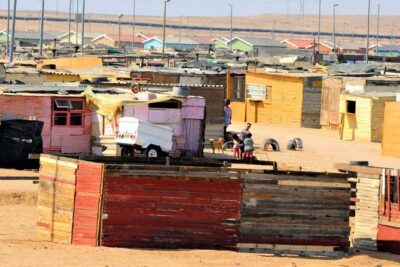
Swakopmund Best Cultural Historical Township Tours Namibia
Read our review →Browse the lists this tour appears in