
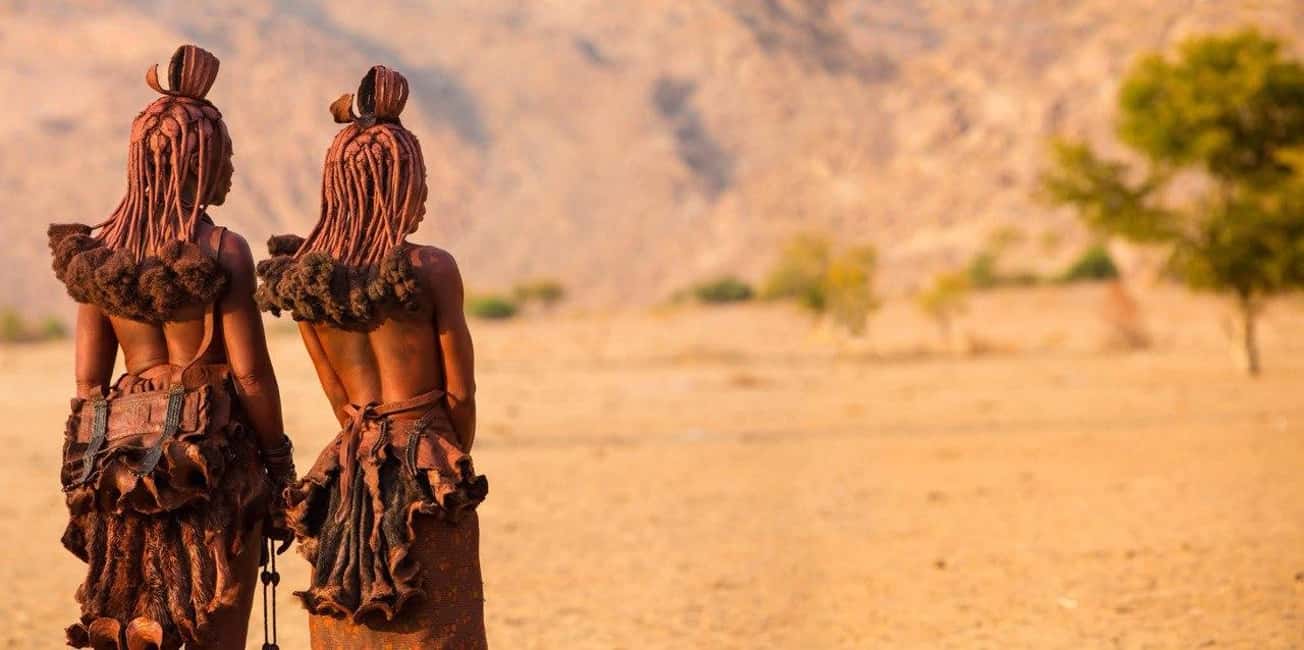
Reviewed · ETOSHA SAFARI TOURS
Etosha National Park: Himba Village Cultural Tour
Red ochre, cattle, and open sky make this short outing a memorable companion to an Etosha safari. From the southern Anderson Gate, you ride about 40 kilometers to a traditional Himba village, where a local guide explains family life, cattle, marriage customs, spiritual practices, clothing, and beauty traditions.
I especially like the small group limit of six, which gives you more room to ask questions, and the chance to support the village by buying handmade jewelry or other crafts. I also like that the visit offers more than a quick photo stop: you walk among mud huts, courtyards, and cattle kraals while learning how daily life is organized.
The main caution is clarity about time and cost. The advertised total is 150 minutes, yet the schedule also describes a 1.5-hour transfer plus a two-hour village visit. One verified booking also reported an extra 300 NAD entrance charge, even though the tour details say the village entrance is included. Confirm both points before you go.
In This Review
- Key points to know before you book
- From Anderson Gate to the Himba village
- Walking through huts, courtyards, and cattle kraals
- Understanding red ochre and Himba beauty traditions
- Dance, music, and handcrafts depend on the season
- Photography with respect
- Is $64 a fair price?
- Practical preparation for a hot, outdoor visit
- Who will enjoy this cultural stop most?
- Should you book the Himba village tour?
- FAQ
- Where does the Himba village tour begin?
- Can I join from Etosha’s northern entrance?
- How far is the village from Anderson Gate?
- How long does the activity last?
- Is transportation included?
- Is the village entrance fee included?
- What language does the guide speak?
- Are food and drinks provided?
- Is the tour suitable for wheelchair users?
Key points to know before you book
- Only available from Etosha’s southern Anderson Gate: Pickup is also possible at lodges within 30 kilometers of the gate, but this is not a northern Etosha excursion.
- A small group of up to six people: The limited size should make conversation with the guide easier and the village walk less crowded.
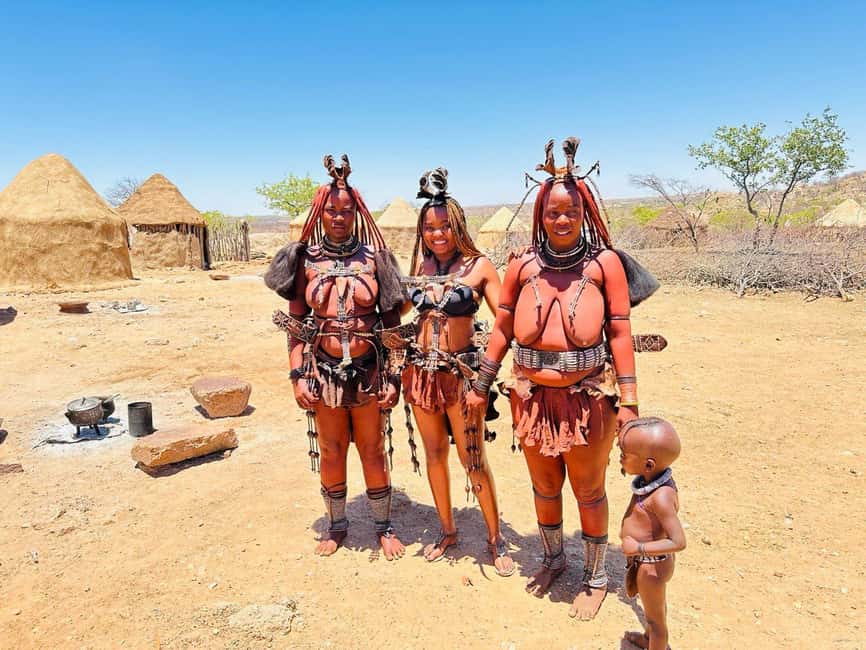
- Himba life is explained through daily details: Look for traditional huts, open courtyards, cattle kraals, crafts, clothing, and the use of red ochre and butter.
- The visit can include music and dance: These activities depend on the season, so treat them as a possible extra, not a guaranteed part of the outing.
- The price is $64 per person: Transportation, a local guide, and village entry are listed as included, but one booking reported paying 300 NAD separately.
- Bring your own water, food, sunscreen, and hat: Meals and drinks are not included, and the walk takes place outdoors.
From Anderson Gate to the Himba village
Your outing begins at Anderson Gate, Etosha National Park’s southern entrance. Pickup can also be arranged at a lodge within 30 kilometers of the gate, but the activity is specifically tied to this southern side of the park.
Transport is by jeep or SUV. The stated driving time is about 1.5 hours, so the transfer is a meaningful part of the experience rather than a quick hop down the road. You should be ready for a road trip after your safari, with water and sun protection close at hand.
The schedule needs a little checking here. The tour is advertised as lasting 150 minutes, but the detailed plan describes 1.5 hours of driving and two hours at the village. Those figures add up to more than three hours, before any delays. Ask the operator for the actual door-to-door timing when you reserve. That one question can prevent a rushed afternoon or a clash with another Etosha activity.
The vehicle transfer also shapes the value of the outing. You are not paying only for a village walk. You are paying for transport from the park area, a guide, and access to a cultural visit that would be difficult to arrange independently from Etosha. Still, if you are counting every hour of a short Namibia trip, the timing matters.
More Etosha Safaris in Namibia:
- Etosha National Park: Full or Half-Day Game Drive
★ 4.6 · 175 reviews - ETOSHA PARK SAFARI with local guides in 9-seater 4x4s
★ 5.0 · 87 reviews - 3 Day Etosha Budget Camping Safari
★ 5.0 · 37 reviews
Walking through huts, courtyards, and cattle kraals
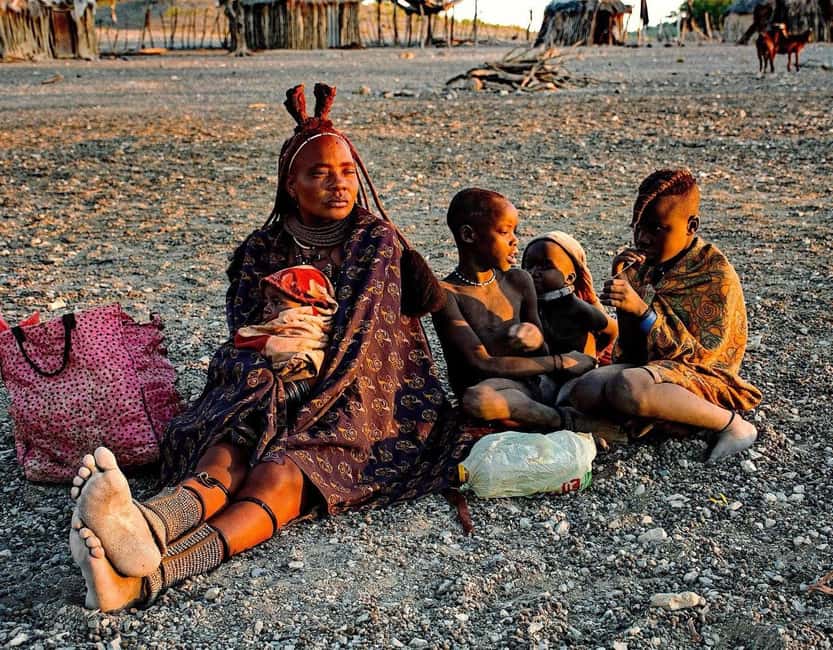
At the village, the guide leads you through the main areas of daily life. Traditional mud huts, known as ovahimba, sit near open courtyards and cattle kraals. These are not decorative pieces arranged for a museum. They help explain how family life, livestock, work, and community space fit together.
Cattle are central to Himba life, and the visit gives you a chance to understand that importance through the physical layout of the village. The kraals and meeting areas show how practical needs and social life overlap. You will also hear about animal husbandry, agriculture, and craftsmanship.
The best part of this format is the opportunity to ask questions as you go. A French visitor praised the guide for being attentive and available, which is exactly what you want here. A cultural visit becomes much more useful when the guide explains what you are seeing instead of leaving you to walk around and guess.
The village visit is also a chance to learn about Himba social structure and family bonds. Expect discussion of marriage customs, spiritual practices, and the community’s connection to the land. The information provided for this tour does not promise a formal lecture, so the depth may depend on the guide and on your questions. Come prepared to ask politely and listen carefully.
Understanding red ochre and Himba beauty traditions
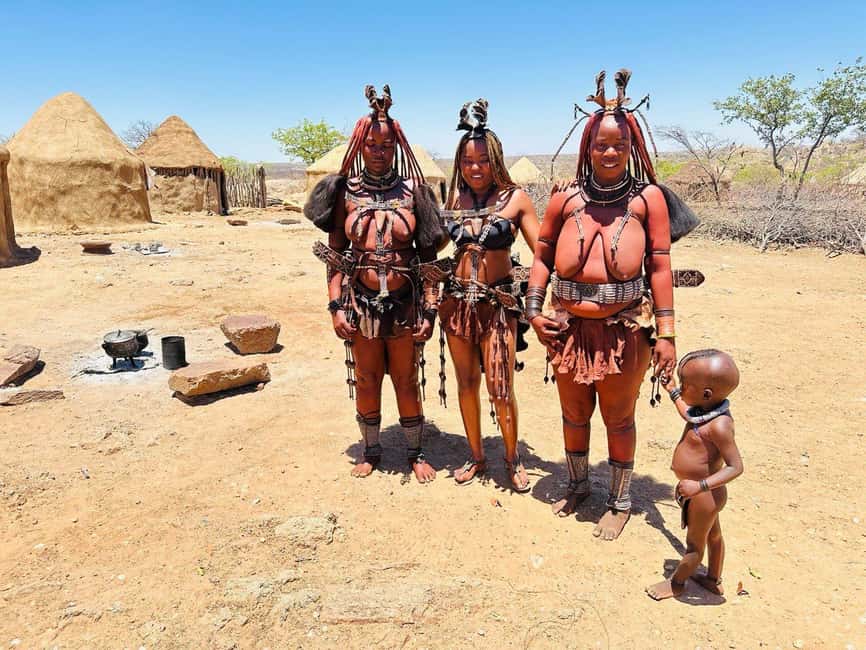
One of the most recognizable features of Himba appearance is the red ochre applied to women’s skin and hair, often mixed with butter. The tour explains the practice as part of Himba beauty traditions and gives you a chance to see the distinctive clothing, hairstyles, and adornment up close.
This is a good place to slow down and avoid treating people as scenery. The bright color makes striking photographs, but the people you meet are not props for a safari album. Ask before taking close portraits, follow the guide’s instructions, and remember that you are entering a living community rather than a staged photo set.
The supplied experiences give a mixed but useful picture. One French booking described the visit as a genuine look at everyday Himba life, with no obvious staging. Another booking from the Czech Republic felt the village activities seemed arranged for tourists and considered the trip overpriced. Both reactions are possible because cultural tourism can sit in an uncomfortable middle ground: a community may welcome visitors, offer demonstrations, and sell crafts while still presenting selected parts of life.
I would approach the visit with open eyes. You are receiving a guided introduction, not an unfiltered look at every part of village life. That does not make the experience worthless. It means you should judge it by the quality of the explanations, the respect shown by everyone involved, and the direct benefit to the community.
Dance, music, and handcrafts depend on the season
The village program may include traditional Himba dance and music. It may also include demonstrations of jewelry-making, pottery, or weaving. These skills are passed through generations, and seeing the work in progress can add a practical layer to the cultural lesson.
Do not book this expecting a guaranteed performance at a fixed time. The information says these activities depend on the season. If dance is important to you, ask before departure if it is planned for your date.
The craft market is one of the clearest ways to support the community directly. You have the opportunity to buy handmade goods, and the tour specifically presents this as a way for the Himba people to benefit from your visit. Bring enough cash if you intend to shop, since no payment method is specified.
Take time to look at the work before buying. Ask what an item is used for, how it was made, and who made it. That turns a quick purchase into a better exchange. It also helps you choose something you actually want rather than buying in a hurry because you feel pressured.
Other history-led days in Namibia:
- Half-Day Windhoek City and Township Cultural Tour
★ 4.5 · 187 reviews - From Walvis Bay: Sandwich Harbour World Heritage Site
★ 4.8 · 134 reviews - Swakopmund Best Cultural Historical Township Tours Namibia
★ 5.0 · 8 reviews - City Tour of Historical Swakopmund
★ 5.0 · 8 reviews
Photography with respect
The people, clothing, red ochre, huts, and Namibian scenery create strong photographic subjects. You can bring a camera, and photography is clearly part of the appeal. The combination of traditional dress and the dry setting makes for images that look very different from standard Etosha wildlife pictures.
Still, a camera can change the mood quickly. Ask permission before photographing individuals, especially children or anyone involved in a personal ritual. If the guide gives a rule about photography, follow it without debate.
I would also put the camera down for part of the visit. Watch how people use the courtyards and meeting spaces. Notice the cattle, the hut construction, and the handcraft process. You will take better pictures after you understand what you are looking at, and you will leave with more than a collection of portraits.
Is $64 a fair price?
At $64 per person, the tour can be fair value if the transport, guide, and village entrance are all truly included. The small group size improves the calculation. With no more than six participants, you should have a better chance to hear the guide and ask questions than on a large coach tour.
The price is harder to judge if the actual village time is short. One verified booking described the outing as mainly a roughly 30-minute transfer each way, with the total village experience feeling limited. That account conflicts with the stated 1.5-hour vehicle segment and two-hour village program, so you should get the timing in writing or confirm it directly.
There is also a cost warning. The tour information says entrance fees are included, but one booking reported an additional 300 NAD per person at the village. That may reflect a change, a local charge, or a misunderstanding, but it is important enough to check before paying. Ask this exact question: Is the 300 NAD village entrance fee included in the $64, or is it payable separately?
If the answer is clear and the full visit lasts as advertised, the price covers several useful pieces: a vehicle, a local guide, a small group, and a direct route from Etosha. If extra fees appear and the village visit is much shorter than expected, the value drops.
Practical preparation for a hot, outdoor visit
Wear comfortable walking shoes. The village walk includes open areas and uneven ground, and the activity is not suitable for wheelchair users or people with mobility impairments.
Bring a hat, sunscreen, and plenty of water. Food and drinks are not included, so pack your own supplies before leaving the park area. The supplied instructions also recommend bringing a camera, though respectful photography should come before getting the perfect image.
The tour is conducted in English. That is useful to know if you need detailed explanations about rituals or social customs. The small group format should make it easier to ask for clarification, especially if a cultural term or practice is unfamiliar.
You should also plan for an outdoor setting rather than a formal visitor center. There is no promise of shade, seating, meals, or drinks. Keep your essentials in a small day bag and avoid carrying anything you do not need.
Free cancellation is available up to 24 hours before the activity for a full refund, and you can reserve now and pay later. Those policies help if your Etosha plans may change, but they do not remove the need to verify the timing and entrance fee.
Who will enjoy this cultural stop most?
I would recommend this outing to you if you want a human encounter to balance Etosha’s animals. It suits curious visitors who enjoy asking questions, listening to local explanations, and learning how homes, cattle, family, belief, and craft work connect.
It is also a good fit if you are staying near Anderson Gate and want a half-day cultural option outside the usual game-drive pattern. The pickup area makes it practical for lodges near the southern entrance.
You may want to skip it if your main goal is wildlife viewing and your Etosha schedule is already tight. The transfer takes time, and the uncertain duration makes planning difficult. It is also not a good choice if you have mobility limitations or do not enjoy walking outdoors in strong sun.
Most of all, book it if you can approach the village with respect rather than expectation. You may see a dance, buy crafts, and take memorable photographs, but the lasting value comes from understanding the people and the setting behind those moments.
Should you book the Himba village tour?
Book this tour if you are based near Etosha’s southern gate, want a small group, and value a direct cultural exchange with a local guide. The praised points are clear: the guide can be attentive, the village offers a close look at Himba daily life, and craft purchases can put money directly into the community.
Before confirming, check two practical details: the exact total duration and the possible 300 NAD entrance fee. If both match your expectations, $64 can be a reasonable price for transport, guiding, and a village visit. If the operator cannot explain the schedule or charges clearly, I would be cautious, especially if you have limited time.
FAQ
Where does the Himba village tour begin?
It begins at Anderson Gate, the southern entrance to Etosha National Park. Pickup is also available at lodges located within 30 kilometers of Anderson Gate.
Can I join from Etosha’s northern entrance?
No. This activity is conducted only from Etosha’s southern entrance at Anderson Gate.
How far is the village from Anderson Gate?
The traditional village is located about 40 kilometers from Anderson Gate.
How long does the activity last?
The advertised duration is 150 minutes. The detailed schedule also lists a 1.5-hour jeep or SUV transfer and a two-hour village visit, so confirm the actual timing before booking.
Is transportation included?
Yes. Transportation by jeep or SUV is included.
Is the village entrance fee included?
The tour details say village entrance fees are included. However, one verified booking reported an additional charge of 300 NAD per person, so confirm this cost directly before departure.
What language does the guide speak?
The live tour guide speaks English.
Are food and drinks provided?
No. Meals and drinks are not included. Bring your own food, water, and other drinks.
Is the tour suitable for wheelchair users?
No. The activity is not suitable for wheelchair users or people with mobility impairments.
More National Parks in Namibia
- Safari in Etosha national park with professional tour guides born in Etosha.
★ 5.0 · 32 reviews - Etosha National Park: Full or Half-Day Game Drive
★ 4.6 · 22 reviews - 3 Day Camping tour at Etosha National Park
★ 5.0 · 5 reviews
Written up most recently in Namibia
- Windhoek: Okapuka Game Ranch Guided Tour★ 5.0 · 2 reviews
- Windhoek : Cheetah walk Experience★ 4.6 · 8 reviews
- Windhoek: City & Township tour. Vehicle, guide, kapana★ 4.2 · 4 reviews
- Windhoek: Katutura Township Tour with Local Guide★ 3.5 · 3 reviews
- Windhoek City Tour★ 3.5 · 7 reviews
- Walvis Bay Shore Excursion: Flamingos, Dune 7, Swakopmund★ 5.0 · 3 reviews
- Walvis Bay: Seal Kayaking Adventure with Brunch★ 4.1 · 3 reviews
- Knight Vibes: Bars, Shebeen, Clubs Crawl Windhoek★ 5.0 · 3 reviews
Etosha Safari Tours, compared.
ETOSHA PARK SAFARI with local guides in 9-seater 4x4s
Read our review →
6 Day Sand, Sea & Etosha Budget Camping Safari
Read our review →
Safari in Etosha national park with professional tour guides born in Etosha.
Read our review →
9 Day Etosha, Skeleton Coast and Sossusvlei Camping and Lodge Safari
Read our review →
4-Day Etosha And Swakopmund Accommodated Adventure from Windhoek
Read our review →Browse the lists this tour appears in