
Reviewed · WINDHOEK TOURS
10-Day Namibia Highlights Guided Tour from Windhoek
Namibia rewards the curious. This 10-day journey links the country’s biggest natural sights, from the red dunes of Sossusvlei to the wildlife-rich plains of Etosha National Park, without asking you to plan every lodge, road connection, or park visit yourself. Sossusvlei and Etosha are the major prizes, but the route also brings in Cape Cross, Twyfelfontein, Damaraland, the Moon Landscape, and Walvis Bay.
I like the way the tour combines striking scenery with small groups of up to 10 people, and I like that the price includes nine nights of accommodation, transport, a professional driver-guide, breakfasts, lunches, and dinners. The main consideration is the pace: Namibia is enormous, so some days involve long drives and several hours in the vehicle.
This is a good fit if you want Namibia’s main natural attractions in one organized trip. It is less suitable if you prefer to linger in one place, choose your own daily schedule, or spend much of the holiday in luxury lodges with plenty of free time.
In This Review
- Five things to know before booking
- Is $3,111.80 a fair price for 10 days?
- Day 1: Spreetshoogte Pass and the road to the Namib
- Day 2: Sossusvlei, Dune 45, Big Daddy, and Deadvlei
- Day 3: Namib-Naukluft scenery and the Tropic of Capricorn
- Day 4: Moon Landscape, Welwitschia, and Walvis Bay
- Day 5: Cape Cross seals and the road into Damaraland
- Day 6: Twyfelfontein and the Damara Living Museum
- Days 7 to 9: Three days inside Etosha National Park
- Day 10: Returning to Windhoek and the Namibia Craft Centre
- What the small-group format changes
- Accommodation, meals, and daily comfort
- Who should book this Namibia tour?
- Should you book it?
- FAQ
- Where does the tour start?
- How long is the tour?
- What meals are included?
- Is transportation included?
- How many people can join the tour?
- What is not included in the price?
Five things to know before booking
- Sossusvlei gets a full six-hour visit: You have time for Dune 45, Big Daddy, and Deadvlei rather than a quick roadside stop.
- Etosha receives three days of attention: Day seven includes an afternoon game drive, followed by morning and afternoon drives on days eight and nine.
- The route reaches the Atlantic coast: Cape Cross, Walvis Bay, the salt pans, and the Moon Landscape give the trip more variety than a desert-and-safari tour alone.
- The group is capped at 10 people: That is small enough to keep the vehicle experience more personal than a large coach trip.
- Most major costs are bundled: Nine nights, fuel, transport, local taxes, and all listed meals are included, but drinks, optional activities, insurance, airfare, and visas are not.
- The guide matters greatly: Past departures have featured guides such as Vincent, Petrus, Darius, Timan, Tulimo, Rambo, George, and Martha, with strong praise for their driving, organization, safety, and country knowledge.
Is $3,111.80 a fair price for 10 days?
At $3,111.80 per person, this tour is not a shoestring trip, but it covers many costs that can quickly pile up in Namibia. You are paying for nine nights in lodges or guesthouses, a vehicle and fuel, a driver-guide, park and site admissions where listed, local taxes, and 28 included meals: 10 lunches, nine dinners, and nine breakfasts.
That package matters in Namibia. Distances are large, roads can be remote, and the main attractions are spread across the country. Organizing the same route independently would mean arranging a suitable vehicle, accommodation, park entry, fuel, meals, and navigation. You would also need to manage the practical details of reaching places such as Sossusvlei, Cape Cross, Twyfelfontein, and Etosha in the right order.
The value depends partly on the accommodation level assigned to your booking. The supplied information identifies the lodging as lodge or guesthouse accommodation but does not name each property or promise a specific luxury category. Some previous tours have used comfortable, clean mid-level lodges, while other departures have received especially favorable comments about the quality of their accommodation.
Food deserves a realistic note. The package includes meals, which is convenient, but the standard may vary by departure and accommodation. One unhappy account described skipped or disappointing lunches on a longer camping trip, while other accounts praised the food and lodges. If meals are important to you, send your dietary needs when booking and ask what a typical lunch looks like on driving days.
More out of Windhoek:
- Windhoek: City and Township Tour
★ 4.8 · 430 reviews - Half-Day Windhoek City and Township Cultural Tour
★ 4.5 · 187 reviews - Windhoek: Bushman Walk with the San
★ 4.9 · 145 reviews
Day 1: Spreetshoogte Pass and the road to the Namib
The tour begins with pickup at Hosea Kutako International Airport at 8:00 a.m. That early start makes sense if your flight schedule allows it, but you should plan your arrival carefully. The first stop is Spreetshoogte Pass, one of Namibia’s most dramatic viewpoints.
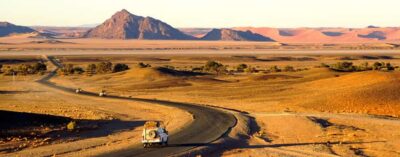
The pass gives you an immediate sense of Namibia’s scale. Instead of easing into the country with a city tour, you are quickly looking across broad desert scenery and open mountain country. This is a scenic introduction, not a long activity, with about two hours assigned to the stop.
Lunch is planned at Solitaire, a small desert oasis known as a useful pause on the route. It is the kind of stop that helps break up a long transfer and gives you a chance to eat before continuing toward the Namib.
Day 2: Sossusvlei, Dune 45, Big Daddy, and Deadvlei
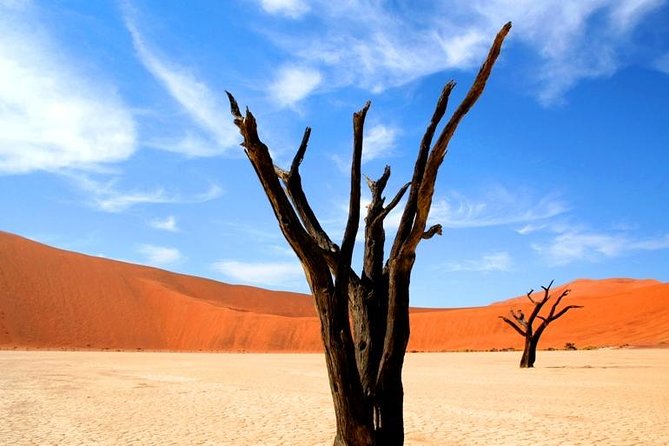
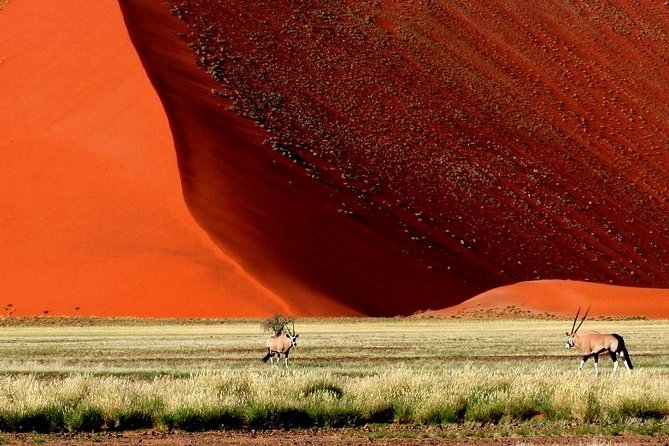
Day two is the trip’s great visual event. Sossusvlei sits inside the Namib Sand Sea, a UNESCO World Heritage site known for immense orange dunes, stark white clay pans, and dead camel thorn trees at Deadvlei.
You have about six hours in the area, which is valuable. Sossusvlei is not a place to rush through with a quick photograph from a parking area. The scheduled visit includes Dune 45, Big Daddy, and Deadvlei, giving you several ways to experience the dunes.
Dune 45 is famous for its shape and access, while Big Daddy offers the more demanding dune experience for anyone who wants to climb. Deadvlei provides the most unusual contrast: pale ground, dark tree trunks, and walls of red sand. You should be ready for sun, heat, sand, and walking. The information does not specify how much climbing is required or which transfer arrangements are used inside the site, so ask your operator if mobility or hiking effort is a concern.
This is one of the strongest parts of the program. You get the iconic Namib Desert without having to arrange park access or work out the route yourself.
Day 3: Namib-Naukluft scenery and the Tropic of Capricorn
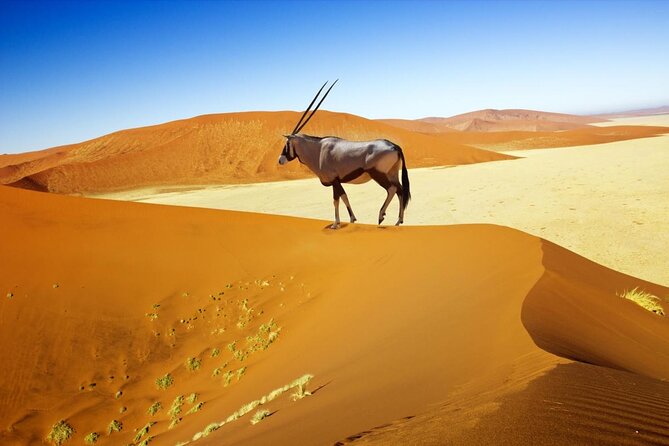
The third day continues through Namib-Naukluft National Park. The appeal here is not one single landmark but the sheer reach of the desert. The route offers views across open country, with possible sightings of oryx, springbok, mountain zebra, giraffe, and ostrich.
Wildlife here is less predictable than at Etosha. You might see animals grazing in the open, or you might spend much of the day enjoying the scenery and the changing colors of the desert. That uncertainty is part of the experience, but anyone expecting a game drive every day should adjust expectations.
A stop at the Tropic of Capricorn adds a small geographical ritual to the day. It is a simple photo opportunity, yet it gives the route a sense of place and makes the long drive feel connected to the wider world.
A handful of other Windhoek outings to read first
- Namibia Self-Driving Audio Guide (in English & German)
★ 4.7 · 57 reviews - Private Guided Walking Tour with the San in Windhoek
★ 5.0 · 20 reviews - 3 Days Amazing Red Dunes of Sossusvlei | Private Guided Tour
★ 5.0 · 10 reviews - From Windhoek: Budget Sossusvlei Guided 2-Day Tour
★ 4.9 · 9 reviews
Day 4: Moon Landscape, Welwitschia, and Walvis Bay
The scenery changes sharply as the tour reaches the coast. The Moon Landscape is a rugged area near Swakopmund, shaped by bare rock and weathered ground. It looks less like a conventional desert and more like a view from another planet, which explains the name.
The day also introduces Welwitschia mirabilis, a strange and ancient desert plant sometimes called a living fossil. The plant’s survival in such a dry setting is one of the more unusual natural-history moments on the trip. This stop rewards people who enjoy botany and geology as much as wildlife.
In the afternoon, the route reaches Walvis Bay’s salt pans and lagoon. The salt works bring color and geometric patterns to the coastal scenery, while the lagoon adds a different kind of habitat from the dry interior. The planned stop lasts about four hours, so this is a lighter day than the long desert and park drives.
Day 5: Cape Cross seals and the road into Damaraland
Cape Cross requires a long coastal run, with the route traveling about 150 kilometers north along the salt road. The destination is a large Cape fur seal colony. The sight, sound, and smell can be intense, but that is exactly what makes it memorable. This is not a polished animal attraction. It is a busy, noisy natural colony where you see the animals behaving in great numbers.
After Cape Cross, the road turns inland toward the Brandberg Massif and Damaraland. The change from Atlantic coast to dry mountain country is one of the trip’s best transitions. Along the way, you might spot ostriches, jackals, hyenas, and springbok, though sightings are never guaranteed.
The day is scheduled for about six hours. That does not mean six hours of activities, since much of the time is spent covering distance. Namibia’s size is the central fact of this tour. The reward is variety, but the cost is time on the road.
Day 6: Twyfelfontein and the Damara Living Museum
Twyfelfontein is one of Namibia’s essential cultural stops. The UNESCO-listed site contains one of Africa’s largest concentrations of rock engravings, with more than 2,000 works recorded in the rusty-orange rock.
The carvings connect the area to San hunter-gatherer communities and their ritual and economic practices. A guide can make a major difference here because the images are not simply decoration. Their meaning, setting, and relationship to the surrounding rock formations turn a short walk into a more thoughtful visit.
The day also includes a meeting at the Damara Living Museum. This offers an introduction to Damara traditions and daily life through a cultural presentation. You should approach it with respect and an open mind, remembering that staged cultural encounters can only show part of a community’s story.
With about four hours planned, day six is not overloaded. The surrounding Damaraland scenery, wildlife, and rock formations fill out the experience without requiring another exhausting full-day transfer.
Days 7 to 9: Three days inside Etosha National Park
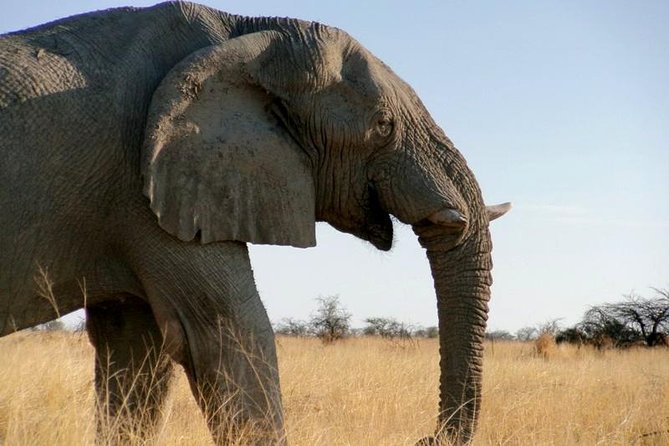
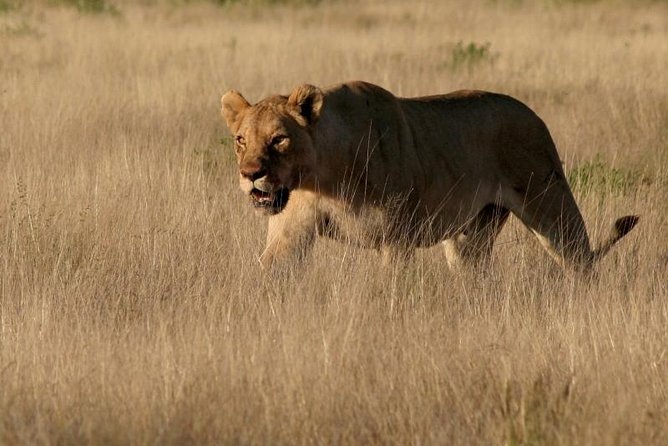
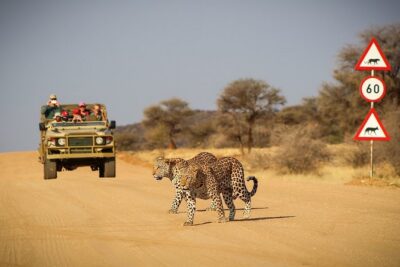
Etosha is where the tour shifts from scenic travel to sustained wildlife viewing. Day seven brings an afternoon game drive after the journey toward the park, while days eight and nine include both morning and afternoon drives. That gives you repeated chances to see animals in different conditions and locations.
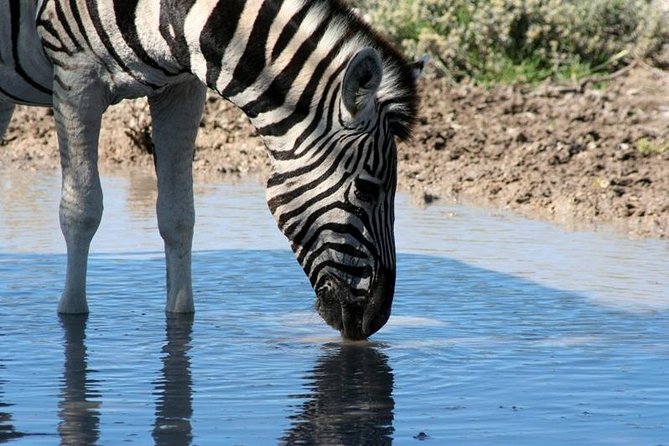
The park is known for its pale plains and the broad Etosha Pan. You might see giraffes, zebras, antelope, elephants, rhinos, lions, leopards, cheetahs, and hyenas. The list is impressive, but nature does not follow a timetable. A good guide will help you watch carefully, read the surroundings, and understand that a quiet drive can be just as worthwhile as a dramatic sighting.
Three days is a real strength. A single game drive can leave you feeling lucky or unlucky based on the hour and route. Morning and afternoon outings spread across three days give you more opportunity and prevent Etosha from becoming a quick checkbox.
The program lists five hours for the first park day and seven hours for each of the next two. Those are substantial outings. You should be comfortable sitting in a vehicle for long periods, getting up early when scheduled, and staying patient when wildlife is not immediately visible.
The guide is especially important in Etosha. Past guides named Vincent, Petrus, Darius, Timan, Tulimo, and Rambo received strong praise for safe driving, organization, and their ability to explain Namibian wildlife and culture. One account singled out a guide for making the trip both fun and safe, while others praised guides for answering questions and solving problems on the road.
Day 10: Returning to Windhoek and the Namibia Craft Centre
After breakfast, the group leaves Etosha and heads south toward Windhoek. This is another long transfer, but it ends with time at the Namibia Craft Centre.
The market is a practical final stop for gifts, souvenirs, and local crafts. It also gives you a last chance to take photographs and make purchases before reaching the capital. Keep your expectations sensible: the stop is listed as shopping time, not a guided cultural tour.
The program ends in Windhoek, although the supplied details do not specify the exact drop-off time or location. If you are catching a flight the same day, confirm the timing before you book flights or arrange onward transport.
What the small-group format changes
The maximum group size is 10 people, and small groups or family groups are welcome. That is a useful middle ground. You avoid the scale of a large coach, yet you still have the structure and shared cost of a group departure.
A small group also makes the guide’s role more visible. You can ask questions, discuss sightings, and get help with practical problems without competing with dozens of other people. The tradeoff is that you have less control than on a private trip. The vehicle schedule, meal stops, and pace must work for the group as a whole.
Solo bookings require a minimum of two people, although solo departures may sometimes be arranged. Ask about this before paying, since confirmation is subject to availability.
Accommodation, meals, and daily comfort
Nine nights of lodge or guesthouse accommodation are included. This is a major advantage over a camping program if you want a bed, a proper room, and a simpler end to each long day. The supplied details do not name the lodges, so you should ask about the accommodation category and locations before booking.
Breakfast is included on nine mornings, lunch on all 10 days, and dinner on nine nights. Drinks and alcohol cost extra. If you have dietary requirements, provide them when you book rather than waiting until arrival.
Do not pack as if this were a city holiday. You will need practical clothing for heat, dust, sun, and long drives. You are also responsible for personal equipment insurance, including cover for cameras and laptops.
Who should book this Namibia tour?
I would choose this tour if you have 10 days, want the country’s major natural sights, and prefer a guide to handle the driving and park logistics. It suits first-time visitors to Namibia especially well because the route gives you desert, coast, culture, mountains, and wildlife in one trip.
It also works for couples, families with children accompanied by an adult, and small groups of friends. Most people can participate, and the tour is near public transportation, though the main experience takes place far beyond towns.
I would hesitate if you dislike long road days or need a flexible schedule. The program covers a lot of ground, and some listed stop times include the driving needed to reach remote places. You should also consider a private or extended trip if you want Fish River Canyon, a longer stay in one region, or more time for optional activities.
Should you book it?
Book this tour if efficient coverage matters more than slow travel. The strongest reasons are the full Sossusvlei visit, three days of Etosha game drives, included transport and lodging, and the support of a professional driver-guide.
Before committing, confirm the exact lodges, vehicle type, daily driving expectations, lunch arrangements, and any optional costs. The non-refundable booking condition also deserves attention, so make sure your dates and travel documents are settled first.
For a first Namibia visit, this is a sensible route with a strong mix of scenery and wildlife. It is busy, but it does not waste your limited time on the country’s biggest sights.
FAQ
Where does the tour start?
Pickup starts at Hosea Kutako International Airport near Windhoek, Namibia, at 8:00 a.m.
How long is the tour?
The tour lasts approximately 10 days and includes nine nights of lodge or guesthouse accommodation.
What meals are included?
The package includes 10 lunches, nine dinners, and nine breakfasts. Drinks and alcoholic drinks are not included.
Is transportation included?
Yes. Transport, fuel, local taxes, and a professional driver-guide are included.
How many people can join the tour?
The maximum group size is 10 people. A minimum of two people per booking is required, although solo tours may sometimes be arranged.
What is not included in the price?
Airfare, travel insurance, visas if required, personal equipment insurance, drinks, alcoholic drinks, and optional activities are not included.
Written up most recently in Windhoek
- Windhoek: Okapuka Game Ranch Guided Tour★ 5.0 · 2 reviews
- Windhoek: Katutura Township Tour with Local Guide★ 3.5 · 3 reviews
- Windhoek : Cheetah walk Experience★ 4.6 · 8 reviews
- Windhoek: City & Township tour. Vehicle, guide, kapana★ 4.2 · 4 reviews
- Windhoek City Tour★ 3.5 · 7 reviews
- Knight Vibes: Bars, Shebeen, Clubs Crawl Windhoek★ 5.0 · 3 reviews
- Predator Encounter: Half-Day Carnivore Feeding Windhoek★ 4.0 · 5 reviews
- Discover the Routes of N/a’an ku sê.★ 4.0 · 6 reviews
Windhoek Tours, compared.

Half-Day Windhoek City and Township Cultural Tour
Read our review →
6-Day Dunes and Wildlife Accommodated Safari from Windhoek
Read our review →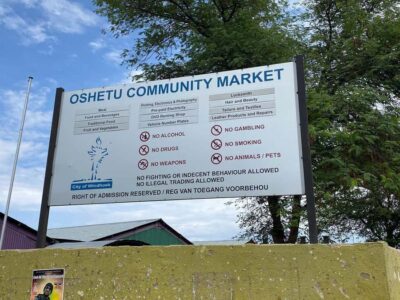
Namibia Self-Driving Audio Guide (in English & German)
Read our review →Browse the lists this tour appears in