
Reviewed · PRIVATE TOURS IN WINDHOEK
Private Guided Walking Tour with the San in Windhoek
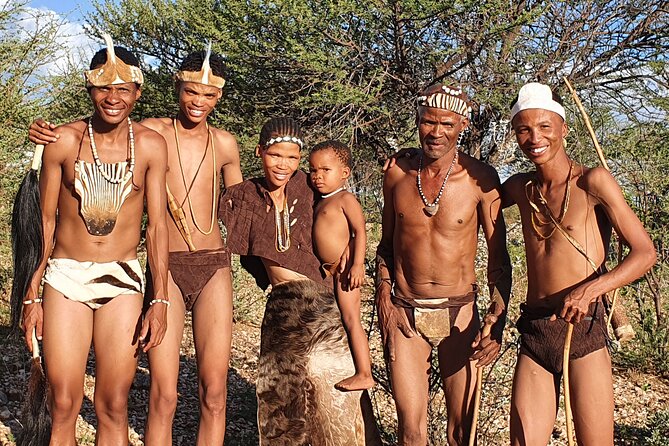
Bush skills come alive just outside Windhoek. This private walking tour takes you to Brakwater, where San guides share practical traditions through plant use, animal tracking, click-language, firemaking, dance, and ostrich-egg jewelry. I like the small private format and the chance to learn directly from San people rather than through a museum display. I also like that the walk is easy enough for most ages and fitness levels.
The main consideration is timing. The outing lasts about three hours, but the actual bush walk takes two hours, with roughly 30 minutes needed to reach the farm from central Windhoek. You will also pay extra for drinks and handmade crafts, and explanations may pass through an interpreter.
In This Review
- Key points to know before you book
- From Windhoek to the Brakwater farm
- The first steps of the two-hour bush walk
- Learning the uses of bush plants
- Click-language and reading animal tracks
- Traditional firemaking and a San dance
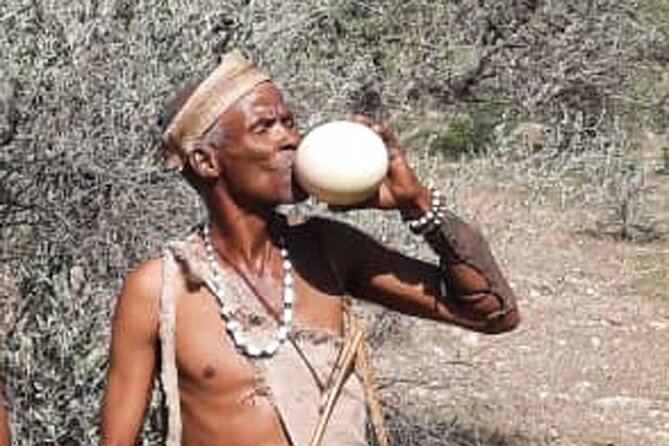
- Ostrich-egg jewelry and handmade crafts
- What the price of $38.33 really buys
- Who will enjoy this tour most
- Practical tips for a better visit
- Should you book the San walking tour?
- FAQ
- Where does the San walking tour begin?
- Where does the activity end?
- How long does the tour last?
- Is pickup available?
- Is the walk suitable for children?
- Is this a private tour?
- What language is the tour conducted in?
- What activities are included?
- Are drinks and crafts included?
Key points to know before you book
- A two-hour walk in the bush: The tour takes place at a farm in Brakwater, about half an hour from Windhoek.
- Practical San traditions: You learn about useful bush plants, animal tracks, traditional firemaking, and hunting-gathering skills.
- A private group experience: Only your own group participates, which gives you more room for questions.
- Culture taught through demonstration: Click-language, dance, plant knowledge, and jewelry-making make the visit active rather than lecture-based.
- A low-cost cultural outing: At $38.33 per person, the price is reasonable for a private guide, two-hour activity, and access to a nonprofit project.
- Small purchases support the project: Ostrich-egg jewelry and Bushmen drawings cost about 100 to 200 NAD, while drinks cost 20 NAD.
From Windhoek to the Brakwater farm
Your meeting point is Human Dreams Namibia at J332+2M3 in Windhoek. The farm is in Brakwater, a short drive from the city center. One account puts the trip at about 25 minutes, while the tour information allows roughly half an hour, so give yourself a little breathing room.
Pickup is offered, but confirm the exact arrangement when you book. The listed meeting point is the Human Dreams Namibia farm, and the activity ends back there. Public transportation is nearby, though the information does not specify the route or stop, so private transport or arranged pickup may be simpler.
The farm also houses an animal-assisted therapy center run by Human Dreams Namibia, a nonprofit organization. Before the walk begins, you receive a short introduction to the organization’s work. This gives the visit a wider purpose: your payment is not only buying a guided outing, but also helping create income for San people and supporting a place where older skills can be passed to younger people.
That matters because the tour is not presenting San culture as a frozen picture from the past. Part of the discussion addresses the San people’s current situation in Namibia. You get a chance to connect traditional skills with present-day life, which makes the visit more honest and useful.
More Private Tours in Windhoek
- Private Transfers between Windhoek and Hosea Kutako Int. Airport
★ 5.0 · 34 reviews - 3 Days Amazing Red Dunes of Sossusvlei | Private Guided Tour
★ 5.0 · 10 reviews - 10-Day Private Yoga Adventure in Namibia
★ 5.0 · 7 reviews
The first steps of the two-hour bush walk
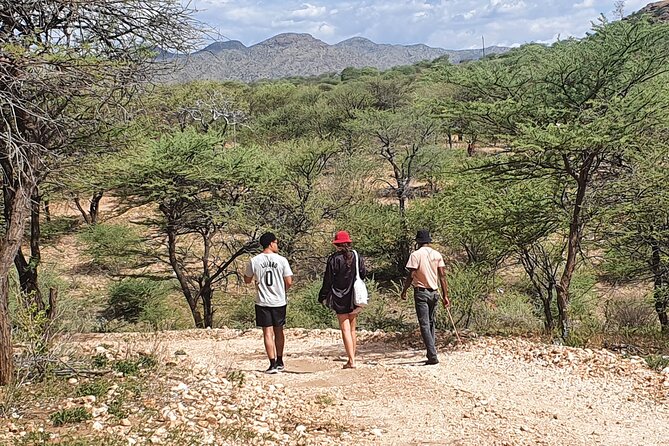
The walk is designed to be easy. The tour information says it suits all ages and fitness levels, and most people can participate. Still, you are walking outdoors in natural surroundings, so comfortable shoes, sun protection, and water make sense.
The San guides lead you through the farm’s bush surroundings and stop at different points for demonstrations. This stop-and-talk rhythm keeps the outing manageable. You are not expected to cover a long route or keep up with a fast hiking group.
The focus is not on scenery alone. The bush becomes a classroom. A plant may be explained as food, medicine, a tool, or part of everyday survival. The value comes from seeing the plant in its setting and hearing how it fits into a practical way of life.
I would pay close attention to the guides’ demonstrations rather than treating the walk as a simple nature stroll. The most rewarding parts are likely to be the small details: what to look for, how to identify useful plants, and how a person with close knowledge of the bush reads signs that you might walk past.
Learning the uses of bush plants
Plant knowledge is one of the strongest parts of this outing. The San guides explain how particular bush plants can serve medicinal and practical purposes. You are not simply given a list of names. The activity connects plants with the needs of daily life.
This is a good place to ask questions. If you want to understand how a plant is prepared or used, ask the guide or interpreter to explain the process clearly. The information says the tour includes an English-speaking guide, and one praised guide, France, is described as especially informative. An interpreter helps explain the San guides’ words and handles questions.
That language support is important. Communication may not be completely direct at every moment, but the format gives you a way to ask follow-up questions. You should expect interpretation to be part of the experience rather than assume every explanation will be delivered in fluent English by the San guides themselves.
The plant section also gives you a better sense of why oral teaching matters. A skill can disappear when it is no longer used or passed down. By teaching the plants to paying visitors, the San guides help keep this knowledge active while earning money from their own expertise.
Click-language and reading animal tracks
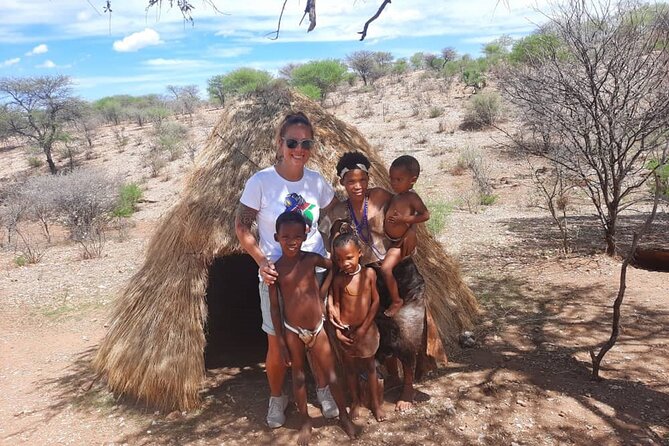
The introduction to San click-language is another memorable feature. You will hear how the language works and get an explanation of the clicks used in speech. This is a short introduction, not a full language course, but it offers a direct connection to one of the most distinctive parts of San culture.
Try to listen carefully and avoid treating the language as a party trick. The respectful approach is to see it as a living means of communication with its own structure and meaning. A private group makes it easier to ask what you are hearing and to have the guide repeat an example if needed.
The guides also show you how to read animal tracks. This lesson changes the way you look at the ground. Instead of seeing dust and scattered marks, you begin to look for signs left by animals and to consider what those marks can reveal.
The supplied information does not identify which animals you will track, so do not book this expecting a wildlife encounter. The point is the skill of interpreting tracks, not a guarantee that you will see a particular species.
More out of Windhoek:
- Windhoek: City and Township Tour
★ 4.8 · 430 reviews - Half-Day Windhoek City and Township Cultural Tour
★ 4.5 · 187 reviews - Windhoek: Bushman Walk with the San
★ 4.9 · 145 reviews - 6-Day Dunes and Wildlife Accommodated Safari from Windhoek
★ 5.0 · 123 reviews
Traditional firemaking and a San dance
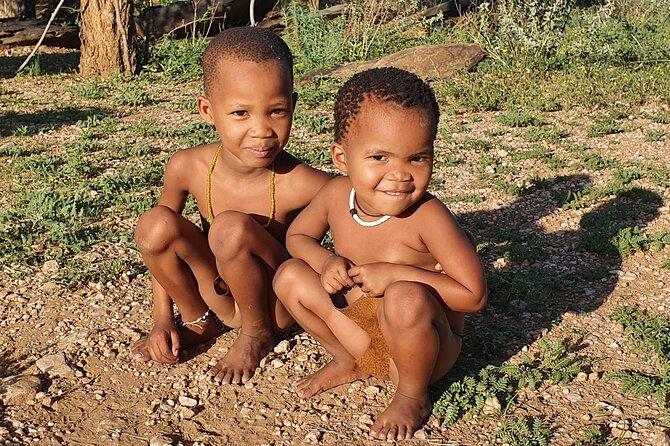
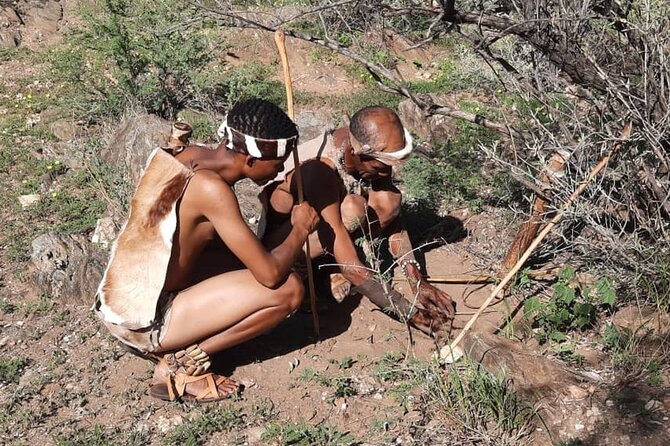
The firemaking demonstration brings the practical side of the tour into sharp focus. You watch the San guides make fire in a traditional way, using methods linked to their older hunter-gatherer lifestyle.
This is exactly the sort of demonstration that works better in person than in a book. You can watch the process unfold and ask how the materials are chosen and handled. The activity is not advertised as a hands-on workshop, so you should expect to watch rather than assume you will make the fire yourself.
The dance offers a different mood. After plant use, tracking, and firemaking, the performance gives the visit a social and expressive element. It is part of the cultural welcome, but it should not be mistaken for a complete picture of San life. The strongest value comes from seeing the dance alongside the conversation about current life and the practical skills shown on the walk.
You may take pictures and videos of the San Bushmen during the experience. Even with permission included, use good judgment. Ask before focusing closely on a person, and give the guides your attention instead of viewing the whole outing through a phone screen.
Ostrich-egg jewelry and handmade crafts
The tour includes an introduction to making jewelry from ostrich eggshell. This is a fine example of a skill that combines natural materials with careful handwork. You learn about the craft as part of the cultural program, then have the option to buy finished items.
Ostrich-egg jewelry and Bushmen drawings are not included in the tour price. Prices are listed at about 100 to 200 NAD. If you like buying directly from the people involved, this is a practical way to support the project while taking home something small.
You do not need to buy anything to take part. The purchase is optional, and it is best to view it as support for the makers rather than as a required extra fee. Cold drinks and bottled water are also available for 20 NAD each, but bring your own water if you prefer to keep costs down.
The information does not promise a full craft lesson. You should expect to learn how ostrich eggshell jewelry is made and see the work associated with it, not necessarily complete a piece yourself.
What the price of $38.33 really buys
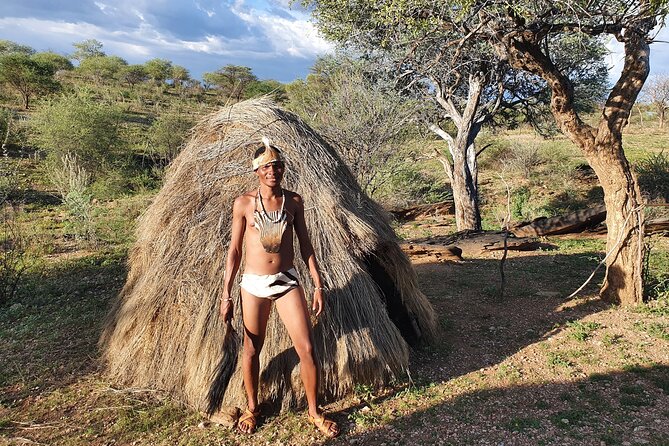
At $38.33 per person, this is a fairly priced half-day outing. Your fee covers an English-speaking guide, the short nonprofit introduction, the two-hour bush walk, an information sheet about San knowledge, and the private group setup.
The private format improves the value. You are not sharing the experience with a large tour bus group, and your questions do not have to compete with a crowd. If you are traveling with family, colleagues, or friends, the format can feel more personal than a standard group excursion.
The price also supports a direct cultural program. Income from these activities gives impoverished San people a way to earn money and helps younger generations learn skills that might otherwise fade. That does not make every part of the tour perfect, but it gives your spending a clear purpose.
There are modest extras. Drinks cost 20 NAD, and handmade items cost about 100 to 200 NAD. Children below six receive a free ticket, which makes the outing more appealing for families. Group discounts are available, though the exact reduction is not given, so ask for the current price before booking.
Who will enjoy this tour most
I would choose this walk if you want a cultural activity with practical demonstrations rather than a long list of dates and facts. It suits you if you are curious about traditional plant use, tracking, firemaking, language, and handmade crafts.
Families may appreciate the gentle route, child pricing for children under six, and variety of short demonstrations. The private format also helps when younger children need a slower pace or more chances to ask questions.
It is a good fit for a short Windhoek stay. The outing takes about three hours, including travel time, and finishes at the starting point. That leaves room for other plans on the same day.
You may want to reconsider if you are looking for a full-day survival course or a hands-on craft workshop. The experience includes demonstrations and explanations, but the supplied details do not promise that you will build traps, prepare traditional foods, make jewelry yourself, or spend a full day in the bush.
Practical tips for a better visit
Book ahead if your schedule is fixed. The tour is booked, on average, about 35 days in advance, which suggests that popular dates may fill before a Namibia trip begins.
Ask about pickup when you reserve. The tour offers pickup, but the stated meeting point is the Human Dreams Namibia farm, so make sure you know where you are expected to go and how the return works.
Bring water, even though bottled water is sold for 20 NAD. Wear comfortable footwear and clothing suited to an outdoor walk. The route is described as easy, but you will still spend two hours outside.
Keep some Namibian dollars available if you may want a craft or a drink. The listed prices are 20 NAD for cold drinks and water, and 100 to 200 NAD for ostrich-egg jewelry or drawings.
Plan your questions. Ask about how plants are used, how tracks are read, what the clicks mean, and how skills are passed to younger San people. The more specific your questions, the more you can gain from the interpreter and guides.
The cancellation policy is generous if your plans change. You receive a full refund when you cancel at least 24 hours before the local start time. Cancellations or changes made within 24 hours are not refunded or accepted.
Should you book the San walking tour?
I would book this tour if you want a respectful, affordable introduction to San traditions close to Windhoek. The strongest parts are the direct teaching, the useful bush skills, the click-language introduction, and the private setting. The nonprofit connection also gives the outing value beyond its three-hour schedule.
Go with realistic expectations. This is not a full-day survival course, a wildlife safari, or a guaranteed chance to make your own craft. It is a gentle walk with demonstrations, conversation, music, and a look at both traditional skills and present-day San life.
For many people, that balance is exactly the point. You get a personal cultural visit without leaving Windhoek for a long overnight trip, and your payment helps keep important skills in use. At $38.33 per person, it is one of the more worthwhile short activities you can add to a Windhoek itinerary.
FAQ
Where does the San walking tour begin?
The tour begins at Human Dreams Namibia, located at J332+2M3 in Windhoek, Namibia.
Where does the activity end?
The activity ends back at the meeting point at Human Dreams Namibia.
How long does the tour last?
The full activity lasts about three hours. You spend two hours on the Bushman Walk, and the farm is roughly 25 to 30 minutes from central Windhoek.
Is pickup available?
Pickup is offered. Confirm the pickup details when booking because the stated meeting point is Human Dreams Namibia.
Is the walk suitable for children?
The walk is described as easy and suitable for all ages and fitness levels. Children below six receive a free ticket.
Is this a private tour?
Yes. Only your own group participates in the activity.
What language is the tour conducted in?
An English-speaking tour guide is included. An interpreter helps explain the San guides’ words and handle questions.
What activities are included?
The two-hour walk includes information about bush plants, San click-language, animal tracks, traditional firemaking, dance, ostrich-eggshell jewelry, and the current situation of San people in Namibia.
Are drinks and crafts included?
No. Cold drinks and bottled water are available for 20 NAD. Ostrich-egg jewelry and Bushmen drawings can be purchased for about 100 to 200 NAD.
More Walking Tours in Windhoek
- Windhoek: Katutura Township and City Walking Tour
★ 4.7 · 15 reviews - Windhoek : Cheetah walk Experience
★ 4.6 · 8 reviews
Written up most recently in Windhoek
- Windhoek: Okapuka Game Ranch Guided Tour★ 5.0 · 2 reviews
- Windhoek : Cheetah walk Experience★ 4.6 · 8 reviews
- Windhoek: City & Township tour. Vehicle, guide, kapana★ 4.2 · 4 reviews
- Windhoek: Katutura Township Tour with Local Guide★ 3.5 · 3 reviews
- Windhoek City Tour★ 3.5 · 7 reviews
- Knight Vibes: Bars, Shebeen, Clubs Crawl Windhoek★ 5.0 · 3 reviews
- Predator Encounter: Half-Day Carnivore Feeding Windhoek★ 4.0 · 5 reviews
- Discover the Routes of N/a’an ku sê.★ 4.0 · 6 reviews
Private Tours in Windhoek, compared.

Private Transfers between Windhoek and Hosea Kutako Int. Airport
Read our review →
3 Days Amazing Red Dunes of Sossusvlei | Private Guided Tour
Read our review →

Private Multi-Day Tour Self-Drive for Beginners Safari in Namibia
Read our review →
6 Day Private Guided Accommodated Namibian Loop
Read our review →
Etosha Private Safari Adventure (3 Days from Windhoek)
Read our review →
Browse the lists this tour appears in