
Reviewed · WINDHOEK TOURS
Windhoek: Bushman Walk with the San
Ancient skills still speak clearly. This two-hour San bush walk near Windhoek offers a rare look at hunter-gatherer traditions without requiring a full day on the road. I especially like the direct teaching from San participants and the chance to hear their click language explained through an interpreter. I also like that the activity supports the Bushmen’s Survival Trust and helps keep fading skills in use. The main drawback is practical: the setting is outside the city, directions can be confusing, and the tour may finish in about two hours rather than the advertised three.
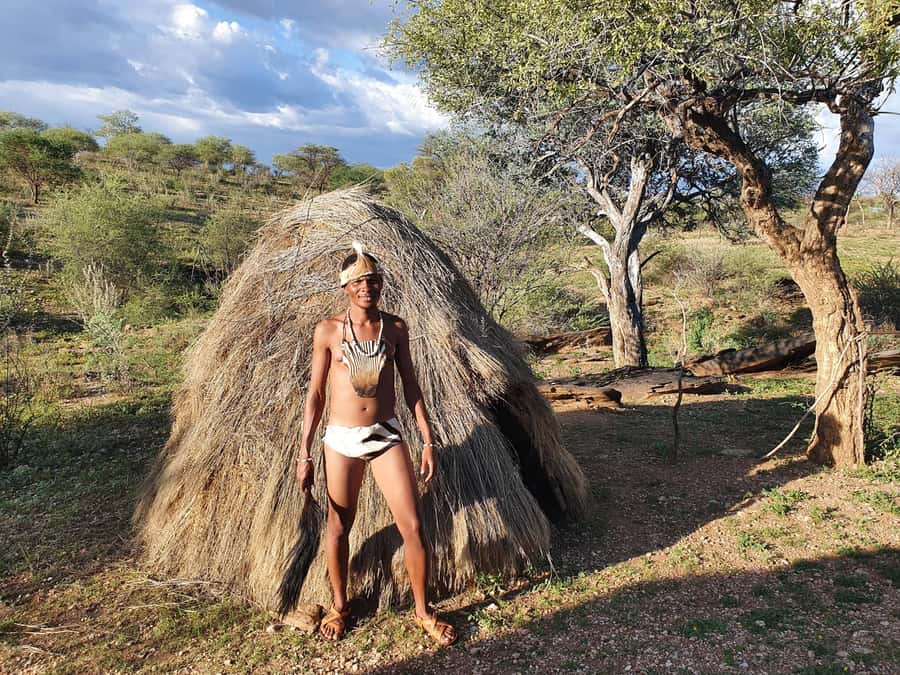
This is not a traditional San village, and you should not expect a staged replica of remote Kalahari life. It is a small cultural program on a farm near Windhoek, where San people share hunting methods, bush plants, crafts, language, and stories. That honest framing matters. You are seeing a living cultural demonstration shaped for visitors, while also hearing about the difficult pressures San communities face today.
In This Review
- Key details before you book
- Why this short walk matters near Windhoek
- Arriving at the farm and meeting the group
- Following an easy two-hour bush walk
- Learning San click language through translation
- Seeing fire making, hunting, and simple tools
- Meeting the San people beyond the demonstrations
- What the price includes at $43
- Who will enjoy this experience most
- Practical advice for a smoother visit
- Should you book the San bush walk?
- FAQ
- Where does the San bush walk take place?
- How long does the activity last?
- Is hotel pickup available in Windhoek?
- What language is the tour conducted in?
- What should I bring?
- Is the experience suitable for wheelchair users?
Key details before you book
- Hear the click language in context: The San guide first uses his own language, with an English-speaking guide translating and explaining what is being said.
- Learn practical bush skills: The walk covers fire making, hunting tools, animal traps, bush plants, and traditional uses of natural materials.
- Expect a gentle walk: The route is described as an easy bush walk, not a demanding hike, though heat can make it tiring.
- Allow two to three hours: The guided walk itself lasts about two hours, with the full visit sometimes taking closer to three.
- Choose transport if you lack a car: Hotel pickup and drop-off in Windhoek are available with the appropriate option, and this can save you a frustrating search for a taxi.
- Bring protection from the sun: Closed-toe shoes, water, and a hat are sensible. One visitor specifically wished for an umbrella and cold water on a hot day.
Why this short walk matters near Windhoek
Windhoek is often a starting point for Namibia’s bigger adventures, yet it can be hard to learn about indigenous culture without traveling far from the capital. This activity fills that gap in a useful way. In a few hours, you can meet San people, watch skills being demonstrated, and ask questions about how older traditions fit, or fail to fit, into modern life.
The program also has a clear social purpose. The San participants share their skills through the Bushmen’s Survival Trust, and income from the activity helps them support themselves and their families. The organizers also describe the program as a way for younger San people to keep nearly forgotten skills alive.
I would keep your expectations grounded. This is not a complete picture of San life, and no short tour could provide one. It is better understood as a personal introduction and a cultural exchange, with a focus on traditional survival skills. That makes it valuable, as long as you approach it with curiosity rather than expecting a museum display or a remote village visit.
The excellent 4.9 rating from 145 bookings reflects how strongly the experience connects with people. The praise is not mainly about scenery or luxury. It centers on the friendly San participants, the clear explanations, the fun of trying words in the click language, and the feeling that the visit supports a worthwhile cause.
More out of Windhoek:
- Windhoek: City and Township Tour
★ 4.8 · 430 reviews - Half-Day Windhoek City and Township Cultural Tour
★ 4.5 · 187 reviews - 6-Day Dunes and Wildlife Accommodated Safari from Windhoek
★ 5.0 · 123 reviews
Arriving at the farm and meeting the group
Pickup depends on the option you select. If you choose transport, you are asked to wait in your hotel lobby. This is the simplest choice if you are staying in Windhoek and do not have a rental car.
If you drive yourself, parking is available at the pool area. A guide welcomes you there, but you should request clear directions and provide a WhatsApp number before the visit. This is not a minor point. One person found the directions confusing and noted there was no sign at the correct turn. Another had trouble finding a taxi after arranging their own return, so independent transport needs more planning than the short distance might suggest.
The visit begins with a brief introduction to the nonprofit work on the farm. This gives the cultural activity some context before the walk starts. You can also see a small gallery selling San jewelry made by hand, and cold drinks are available for 20 Namibian dollars.
That opening period is useful because it explains what your payment is helping to support. It also lets you settle into the setting rather than rushing straight into a demonstration. If you arrive early, the property has alpacas, horses, and donkeys, according to one detailed account, though these animals are not the main focus of the tour.
Following an easy two-hour bush walk
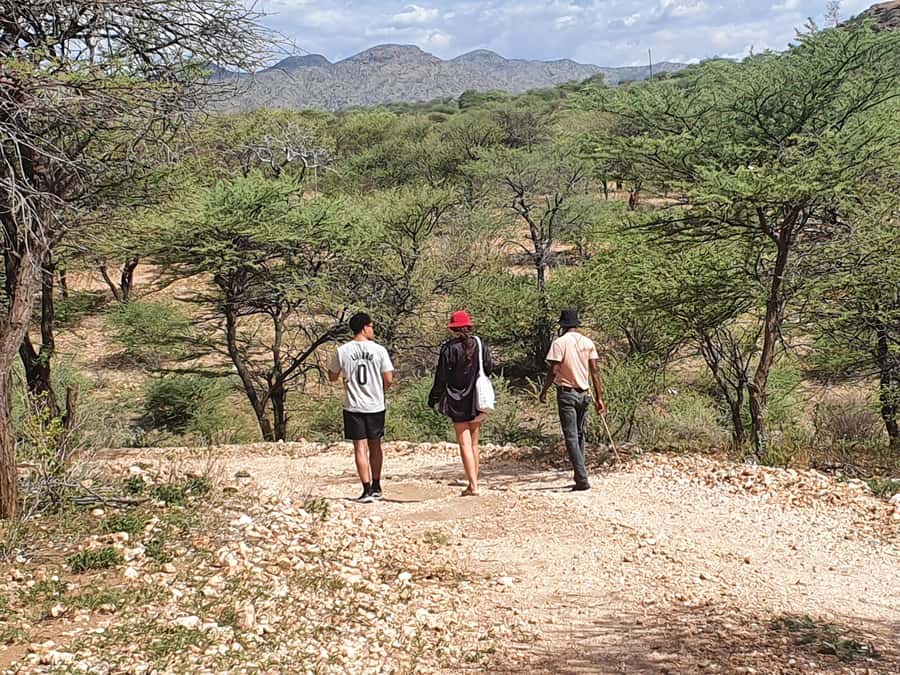
The main activity is a guided walk through the bush. It is described as well paced and not difficult, making it suitable for many families and for people who want a cultural experience rather than a serious hike.
The setting gives the demonstrations a practical feel. Instead of hearing a lecture in a room, you see how plants, wood, shells, and other natural materials connect with daily life. The San guides explain how bush plants were used, and you gain a clearer sense of how much observation and memory traditional hunter-gatherer life required.
You should still prepare for heat. Namibia’s sun is not a background detail, especially during an exposed afternoon visit. Wear closed-toe shoes, carry water, and bring a hat. An umbrella may help if you are especially sensitive to the sun, though it could be awkward during the walk.
The tour is short enough to fit into a free afternoon. That is a real advantage in Windhoek, where you may have limited time between a morning arrival and a later departure. The only timing concern is that the experience can finish in roughly two hours, even though the total duration is listed as two to three hours. If you have arranged a private pickup, leave some flexibility rather than planning a tight connection.
Learning San click language through translation
Language is one of the most memorable parts of the visit. The San language uses clicks, and the introduction gives you a chance to hear how it sounds from a native speaker rather than treating it as a novelty.
A particularly effective part of the format is that the San participants can speak first in their own language, while the English-speaking guide translates afterward. This lets you watch tone, gesture, and reaction before receiving the explanation. It also shows how much people can communicate through expression and shared attention, even when words are not understood.
Frans was praised as a friendly guide who could speak English, Afrikaans, and his own San language. His role is important because translation is not just word-for-word conversion here. It helps connect the San participants’ explanations with questions from the group and gives you a way to ask about family life, traditions, and the effects of modern Western society.
The exchange seems to work especially well for families. A five-year-old enjoyed meeting the San people, and older children aged 14 and 17 also found the walk interesting. You should not expect a children’s entertainment program, but the demonstrations, language, and storytelling give younger visitors something concrete to watch and remember.
A handful of other Windhoek outings to read first
- Private Guided Walking Tour with the San in Windhoek
★ 5.0 · 20 reviews - Windhoek: Katutura Township and City Walking Tour
★ 4.7 · 15 reviews - Windhoek : Cheetah walk Experience
★ 4.6 · 8 reviews
Seeing fire making, hunting, and simple tools
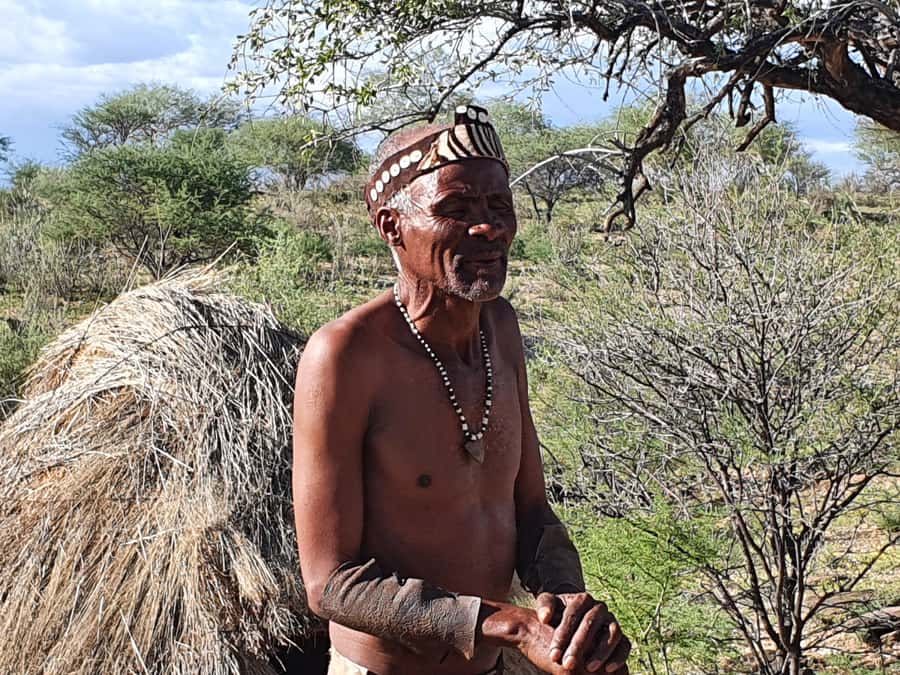
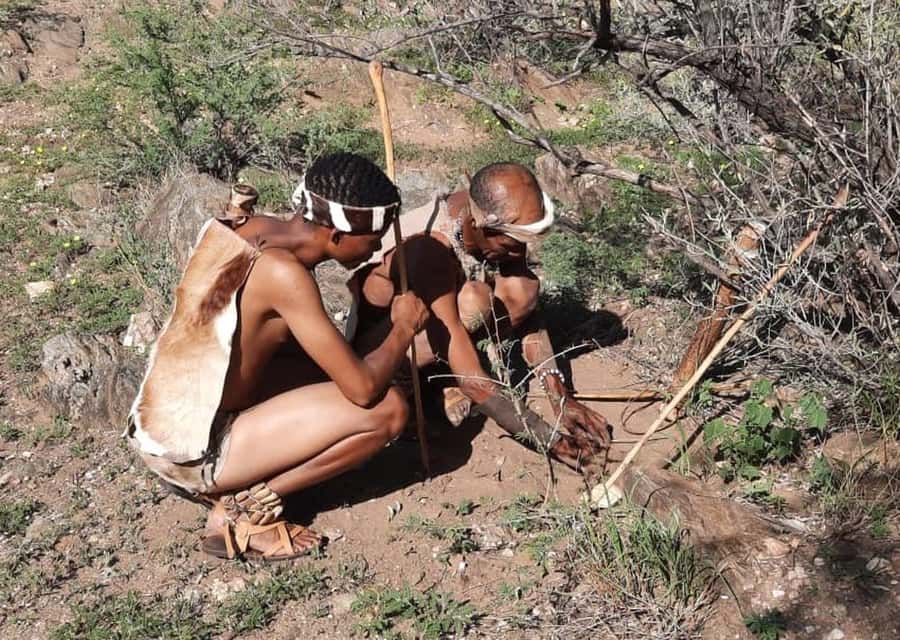
The demonstrations are the heart of the walk. You learn how fire is made, how hunting tools are crafted, and how traps work. One account specifically describes demonstrations involving bows and arrows, poison, snares, and tools used in the bush.
These activities are valuable because they turn broad ideas about hunter-gatherer life into visible skills. Fire making, for example, is not simply an old trick. It shows the importance of knowing local materials, handling friction, and reading the immediate environment. The hunting demonstrations explain how a small tool can depend on careful design and detailed knowledge of animal behavior.
The subject of poison may sound dramatic, but it is presented as part of traditional hunting knowledge. Listen closely to the guide’s explanation and treat the demonstrations as instruction, not a chance to handle equipment on your own.
Craft work adds a quieter part to the program. You learn about ostrich eggshells and see how they can be used to make jewelry and other items. The small gallery gives you a chance to look at self-made San jewelry after the walk, and buying something there may be a direct way to support the people involved.
The demonstrations are not designed to turn you into a hunter in two hours. Their value is in showing the thought behind each practice. You see how traditional skills combine practical need, artistic work, and cultural teaching.
Meeting the San people beyond the demonstrations
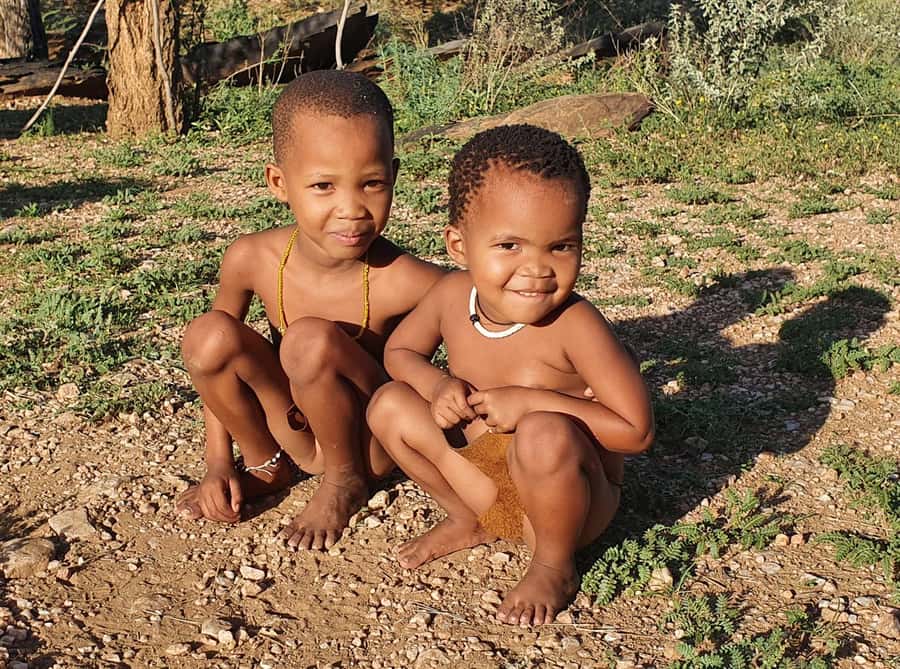
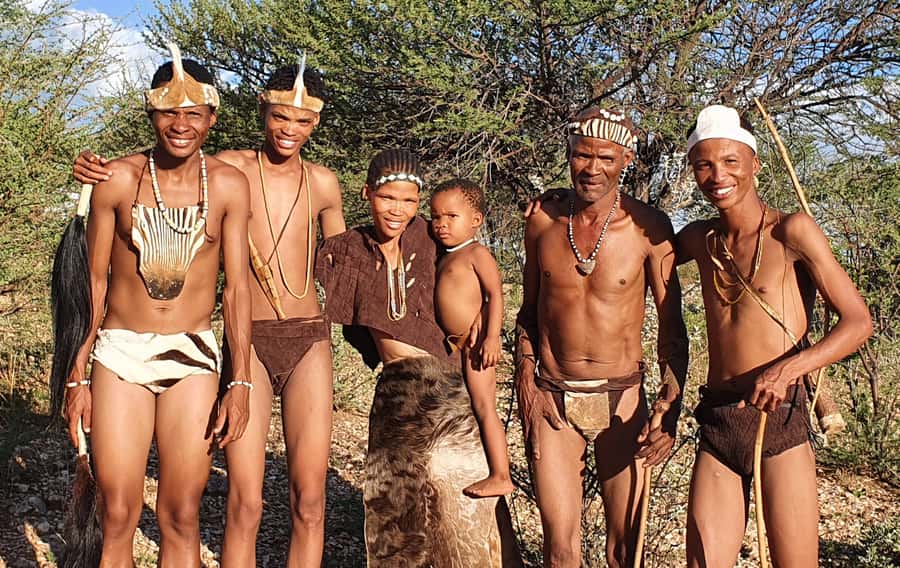
The strongest part of the experience is the human contact. The San participants are described as warm, friendly, and welcoming, and the interaction goes beyond watching a formal presentation. You can ask about their culture, family life, traditions, and the impact of modern life.
Storytelling helps give the skills a social setting. You may hear about courtship customs, including the small bow used in a marriage proposal, a detail that several people found amusing and memorable. There may also be singing or dancing at the end, with one visitor calling the shared dancing the highlight of the afternoon.
These moments make the tour feel less like a list of survival techniques. You begin with plants, fire, and hunting, then move toward the people who carry these traditions. That is where the experience has its greatest value.
Still, cultural contact requires care. You are receiving a short window into a complex identity, not a complete account of San history or present-day life. The tour itself addresses contemporary challenges, which helps prevent the visit from presenting traditional culture as frozen in the past. I appreciate that balance. The San are not simply figures from an ancient story. They are people dealing with a changing society while deciding what knowledge to pass on.
What the price includes at $43
At $43 per person, this is reasonably priced for a two to three-hour cultural activity, especially if your Windhoek schedule does not allow a longer excursion. The fee includes the introduction to the nonprofit work, the two-hour guided bush walk, and an information sheet about traditional knowledge.
Pickup and drop-off are included only when you select the transport option, so compare the total price before booking. If you are relying on taxis, the transfer option may be worth the extra cost and peace of mind. One person had difficulty finding a taxi from the property, which is a useful warning.
The value also comes from what the activity supports. The program provides income for San participants and gives younger generations a reason to practice skills that might otherwise disappear. One detailed account said the tour income goes directly to the San, apart from booking fees. That is an important reason to consider this activity over a purely commercial cultural show.
There are small extra costs. Cold drinks are available for 20 Namibian dollars, while San jewelry in the art gallery is sold separately. Carrying Namibian cash may be useful, though payment details for the gallery are not specified.
Who will enjoy this experience most
I would recommend the walk to you if you want a cultural activity that fits into a half day and includes real conversation, not just photographs. It is a particularly good choice for first-time visitors to Namibia who want some cultural context before heading into the country’s national parks and rural areas.
Families should also consider it. The walk is not described as strenuous, and children can watch fire making, tool construction, language demonstrations, and dancing. Parents should prepare children for a learning experience rather than a wildlife safari. The focus is on people and skills.
Solo women can feel comfortable booking, based on the careful pickup communication described by one participant. The organizer confirmed the pickup time and provided the names of the driver and guide, which is a reassuring practice. You should still provide your WhatsApp number and confirm the meeting details before the day.
The activity may be less suitable if you need wheelchair access, since it is specifically not suitable for wheelchair users. It is also not ideal if you expect a remote village visit, a long wilderness walk, or an unstructured encounter. The program takes place close to Windhoek and is arranged around demonstrations for visitors.
Practical advice for a smoother visit
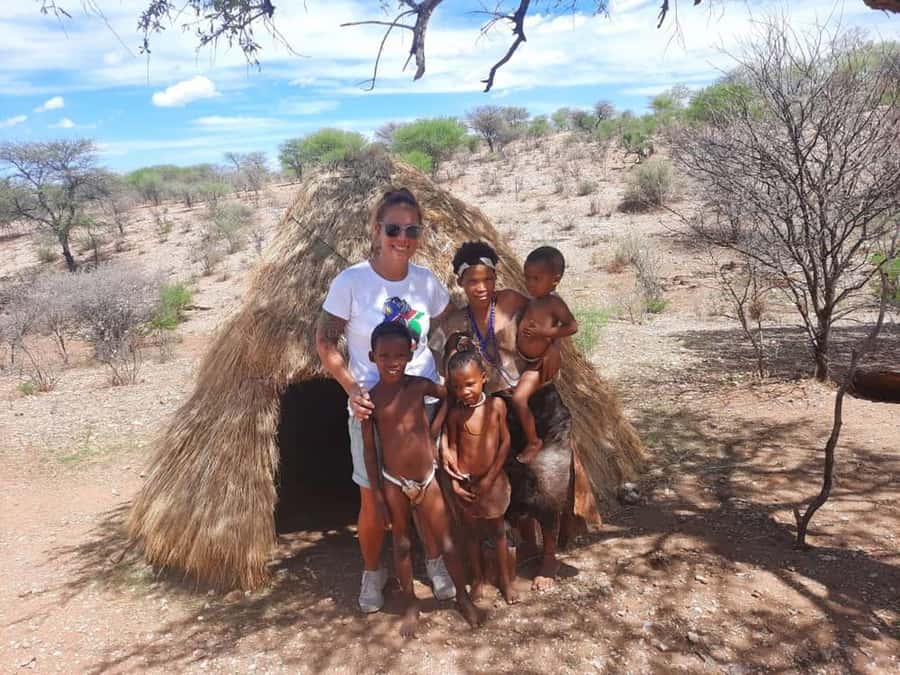
Book the pickup option if you do not have a car. The property can be difficult to find, and return taxis are not guaranteed to be easy to arrange.
Ask for the exact pickup time and location in advance. Keep the organizer’s WhatsApp contact available, and wait in your hotel lobby if transport is included.
Wear closed-toe shoes. Add a hat, sunscreen, and plenty of water, since the bush can be hot and shade may be limited. A cold drink is available for 20 Namibian dollars, but do not rely on that as your only hydration plan.
Keep your afternoon open for at least three hours. The walk may take two hours, but arrival, introductions, questions, the gallery, and transport can stretch the visit.
If you want San jewelry, allow time to browse the small art gallery after the walk. It is a more meaningful purchase when you understand the skills and materials introduced during the tour.
Should you book the San bush walk?
I would book it if you have a free half day in Windhoek and want a direct introduction to San culture. The strongest reasons are the personal contact, the click language, the practical bush skills, and the chance to support a program that helps preserve knowledge for younger San people.
I would skip it only if mobility limitations make an uneven bush walk unsuitable, or if your schedule is so tight that transport delays would cause stress. For everyone else, $43 buys an informative and family-friendly experience with a clear social purpose.
Go with realistic expectations. You are not traveling to a remote San settlement, and you are not seeing every part of contemporary San life. You are meeting a small group near the capital, learning from their skills, and listening to their perspective. That is enough to make this one of Windhoek’s more worthwhile cultural outings.
FAQ
Where does the San bush walk take place?
The experience takes place in the Khomas region near Windhoek, at a farm connected with the Bushmen’s Survival Trust. Self-drivers can park at the pool area, where a guide will welcome them.
How long does the activity last?
The advertised duration is two to three hours. The guided bush walk itself lasts about two hours, although the full visit may include an introduction, questions, and time at the property.
Is hotel pickup available in Windhoek?
Yes, hotel pickup and drop-off are available if you select the transport option. You should wait in your hotel lobby and provide a WhatsApp number for additional information.
What language is the tour conducted in?
The live tour guide speaks English. The San participants also demonstrate their own click language, with translation and explanation provided for the group.
What should I bring?
Bring closed-toe shoes. A hat and bottled water are also sensible because the bush can be hot. Cold drinks are available at the property for 20 Namibian dollars.
Is the experience suitable for wheelchair users?
No. The activity is not suitable for wheelchair users because it includes a bush walk.
Written up most recently in Windhoek
- Windhoek: Okapuka Game Ranch Guided Tour★ 5.0 · 2 reviews
- Windhoek : Cheetah walk Experience★ 4.6 · 8 reviews
- Windhoek: City & Township tour. Vehicle, guide, kapana★ 4.2 · 4 reviews
- Windhoek: Katutura Township Tour with Local Guide★ 3.5 · 3 reviews
- Windhoek City Tour★ 3.5 · 7 reviews
- Knight Vibes: Bars, Shebeen, Clubs Crawl Windhoek★ 5.0 · 3 reviews
- Predator Encounter: Half-Day Carnivore Feeding Windhoek★ 4.0 · 5 reviews
- Discover the Routes of N/a’an ku sê.★ 4.0 · 6 reviews
Windhoek Tours, compared.

Half-Day Windhoek City and Township Cultural Tour
Read our review →
6-Day Dunes and Wildlife Accommodated Safari from Windhoek
Read our review →

10-Day Namibia Highlights Guided Tour from Windhoek
Read our review →
Namibia Self-Driving Audio Guide (in English & German)
Read our review →Browse the lists this tour appears in