
Reviewed · WINDHOEK TOURS
11 Days Small Group Namibia Experience Fully Accommodated Tour
Namibia rewards patience and plenty of road time. This 11-day small-group safari links the country’s biggest sights, from the red dunes of the Kalahari and Sossusvlei to Etosha’s wildlife and Damaraland’s ancient rock art. I like the small maximum group size of seven, and I like the mix of lodges, guest houses, wildlife drives, cultural visits, and guided walks.
The main drawback is the amount of time spent in the vehicle. Several days involve long drives across remote country, and the schedule can feel full. At $4,500 per person, the price is substantial, but it covers accommodation, breakfast each morning, selected dinners, park and attraction fees, mineral water, transport, and a guide. For you, the value depends on how much you want handled for you.
In This Review
- Key points at a glance
- What the $4,500 price really buys you
- Day 1: Red dunes and rondavels near Mariental
- Day 2: From Kalahari bush walks to the Namib
- Day 3: Dead Vlei, Dune 45, and Sesriem Canyon
- Day 4: Across the Tropic of Capricorn to Swakopmund
- Day 5: A free day in Swakopmund
- Day 6: Cape Cross and the rock country of Damaraland
- Day 7: Twyfelfontein and a desert rhino search
- Day 8: Himba culture and Etosha’s southern gate
- Day 9: Waterholes and the huge Etosha Pan
- Day 10: Morning safari and AfriCat at Okonjima
- Day 11: Craft shopping in Okahandja and Windhoek drop-off
- Guides, vehicles, and the small-group setup
- Who should book this Namibia tour?
- Should you book it?
- FAQ
- How long is the tour?
- What is the maximum group size?
- Is accommodation included?
- Are meals included?
- Are park and attraction fees included?
- What is not included in the price?
Key points at a glance
- Seven-person maximum: A small vehicle group makes wildlife stops and guide conversations easier than on a large coach.
- A strong Namibia sampler: You see the Kalahari, Sossusvlei, the Atlantic coast, Damaraland, Etosha, and Okonjima in one route.
- Fully accommodated touring: You stay in lodges and guest houses rather than camping, a useful choice after dusty drives and early starts.
- Excellent signature sights: Dead Vlei, Dune 45, Etosha Pan, Cape Cross, Twyfelfontein, and the AfriCat Foundation all bring something different.
- Culture is part of the route: Bushmen and Himba visits add human context, though you should approach them with respect and listen carefully.
- Guides matter greatly: Guides including Markus, Frank, Sidney, and Me-Gusto have received especially warm praise for patience, planning, and local insight.
What the $4,500 price really buys you
This is not a budget road trip, but it is also not simply an expensive transfer between hotels. The route covers a large portion of Namibia, and your fee includes the hard-to-arrange pieces: park access, guided activities, accommodation, vehicle transport, mineral water, and airport or hotel drop-off at the end.
Ten breakfasts are included, along with selected meals and dinner. Dinner in Swakopmund is at your own expense, and drinks, tips, personal insurance, and personal purchases are extra. Optional activities in Swakopmund also cost more, including boat trips, scenic flights, quad biking, sandboarding, fishing, and skydiving.
I see the value in having one company coordinate a route that would otherwise require several separate bookings. You also avoid the work of driving long distances, finding remote lodges, arranging park visits, and timing the major sights. The trade-off is less freedom to change the plan and less time in each place than you would have on a custom private trip.
The company has also arranged private versions of this route for families and couples. If you need special pacing, extra nights, or a different drop-off, it is worth asking about a private itinerary rather than assuming the group schedule can be altered.
More out of Windhoek:
- Windhoek: City and Township Tour
★ 4.8 · 430 reviews - Half-Day Windhoek City and Township Cultural Tour
★ 4.5 · 187 reviews - Windhoek: Bushman Walk with the San
★ 4.9 · 145 reviews
Day 1: Red dunes and rondavels near Mariental
Pickup from your Windhoek hotel is scheduled between 8:00 and 8:45 in the morning. You then head south toward Mariental and the Kalahari Desert, with a listed duration of about 15 hours for the day’s stop and transfer.
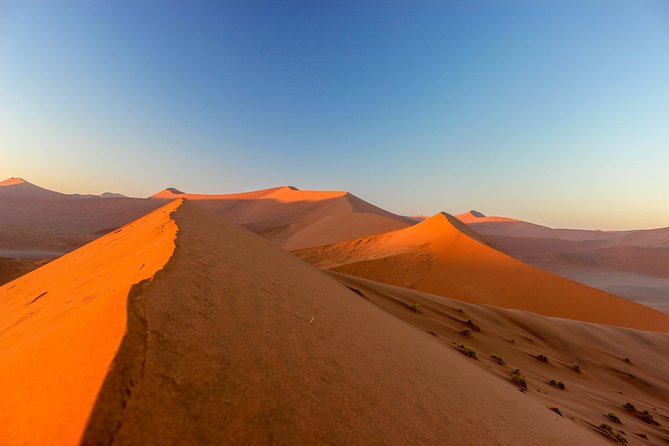
The Kalahari here is a fossil desert, meaning it receives more rain than a true desert. Expect small red dunes, golden grass, camelthorn trees, and broad skies. The scenery changes slowly, which is part of the appeal and part of the challenge.
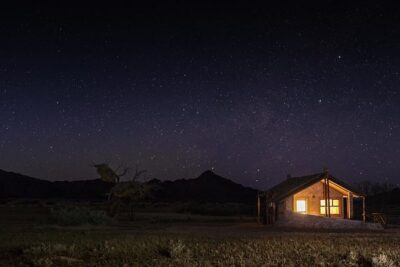
Accommodation is in rondavel-style thatched huts at a lodge with a stone swimming pool. The setting is designed for a quiet first night, and an oryx may occasionally come near the pool. Mariental itself is a practical regional center near the Hardap Dam, with farmland and ostrich farms around the town.
This first day is mainly about getting out of Windhoek and into Namibia’s open country. Bring water, sun protection, and something comfortable for the long ride. The supplied plan says mineral water is available in the vehicle and at all times.
Day 2: From Kalahari bush walks to the Namib
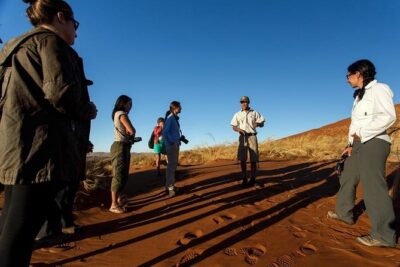
After breakfast, you take part in a walk with local Bushmen in the area. This gives the route an early cultural element instead of making the entire trip about scenery and animals.
You then travel west, moving from the Kalahari’s smaller dunes toward the much larger dunes near the Namib Desert. Small villages and changing terrain fill the route, with lunch served along the way. Arrival at the lodge is planned for early afternoon, leaving time for the pool and a cold drink.
Optional lodge activities can be booked, but they are not part of the stated price. Ask your guide about availability as soon as you arrive. This is a good day to slow down, since the following morning begins with some of Namibia’s most famous sights.
Day 3: Dead Vlei, Dune 45, and Sesriem Canyon
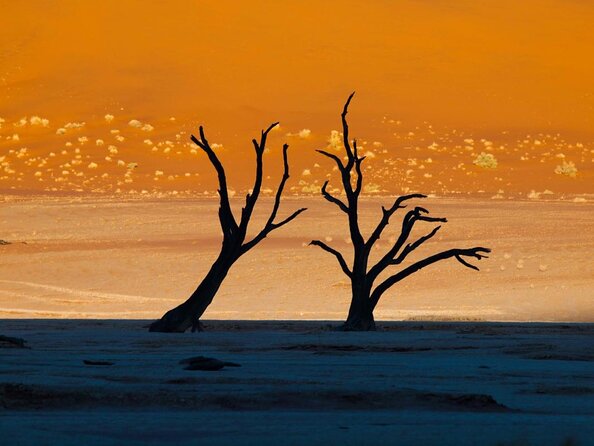
This is one of the tour’s strongest days. Dead Vlei is an ancient clay pan surrounded by red-pink dunes. The dead acacia trees, left standing after the river changed course, create one of the most unusual scenes in Namibia.
The stop lasts about two hours and admission is included. You should expect walking on sand and strong sun. The dramatic photographs are easy to understand, but the place is more impressive when you pause and notice the cracked clay, the black tree trunks, and the scale of the surrounding dunes.
Dune 45 offers a less punishing climb than Big Daddy. It is about 80 meters high, with a gentler slope, and sits close to the road. If you want the famous view without committing to the longest climb, this is the sensible choice.
The day also includes a three-hour visit to Sesriem Canyon. The canyon was cut through rock by water, and its narrow walls provide a welcome change from the open dunes. Wear shoes with a firm grip and expect uneven ground. The canyon name refers to the six leather straps once tied together to reach water below.
Off the sand entirely, for a change:
- 6-Day Dunes and Wildlife Accommodated Safari from Windhoek
★ 5.0 · 123 reviews - Windhoek City Tour
★ 5.0 · 113 reviews - 10-Day Namibia Highlights Guided Tour from Windhoek
★ 5.0 · 78 reviews - 12 Day Classic Namibia Camping Safari
★ 5.0 · 77 reviews
Day 4: Across the Tropic of Capricorn to Swakopmund
The route now shifts from inland desert to the Atlantic coast. You cross the Tropic of Capricorn and pass through the Gaub and Kuiseb areas, including the Kuiseb Canyon. The scenery changes again as you approach Walvis Bay.
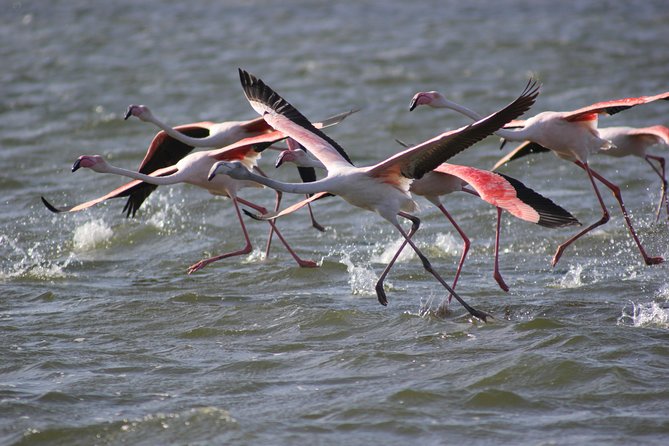
The Walvis Bay lagoon is an important wetland and a good place to look for flamingos, pelicans, avocets, and Damara terns. You also visit the salt works before continuing along the coastal road to Swakopmund, where dunes sit on one side and the cold Atlantic on the other.
A local restaurant dinner is included in the plan. Swakopmund’s German colonial buildings, palm-lined streets, shops, restaurants, museum, and aquarium make it feel very different from the desert stops. The town is also cooler than inland Namibia, so pack a light layer even if Windhoek was hot.
The Tropic of Capricorn sign receives only about 30 minutes, but it is a fun roadside pause and a clear marker of how far south you have come.
Day 5: A free day in Swakopmund
You have most of the day to explore Swakopmund independently. This is an important pause in a route that otherwise moves quickly.
The town offers a museum, aquarium, shops, restaurants, beaches, and colonial-era streets. You can also arrange optional activities through the guide, subject to availability and at your own cost. Options include a boat trip with oysters and champagne, scenic or microlight flights, fishing, desert tours, quad biking, sandboarding, and skydiving.
I like having this free day because it gives you control for once. You can spend it quietly with a museum and a meal, or turn it into the trip’s most adventurous day. Dinner is not included, so budget accordingly.
Do not assume every activity will be available at the last minute. Tell the guide what interests you early, especially if you have your heart set on a flight or boat outing.
Day 6: Cape Cross and the rock country of Damaraland
You leave the coast and head north toward Damaraland, stopping at Cape Cross. The seal colony can contain roughly 80,000 to 100,000 Cape fur seals, and a walkway lets you observe them from about 200 meters away.
This is a powerful wildlife stop, but it is also noisy and strongly scented. That is not a complaint so much as fair warning. Keep your distance, follow the walkway, and do not expect a polished zoo-style encounter.
The route continues to Uis, an old mining town where rough amethyst, tourmaline, and other semi-precious stones may be available. You then pass the Brandberg, Namibia’s highest mountain, before reaching Twyfelfontein in the afternoon.
The day is long, listed at around 12 hours. You will see a great deal, but you will need to be comfortable with dust, roads, and limited services between stops.
Day 7: Twyfelfontein and a desert rhino search
The morning centers on Twyfelfontein, a UNESCO World Heritage Site with about 2,500 Stone Age rock engravings across 17 sites, plus 13 sites with rock paintings. The carvings show how long people have used and understood this dry country.
A local guide or tracker adds value here because the rock images are not always obvious at first glance. Look closely at the stone surfaces and listen for the explanations behind the animals and symbols.
You then travel toward Palmwag through Bersig and join local Torra Conservancy trackers for an afternoon desert rhino tour. This is one of the most special parts of the route because it supports local conservation work and searches for animals adapted to a harsh, dry environment.
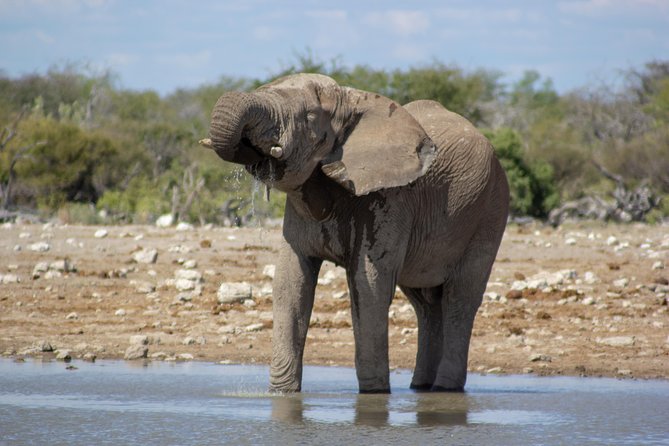
Palmwag is known for table mountains, dry riverbeds, and scarce water that can attract elephants. The area also supports mountain zebra, kudu, springbok, giraffe, leopard, lion, cheetah, and black rhino. None of these sightings is guaranteed, so treat the outing as a search rather than a display.
Day 8: Himba culture and Etosha’s southern gate
The route passes through Kamanjab before stopping at the Otjikandero Himba Orphanage Village. The visit provides a look at traditional Himba life and explains how the village’s tour income supports food, medical needs, and other basics.
Cultural visits require a respectful attitude. Listen before photographing, follow local guidance, and remember that this is a community setting, not a stage show. The two-hour visit is one of the route’s most direct encounters with Namibia’s living culture.
You then continue to a lodge outside Etosha’s southern gate. If timing allows, you take an afternoon game drive inside the park and return before sunset.
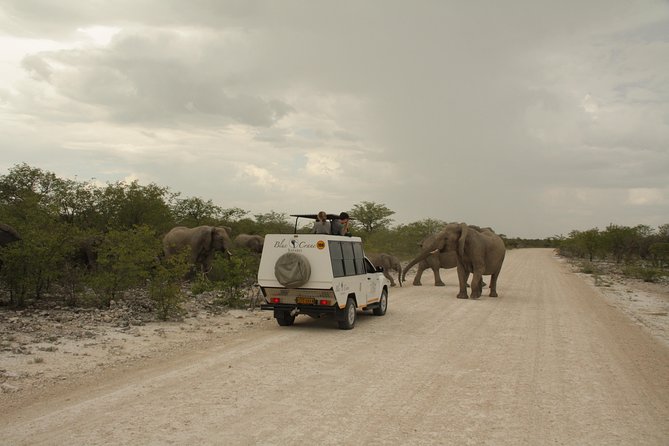
Etosha is home to more than 100 mammal species, 340 bird species, and 110 reptile species. The first game drive may be brief, but it gives you an early chance to begin watching the waterholes.
Day 9: Waterholes and the huge Etosha Pan
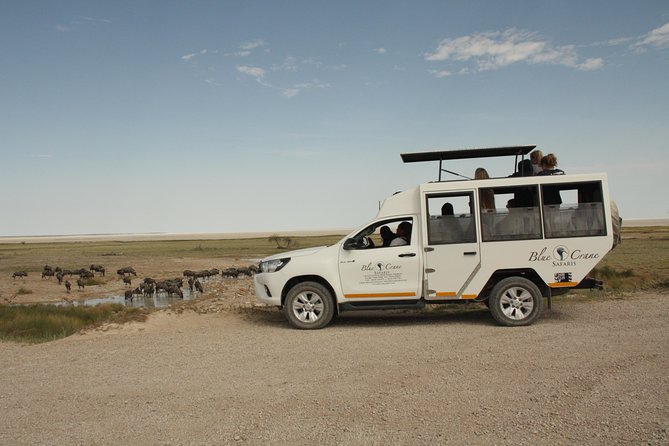
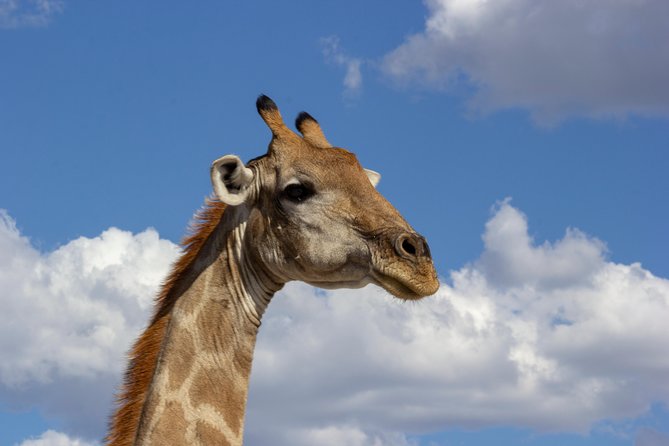
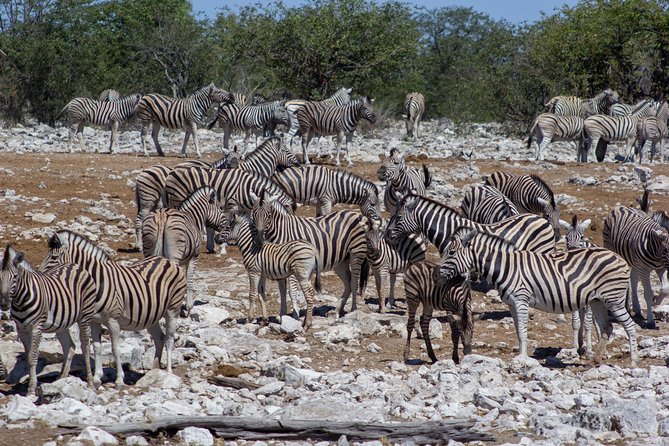
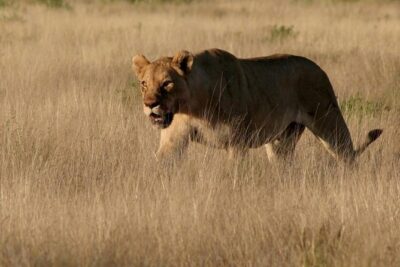
Most of the day is spent on safari inside Etosha. The guide takes you between waterholes, where springbok, zebra, impala, giraffe, gemsbok, birds, and other animals may gather.
Etosha Pan covers about 5,000 square kilometers. It was once the bed of a large lake and now appears as a broad salt depression, often shimmering with mirages. After heavy rain, it can hold shallow water and attract flamingos and pelicans. In dry conditions, the waterholes become the main focus.
Lunch may be taken at Halali before you return to the lodge. Eight hours in a safari vehicle is a long day, but Etosha rewards patience. The best moments often come from waiting quietly at water, not rushing from one sighting to another.
This is a good route for first-time safari visitors who want variety. Etosha is not the same as a fenced reserve with guaranteed close encounters. You are searching in a large national park, and the pleasure comes from the open setting and the possibility of finding predators, rhinos, elephants, and antelope.
Day 10: Morning safari and AfriCat at Okonjima
You begin with a morning game drive before leaving Etosha. The route then turns south toward Okonjima, closer to Windhoek.
After lunch at the Okonjima AfriCat area, you take part in an AfriCat activity. The foundation works with large carnivores including brown hyena, leopard, and cheetah, combining conservation with environmental education.
This makes a useful final wildlife stop because it shifts the focus from searching for animals in a national park to learning about predator conservation. The included activity lasts about two hours, while the broader Okonjima stop is listed at four hours.
The day also gives you a last chance to ask your guide questions about Namibia’s wildlife, conservation work, and the route before returning to Windhoek.
Day 11: Craft shopping in Okahandja and Windhoek drop-off
On the way back to Windhoek, you stop in Okahandja at Namibia’s largest craft market. The stalls operate through a local cooperative, making this a practical place for last-minute souvenirs and a direct way to support local sellers.
The tour ends with transfer to the airport or drop-off at accommodation you arranged yourself. If your flight is on the same day, confirm the timing with the operator and leave enough margin for road delays. The route has involved long distances, so a morning flight may not fit comfortably with the final stop.
Guides, vehicles, and the small-group setup
The maximum group size is seven, which is a major advantage in a country where wildlife viewing depends on space and timing. A small group also makes it easier to hear the guide, share questions, and stop without the fuss of a large coach.
Several guides have been praised by name. Markus is described as attentive, careful with room views, and well informed about the country, culture, and animals. Frank has been praised as a safe driver and pleasant companion, while Sidney is noted for patience with families and children. Me-Gusto receives especially warm praise for his sincerity, professionalism, and ability to connect with young people.
That said, guide quality is central to this kind of trip. A serious safety complaint described a vehicle rollover during a right turn in August 2024. The operator stated that safety procedures helped reduce the effects of the incident and that the matter was addressed. I would ask about current vehicle checks, driver-rest procedures, and emergency arrangements before paying. It is sensible due diligence on any long-distance safari.
Who should book this Namibia tour?
I would recommend it to you if you want Namibia’s major highlights in one organized trip, prefer lodges to camping, and are happy to trade independence for convenience. It suits first-time visitors, couples, families, and active older travelers who can handle long drives and walking on sand or uneven rock.
It is less suitable if you dislike early starts, road travel, changing hotels, or fixed schedules. A private trip may be better if you need a slower pace, special meals, more time in Etosha, or a different balance between culture and wildlife.
The 97 percent recommendation rate and 4.9 rating from 31 recorded ratings are encouraging, and the repeated praise for the guides is meaningful. Still, ratings cannot remove the practical demands of Namibia: distance, heat, dust, and occasional rough roads.
Should you book it?
Book this tour if your goal is a broad, well-organized introduction to Namibia with comfortable accommodation and a small group. The best parts are the range of scenery, the included signature stops, and the chance to have a guide such as Markus, Frank, Sidney, or Me-Gusto shape the journey.
Before booking, confirm the exact lodges, vehicle standards, optional activity prices, and how the operator handles flight-day transfers. If those details suit you, $4,500 can be fair value for an 11-day route that covers so much ground without requiring you to manage every reservation yourself.
FAQ
How long is the tour?
The tour lasts approximately 11 days, beginning with pickup in Windhoek and ending with airport or accommodation drop-off in Windhoek.
What is the maximum group size?
The tour has a maximum of seven travelers.
Is accommodation included?
Yes. The tour includes all accommodation listed for the itinerary, using lodges and guest houses rather than a camping program.
Are meals included?
Ten breakfasts are included, along with selected meals and dinner. Dinner in Swakopmund is at your own expense, and beverages are not included.
Are park and attraction fees included?
Yes. The stated inclusions cover parking fees and admission for listed stops such as Dead Vlei, Dune 45, Sesriem Canyon, Cape Cross, Twyfelfontein, the Himba village, and Okonjima activities.
What is not included in the price?
Beverages, tips, personal insurance, personal purchases, and optional activities are not included.
Written up most recently in Windhoek
- Windhoek: Okapuka Game Ranch Guided Tour★ 5.0 · 2 reviews
- Windhoek: Katutura Township Tour with Local Guide★ 3.5 · 3 reviews
- Windhoek : Cheetah walk Experience★ 4.6 · 8 reviews
- Windhoek: City & Township tour. Vehicle, guide, kapana★ 4.2 · 4 reviews
- Windhoek City Tour★ 3.5 · 7 reviews
- Knight Vibes: Bars, Shebeen, Clubs Crawl Windhoek★ 5.0 · 3 reviews
- Discover the Routes of N/a’an ku sê.★ 4.0 · 6 reviews
- Predator Encounter: Half-Day Carnivore Feeding Windhoek★ 4.0 · 5 reviews
Windhoek Tours, compared.


Half-Day Windhoek City and Township Cultural Tour
Read our review →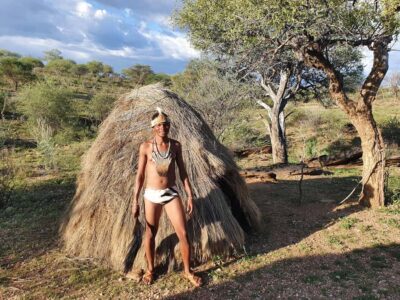
6-Day Dunes and Wildlife Accommodated Safari from Windhoek
Read our review →
10-Day Namibia Highlights Guided Tour from Windhoek
Read our review →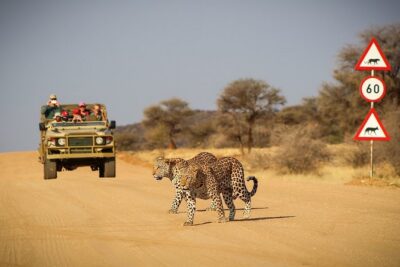
Browse the lists this tour appears in