
Reviewed · SAFARIS IN WINDHOEK
10 Day Discover Namibia Small Group Safari
Namibia rewards early starts. This 10-day safari packs the country’s biggest sights into one well-planned route, from the red dunes of Sossusvlei to Etosha’s wildlife waterholes. I like the small maximum group of seven, and I like that the price includes accommodation, park fees, most meals, transport, and an English-speaking guide. The main tradeoff is the amount of time spent on the road, with several long driving days across remote gravel routes.
I also like the mix of natural wonders and local encounters, including Twyfelfontein rock art, desert elephant searches, and roadside markets run by Himba, Herero, and Damara people. The free day in Swakopmund gives you room to rest or pay for an activity, but optional excursions cost extra, and the strict non-refundable booking policy calls for careful planning.
In This Review
- Key points to know before booking
- Why this route works for a first Namibia trip
- Day 1: Windhoek arrival and an easy first evening
- Days 2 and 3: Into the Namib Desert and Sossusvlei
- Day 4: Solitaire, desert passes, and flamingos at Walvis Bay
- Day 5: A free day in Swakopmund
- Days 6 and 7: Skeleton Coast and Damaraland
- Days 8 and 9: Etosha’s waterholes and night viewing
- Day 10: Onguma sunrise and return to Windhoek
- What the $3,850.61 price really includes
- Who should book this safari?
- Should you book the 10-day Namibia safari?
- FAQ
- Where does the safari begin?
- How many people are in the group?
- What meals are included?
- Are optional Swakopmund activities included?
- Can I fly out of Windhoek on Day 10?
- Are desert elephant and Big Five sightings guaranteed?
Key points to know before booking
- A maximum of seven people keeps the safari more personal than a large coach tour and makes it easier to ask questions or adjust the pace within the fixed route.
- The pre-dawn Sossusvlei start is worth the lost sleep, giving you changing dune colors and cooler walking conditions at Deadvlei.
- Etosha is built around waterholes, so the best sightings often come from patient viewing rather than chasing animals across open ground.
- Damaraland adds cultural and geological depth, with desert elephant searches, Twyfelfontein, and chances to support local roadside craft sellers.
- Swakopmund is your flexible day, with optional skydiving, sandboarding, kayaking, boat trips, and quieter city walks.
- The $3,850.61 price covers many major costs, but not flights, insurance, drinks, snacks, tips, or optional activities.
Why this route works for a first Namibia trip
Namibia is a large country with big gaps between its main sights. That can make independent planning slow and complicated, especially when you want to combine desert, coast, culture, and wildlife in one trip.
This route makes a sensible loop from Windhoek through the Namib Desert, up the Skeleton Coast, inland to Damaraland, and across Etosha before returning to Windhoek. You get a broad introduction rather than a single-purpose safari.
I like the balance. You are not spending all 10 days in a vehicle looking for animals. You get dunes, canyons, wetlands, a coastal town, shipwrecks, rock art, local markets, desert wildlife, and a full national park safari.
The group size matters here. Seven people is small enough for a more relaxed atmosphere, yet large enough to share the cost of the vehicle and guide. Departures are guaranteed with no minimum number, which is useful if your dates are fixed.
Lark Journeys has also received strong praise for clear communication and careful organization. Past trips have featured guides such as Abel and Gerhardus, known as Gerry Jansen, while Rudolph has been praised for handling long driving days with care. Your guide and driver may differ, but the pattern tells you what to value: safety, local explanation, and steady logistics.
More Safaris in Windhoek
- 6-Day Dunes and Wildlife Accommodated Safari from Windhoek
★ 5.0 · 123 reviews - 12 Day Classic Namibia Camping Safari
★ 5.0 · 77 reviews - 3 Day Sossusvlei Budget Camping Safari
★ 5.0 · 62 reviews
Day 1: Windhoek arrival and an easy first evening
Your trip begins with pickup at Hosea Kutako International Airport around noon. You are transferred to Windhoek, checked into your hotel, and given time to settle in.
If timing allows, you can add an optional three-hour city and township tour. This is a useful choice if you want early context about Namibia’s capital, its people, and its past. If your flight leaves you tired, the easier option is to relax by the pool or walk to one of the nearby restaurants for dinner at your own cost.
That flexibility is welcome. The first day is not overloaded with sightseeing, and the airport transfer removes the stress of arranging your own arrival transport. Just remember that the city tour and dinner are not part of the included meals.
Days 2 and 3: Into the Namib Desert and Sossusvlei
After breakfast with the group, you leave at 9 a.m. and travel south through Rehoboth toward the Naukluft Mountains and the Namib Desert. The drive is part of the experience, but it is not a quick transfer. You will cross broad, dry country where the changing colors and rock formations become the main attraction.
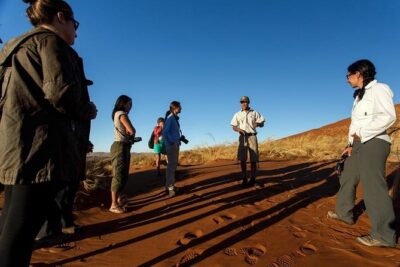
Your desert accommodation gives you time to slow down. After lunch, you can swim, rest, or sit outside and take in the views. Late in the afternoon, the group walks to Elim Dune for sunset. This shorter outing is a gentle introduction to the dunes before the more demanding morning at Sossusvlei.
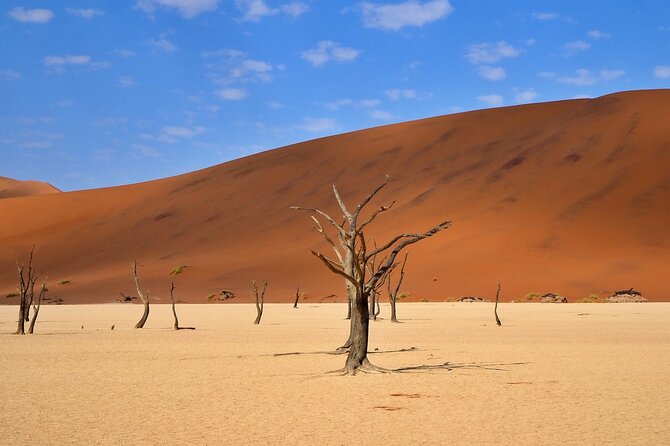
Day 3 begins before sunrise. After breakfast, you enter the dune field and head toward Deadvlei, watching the dunes change color as the light rises. The walk from the 4×4 parking area to Deadvlei is about one kilometer, and you can spend your time taking photographs, exploring the dry pan, or attempting Big Daddy, the highest dune in the area.
Big Daddy is optional, but the desert heat can make even a shorter walk feel demanding. Bring sensible walking shoes, sun protection, and water for personal use. Mineral water is supplied in the vehicle, but snacks and drinks beyond that are your responsibility.
Deadvlei is famous for its pale clay floor and dark, ancient trees. Your guide explains how the area formed and why it became so dry. You then continue to Sossusvlei itself for a snack and a break at picnic benches.
Later, you visit Sesriem Canyon. You can climb down into the narrow canyon and walk along its floor while learning about the local geology. It is a smaller stop than Sossusvlei, but it gives the day a different texture. The canyon was once an important permanent water source for local people and wildlife.
The timing is excellent for photography, but the early start is not negotiable if you want the best light and cooler conditions. You should also expect heat, sand, and a fair amount of walking.
Day 4: Solitaire, desert passes, and flamingos at Walvis Bay
After breakfast, you leave the desert and stop at Solitaire, a tiny settlement known for its apple pie and collection of old vehicles. It is a brief stop, but it breaks up the long drive and gives you one of those odd roadside memories that stays with you.
The route continues past the Tropic of Capricorn sign, Gaub Pass, and Kuiseb Canyon. These stops are short, so think of them as photo and orientation breaks rather than full excursions.
At Walvis Bay, you visit the lagoon, a protected wetland and important breeding site for aquatic birds. Flamingos are the main attraction. This is a good reminder that Namibia is not just sand and large mammals. Its coastal wetlands support a very different type of wildlife.
You then continue north to Swakopmund, arriving in the afternoon. Your guide provides a short orientation before you check into accommodation in the center of town. Staying centrally should make it easy to walk around, though the trip information does not specify the exact hotel.
More out of Windhoek:
- Windhoek: City and Township Tour
★ 4.8 · 430 reviews - Half-Day Windhoek City and Township Cultural Tour
★ 4.5 · 187 reviews - Windhoek: Bushman Walk with the San
★ 4.9 · 145 reviews - Windhoek City Tour
★ 5.0 · 113 reviews
Day 5: A free day in Swakopmund
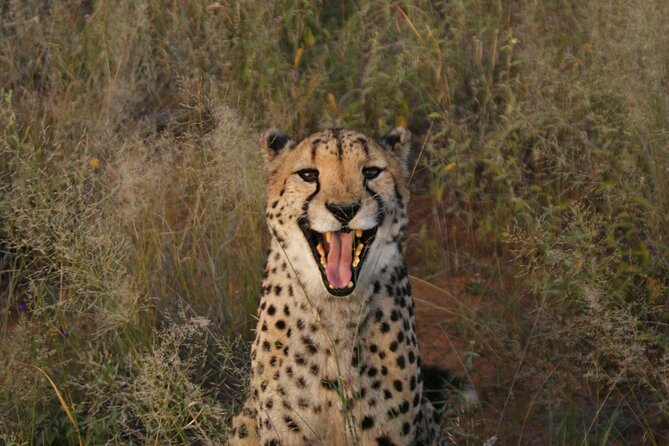
Swakopmund is your pressure-release valve. After several long drives and early mornings, you can sleep later, walk by the beach, explore the town, or simply enjoy a quiet day.
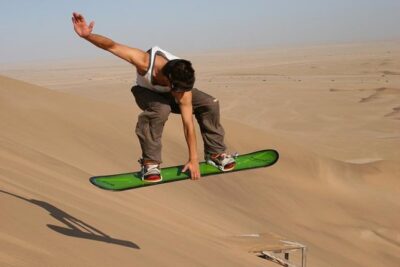
You can also pay for an optional activity. Choices include skydiving, sandboarding, quad biking, sea kayaking, Sandwich Harbour tours, fat biking, boat cruises, fishing, a living desert tour, a Moon Landscape tour, township visits, and food and drink outings.
This is one of the smartest parts of the schedule because it lets you choose your own level of energy. I would not try to cram in several paid activities. Pick one major outing, or keep the day free and save your money for the safari.
The downside is financial. None of these optional activities is included, and the advertised tour price already excludes snacks, drinks, gratuities, and personal expenses. Swakopmund is the point where your final cost can rise quickly.
Days 6 and 7: Skeleton Coast and Damaraland
You leave Swakopmund after breakfast and travel along the Skeleton Coast. The Zeila Shipwreck is your first stop, a recent wreck from 2008 shaped by the rough Benguela Current. You only spend about 15 minutes there, but it is a stark and memorable coastal sight.
From Henties Bay, the route turns inland across the gravel plains toward Damaraland. The scenery changes steadily, and the road itself becomes part of the story. This is another long driving section, so bring patience, a camera, and something to read for the quieter stretches.
You have chances to stop at small roadside markets run by Himba, Herero, and Damara people. These visits give you a way to meet local sellers and buy crafts directly. Bargaining may be part of the experience, but you should also treat the stalls as small businesses rather than simply photo stops.
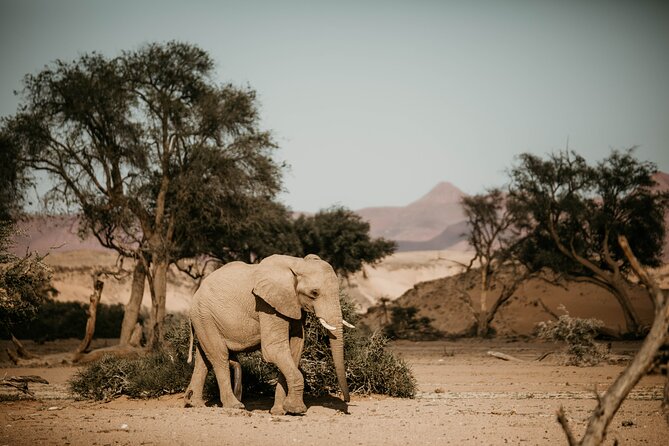
Day 7 begins early with a nature drive through dry riverbeds in search of desert elephants. These elephants have adapted to survive in one of the harshest parts of Namibia. Sightings are not guaranteed, so you should approach this as a tracking experience rather than a promised animal encounter.
That uncertainty is important. If you need guaranteed elephant viewing, this is not the right expectation. The reward is the setting, the search, and the chance to see animals living in conditions that seem impossible.
Later, you visit Twyfelfontein, a UNESCO World Heritage site containing some of the oldest rock engravings in the world. A local guide explains the images and their meaning to the people who made them, as well as their continuing importance.
Twyfelfontein gives the trip cultural depth. You are not simply moving from scenic stop to scenic stop. You are learning how earlier communities understood animals, water, and survival.
Days 8 and 9: Etosha’s waterholes and night viewing
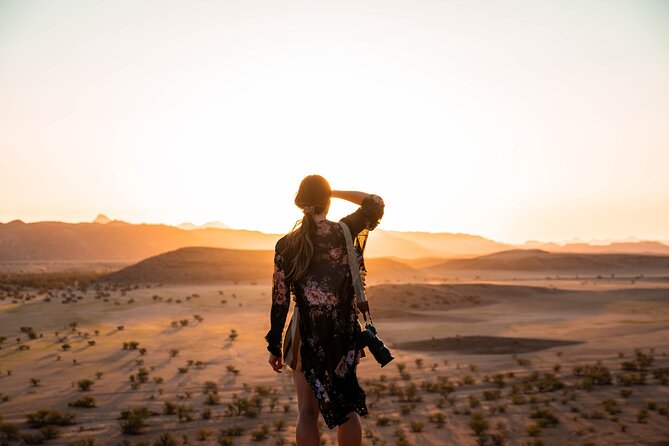
On Day 8, you enter Etosha National Park through the western Galton Gate. The afternoon becomes a game drive toward Okaukuejo, your base for the night.
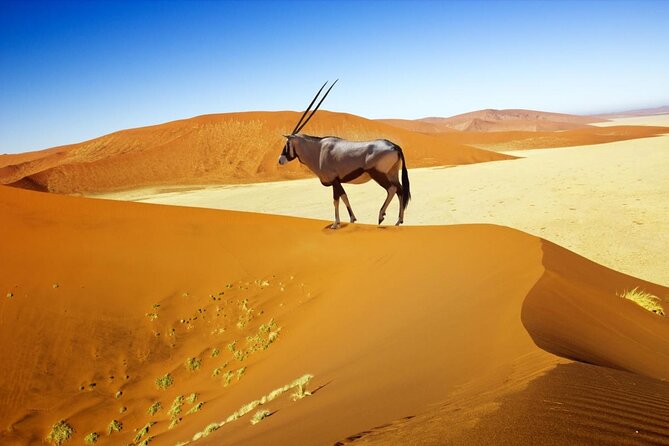
Etosha covers about 22,270 square kilometers, with the huge Etosha Pan taking up roughly 23 percent of the park. The pan is mostly dry, though good rainfall can turn it into a breeding area for flamingos.
The park’s waterholes are the key. Instead of relying only on long drives through open country, you stop at places where animals come to drink, especially during the dry winter months. This gives you time to watch animal behavior and photograph different species near the same water source.
At Okaukuejo, you can sit beside the floodlit waterhole after dark. This is one of the tour’s most appealing details. Animals that prefer cooler nighttime conditions may appear, and you can watch without bouncing along in a vehicle.
Day 9 is a full day in Etosha. After an early breakfast, you drive east from waterhole to waterhole, passing through Halali and Namutoni before leaving the park for Onguma Private Reserve.
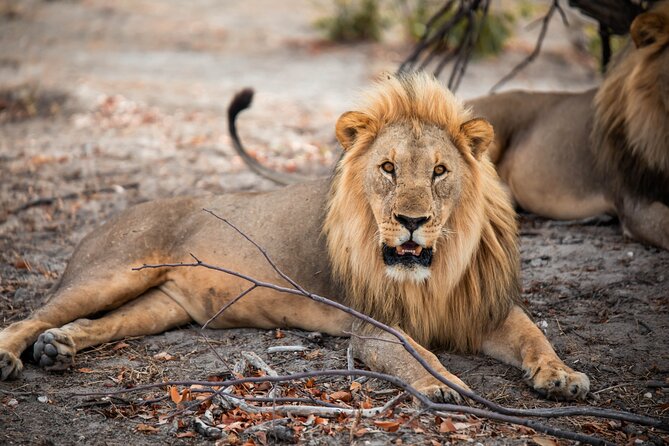
The schedule gives you a strong chance to see a wide range of animals, but no safari can promise every species. The description refers to searching for the Big Five, though sightings depend on season, weather, animal movement, and luck. You should judge the day by the quality of watching, not only by a checklist.
Day 10: Onguma sunrise and return to Windhoek
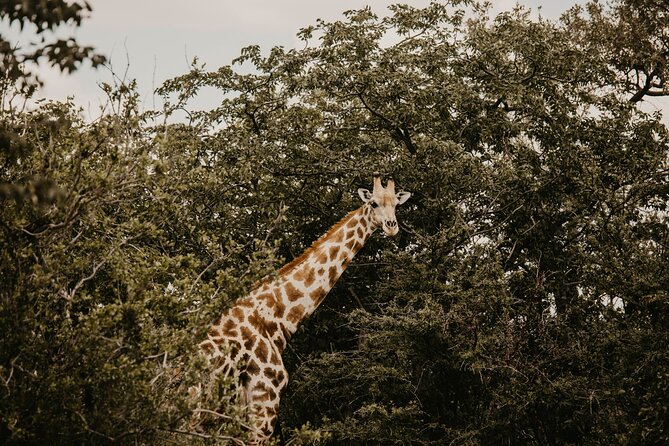
The final morning begins with a two-hour sunrise game drive at Onguma Private Reserve. It is a good way to end the safari, since the cooler hours can be productive for wildlife viewing.
Afterward, you travel through Okahandja. If timing allows, you stop at the Mbangura Woodcarvers Craft Market, an informal market where local artists sell carved goods. It is a practical final chance to buy gifts, and bargaining is expected.
The group aims to reach Windhoek by 5 p.m. You can be dropped at your Windhoek accommodation or at Hosea Kutako International Airport. Do not book a flight before 8 p.m., since the return timing is not designed for an earlier departure.
What the $3,850.61 price really includes
At $3,850.61 per person, this is not a budget overland trip. It is a lodge-based small group safari with a high level of route planning and many major expenses built in.
The price includes an air-conditioned vehicle, an English-speaking guide, mineral water in the vehicle, accommodation, national park entry fees, nine breakfasts, six dinners, and eight lunches. You are paying for a broad, organized journey through a country where distances make logistics expensive.
The value is strongest if you want one booking to handle the route, park access, transport, and most meals. It is less attractive if you prefer to choose every hotel, drive yourself, or spend several days in one area.
Plan extra money for flights, travel and medical insurance, snacks, drinks, optional Swakopmund activities, tips, and personal purchases. Also note that the booking is non-refundable and cannot be changed after purchase. That makes insurance and firm date planning especially important.
Who should book this safari?
I would recommend it to a first-time Namibia visitor who wants the major highlights without managing a complicated self-drive route. It suits people who value a small group, local guiding, lodge accommodation, and a steady blend of scenery, wildlife, and culture.
You should be comfortable with early mornings and long road days. The schedule includes several 8 to 12-hour days, even though not every hour is spent driving. You will also walk on sand and uneven ground at Deadvlei and Sesriem Canyon.
This trip works well for photographers, couples, solo visitors who prefer a group, and families with adults who can handle the pace. It is less suitable if you want a slow holiday, guaranteed elephant sightings, or a safari focused only on wildlife.
Should you book the 10-day Namibia safari?
Book it if you want a strong first look at Namibia and value having the hard parts organized. The route covers Sossusvlei, Swakopmund, Damaraland, Twyfelfontein, and Etosha without forcing you to arrange separate transfers or park entries.
Think twice if the non-refundable terms make you uneasy, or if the price leaves no room for optional outings and personal expenses. My best practical advice is to arrive rested, protect the free Swakopmund day, and treat the long drives as part of the country rather than wasted time.
For a compact Namibia trip with a maximum of seven people, guaranteed departures, and a well-rounded route, this is a strong choice.
FAQ
Where does the safari begin?
The safari begins with pickup at Hosea Kutako International Airport in Namibia. The stated start time is 12 p.m.
How many people are in the group?
The vehicle can carry a maximum of seven travelers.
What meals are included?
The tour includes nine breakfasts, six dinners, and eight lunches. Snacks and drinks are not included.
Are optional Swakopmund activities included?
No. Activities such as skydiving, sandboarding, kayaking, boat cruises, and township tours are optional and cost extra.
Can I fly out of Windhoek on Day 10?
Yes, but you should not book a flight before 8 p.m. The tour aims to return to Windhoek by 5 p.m., with drop-off at your accommodation or the international airport.
Are desert elephant and Big Five sightings guaranteed?
No. Desert elephant sightings are specifically not guaranteed, and wildlife sightings in Etosha depend on animal movement and conditions.
Written up most recently in Windhoek
- Windhoek: Okapuka Game Ranch Guided Tour★ 5.0 · 2 reviews
- Windhoek : Cheetah walk Experience★ 4.6 · 8 reviews
- Windhoek: City & Township tour. Vehicle, guide, kapana★ 4.2 · 4 reviews
- Windhoek: Katutura Township Tour with Local Guide★ 3.5 · 3 reviews
- Windhoek City Tour★ 3.5 · 7 reviews
- Knight Vibes: Bars, Shebeen, Clubs Crawl Windhoek★ 5.0 · 3 reviews
- Predator Encounter: Half-Day Carnivore Feeding Windhoek★ 4.0 · 5 reviews
- Discover the Routes of N/a’an ku sê.★ 4.0 · 6 reviews
Safaris in Windhoek, compared.
6-Day Dunes and Wildlife Accommodated Safari from Windhoek
Read our review →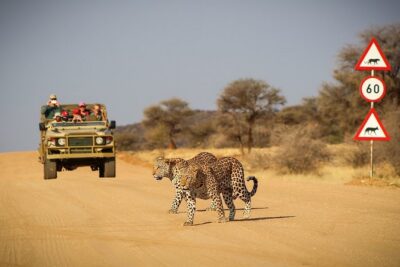
6 Day Sand, Sea & Etosha Budget Camping Safari
Read our review →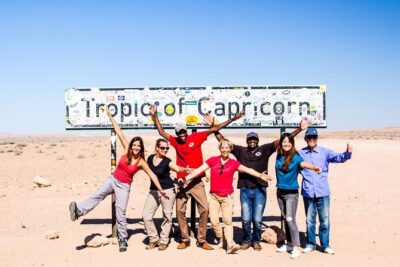
7 Day Southern Namibia and Sossusvlei Camping Safari
Read our review →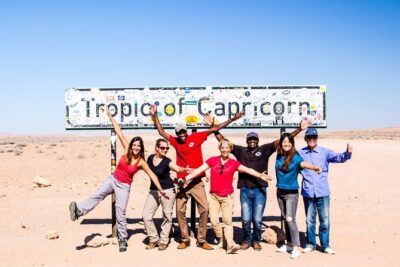
9 Day Canyons, Dunes & Wildlife Camping and Lodge Safari
Read our review →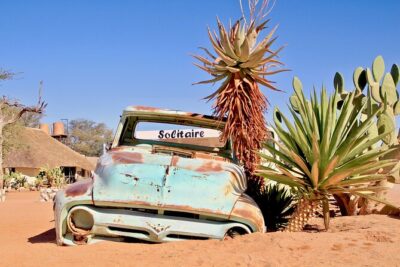
9 Day Etosha, Skeleton Coast and Sossusvlei Camping and Lodge Safari
Read our review →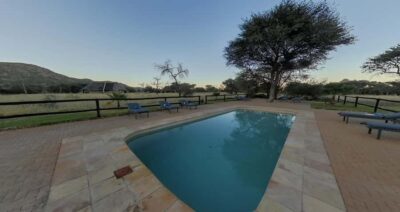
Browse the lists this tour appears in