
Reviewed · WINDHOEK TOURS
10 DAYS BEAUTY OF NAMIBIA | Guided Lodge
Namibia rewards the curious. This 10-day guided lodge tour links the country’s biggest sights in one long overland journey, from Etosha’s waterholes and Himba villages to Twyfelfontein, the Atlantic coast, Sossusvlei, and the red dunes of the Kalahari. I like the strong mix of wildlife and culture, especially the visits to the Himba and Damara communities.
I also like the range of scenery packed into the route: dry wildlife country, German-influenced Swakopmund, ocean views, towering dunes, rocky passes, and desert canyons. The main concern is the pace. Long road sections and several early or full-day outings mean this suits you best if you enjoy seeing a lot in one trip rather than lingering in one place.
The tour is priced at $4,842.28 per person, with fuel, parking, nine breakfasts, and seven dinners included. Guide Basile receives especially warm praise for his professionalism and the amount he teaches along the way, though the package does not include onboard WiFi, restroom facilities, or GST.
In This Review
- Key points before you book
- Why this route works for a first Namibia trip
- Day 1: Okahandja woodcarvers and the road north
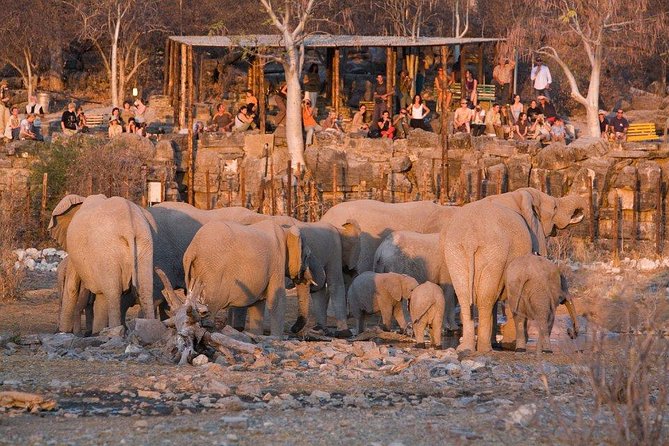
- Days 2 and 3: Etosha wildlife and the Okaukuejo waterhole
- Days 3 and 4: Meeting Himba and Damara communities
- Day 4: Twyfelfontein’s ancient engravings
- Day 5: Swakopmund, the jetty, and Zeila Shipwreck
- Day 6: Walvis Bay by boat, then Dune 7
- Day 7: Kuiseb Pass, the Tropic of Capricorn, and Solitaire
- Day 8: Sossusvlei, Deadvlei, Dune 45, and Sesriem Canyon
- Day 9: From the Namib Desert toward the Kalahari
- Day 10: Namibia’s National Museum and the return to Windhoek
- Does $4,842.28 offer fair value?
- Who should book this Namibia tour?
- FAQ
- Where does the tour start and finish?
- How long does the tour last?
- Is pickup available?
- Is this a private tour?
- What meals are included?
- Is the Walvis Bay boat cruise included?
- Are admission fees included everywhere?
- What happens if I cancel?
- Should you book it?
Key points before you book
- Etosha is the wildlife anchor: You get a full game-drive day, plus time at the famous Okaukuejo waterhole.
- Himba and Damara culture are central: Visits to Ozohere, Otjikandero, and the Damara Living Museum give the trip more depth than a standard safari.
- The desert section is packed: Sossusvlei, Deadvlei, Dune 45, Sesriem Canyon, Kuiseb Pass, and the Tropic of Capricorn all appear in the route.
- Walvis Bay adds a change of pace: A three-hour boat cruise includes champagne and lunch.
- The route covers huge distances: Expect a full 10-day circuit rather than short transfers between nearby sights.
- The format is private: Only your group takes part, and pickup is offered from Windhoek Central.
Why this route works for a first Namibia trip
Namibia is a country of big distances and sharply different regions. A trip that tries to include Etosha, the northwest, the coast, the Namib Desert, and the Kalahari will involve plenty of time on the road. That is not a flaw by itself. It is the price of seeing so much of the country in ten days.
I like the way this route balances famous sights with places that explain how people live here. Etosha supplies the wildlife. The Himba and Damara visits add human context. Twyfelfontein brings ancient rock art. Swakopmund and Walvis Bay show Namibia’s coastal side, while the final desert days deliver the huge red dunes and stark salt-clay formations that appear in so many photographs.
The private format matters. You are not joining a large coach group, and the only participants are members of your own party. That should make it easier to ask questions, adjust the pace at some stops, and spend more time on subjects that interest you. The guide is an important part of that value. Basile is praised for being professional, helpful, and good at explaining the country.
More out of Windhoek:
- Windhoek: City and Township Tour
★ 4.8 · 430 reviews - Half-Day Windhoek City and Township Cultural Tour
★ 4.5 · 187 reviews - Windhoek: Bushman Walk with the San
★ 4.9 · 145 reviews
Day 1: Okahandja woodcarvers and the road north
The first stop is the Mbangura Woodcarvers Craft Market in Okahandja, about an hour from the day’s route toward Otjiwarongo. There is no admission charge, and the stop gives you a practical introduction to Namibian craft traditions before the safari portion begins.
Expect carved wooden objects and a market setting rather than a polished museum. This is a place where browsing and conversation matter. If you are thinking of buying something, compare pieces carefully and ask about the work. The one-hour visit is long enough to look around without taking over the whole day.
Since the tour begins at 8:30 a.m. from Windhoek Central, you should be ready for an early start. Pickup is offered, but confirm the exact pickup arrangement when booking. The first day is mainly about getting north, so do not expect a packed list of major sights.
Days 2 and 3: Etosha wildlife and the Okaukuejo waterhole
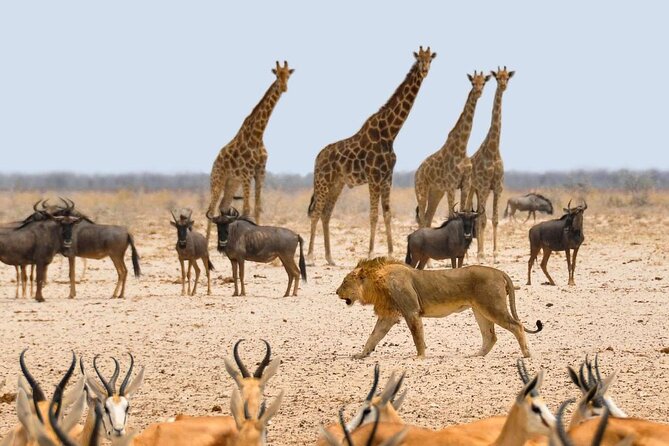
Etosha National Park gets a full game-drive day, with roughly six hours spent exploring in your own tour vehicle with a guide. That is enough time to search for springbok, zebra, giraffe, elephants, and predators, while also watching for less common animals.
Two smaller species receive special attention in the description: the black-faced impala, which is endemic to Namibia, and the dik-dik, one of Africa’s smallest antelopes. These details are a reminder to keep your eyes low as well as high. Etosha is not only about the largest animals.
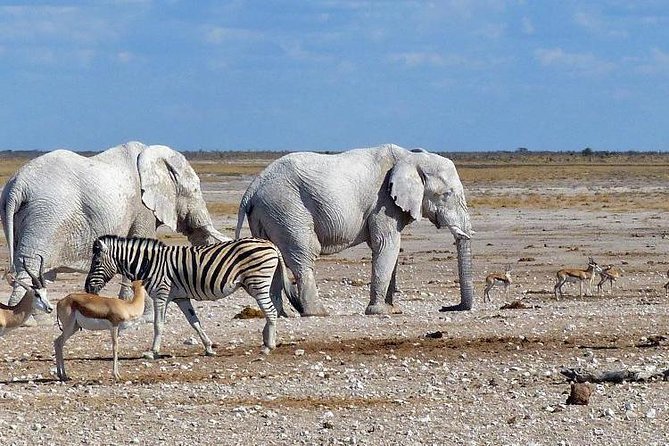
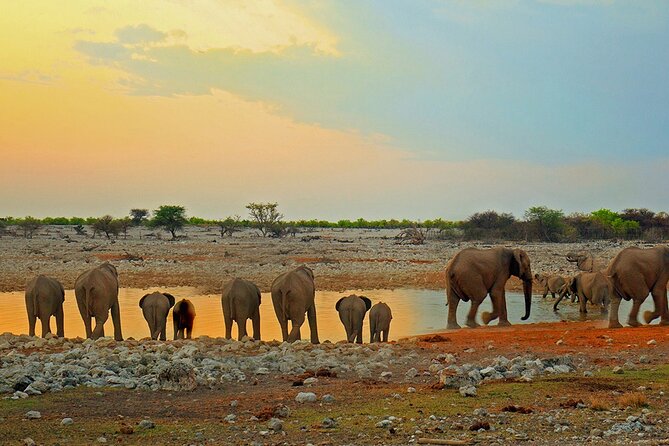
The Okaukuejo waterhole gets a separate hour. It is one of the park’s best-known places for wildlife watching, particularly in the dry season when animals gather to drink. Elephants, lions, zebra, and antelope may appear, but sightings are never guaranteed. The attraction is the waiting. You sit safely at the viewing area and watch the waterhole change as different animals arrive.
The waterhole admission is not included, so allow for that extra cost. More generally, the schedule is demanding. A six-hour drive through a national park can be tiring, especially after a long transfer day. Wear comfortable clothes, carry sun protection, and keep your camera ready, since animals may appear for only a few moments.
Days 3 and 4: Meeting Himba and Damara communities
The cultural visits are among the most distinctive parts of the tour. At the Himba village at Ozohere, you spend about two hours learning about a semi-nomadic cattle-herding community known for red ochre body paint, elaborate jewelry, traditional clothing, and carefully styled hair.
A visit like this is most valuable when you approach it with respect. You are not simply checking off a photo stop. Listen to explanations about beliefs, family life, cattle, homes, and daily customs. The visit has an admission charge, so check how that fee is handled as part of your booking.
The Damara Living Museum follows with another two hours. It presents traditional dances, hunting methods, house construction, and other elements of Damara life. The word museum can suggest glass cases, but this is designed as a more active cultural presentation.
On Day 4, the Otjikandero Himba Orphan Village gives you another two-hour Himba visit. The stated focus is culture, beliefs, and history. Having two Himba-related stops may feel repetitive to some people, but it can also give you a fuller picture than a single short encounter. Ask Basile to explain the differences between the communities and the purpose of each visit.
The strongest reviews of this tour praise the guide’s teaching. That is especially important here. Cultural stops depend on good explanation and careful conduct, not just on arriving at a village and taking pictures.
A handful of other Windhoek outings to read first
- 10-Day Namibia Highlights Guided Tour from Windhoek
★ 5.0 · 78 reviews - Namibia Self-Driving Audio Guide (in English & German)
★ 4.7 · 57 reviews - Private Guided Walking Tour with the San in Windhoek
★ 5.0 · 20 reviews - 3 Days Amazing Red Dunes of Sossusvlei | Private Guided Tour
★ 5.0 · 10 reviews
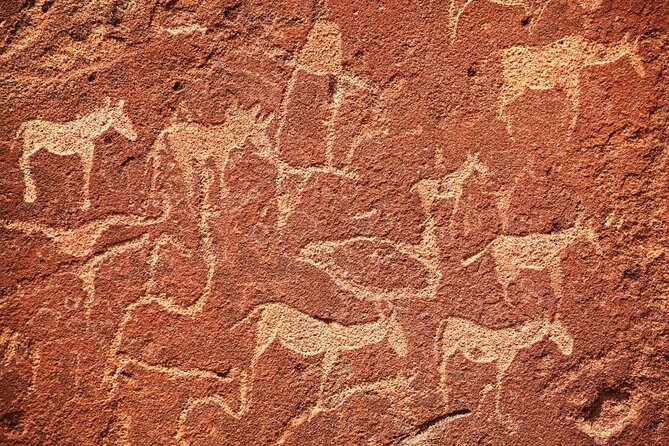
Day 4: Twyfelfontein’s ancient engravings
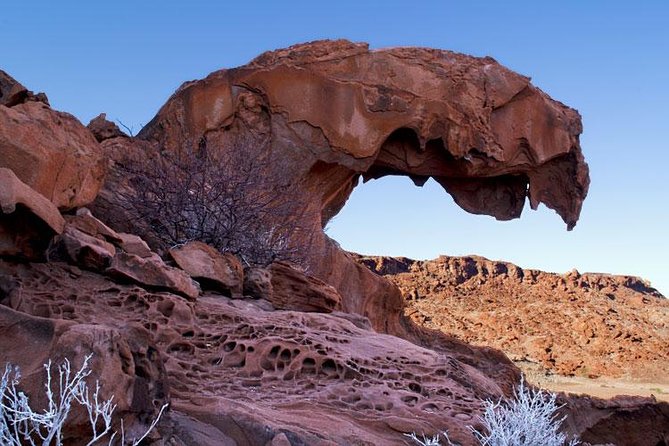
Twyfelfontein is a UNESCO World Heritage Site in the Kunene region. Its importance comes from the large concentration of rock engravings and paintings found in this dry, rocky area.
You have about two hours here, usually in the afternoon. The site’s name means Doubtful Fountain, a reference to an unreliable water source. That small detail helps explain why people lived, hunted, and marked this place despite its harsh setting.
Look closely at the images rather than rushing from one panel to the next. The engravings show animals and other figures connected to the area’s earlier communities. The value of the visit is not only visual. It gives you a glimpse into how people recorded the world around them long before modern roads, cameras, or written records.
Admission is included. Bring water and sun protection, since the attraction is outdoors and the surrounding country is dry and exposed. The two-hour visit is a sensible length, but the rough setting may be less comfortable for anyone who dislikes walking on uneven ground.
Day 5: Swakopmund, the jetty, and Zeila Shipwreck
Day 5 shifts from inland dryness to the Atlantic coast. Swakopmund is known for German colonial architecture, museums, ocean air, and access to desert activities. The schedule allows up to twelve hours in the Swakopmund area, including a stop at the jetty and a half-hour look at the Zeila Shipwreck.
That long block of time gives you room to see the town without treating it as a quick photo stop. The jetty is a useful place to get your bearings, enjoy the coast, and notice the sharp contrast between ocean and desert. Swakopmund itself is also a pleasant pause after several days of wildlife drives and cultural visits.
The Zeila Shipwreck adds a maritime note. It is a historic wreck off Namibia’s coast and interests people who enjoy coastal stories, photography, and maritime sites. The scheduled thirty minutes is brief, so think of it as a stop for views and photographs rather than an extended historical visit.
There is no admission charge listed for either stop. Still, Day 5 may feel less structured than the Etosha days. If you prefer every hour planned, ask how the free time in Swakopmund is arranged.
Day 6: Walvis Bay by boat, then Dune 7
Walvis Bay provides one of the trip’s most comfortable changes of pace. A three-hour boat cruise from the waterfront includes champagne and lunch, with the chance to see coastal aquatic life from the water.
This outing is included, so it adds value to an already expensive tour. It also breaks up the long sequence of road travel. The appeal is not just the meal. You get a different view of Namibia, one shaped by the sea rather than sand, rock, and dry plains.
After the cruise, you visit Dune 7 for about two hours. At roughly 383 meters, it is described as one of the world’s highest sand dunes, and it gives you broad views across the desert around Walvis Bay. Sandboarding may be available as an activity, but it is not included in the price, so budget separately if you want to try it.
Dune 7 can be physically demanding if you climb it. Even if you stay near the base, the heat and loose sand can make walking harder than it looks. Take the guide’s advice on timing and pace.
Day 7: Kuiseb Pass, the Tropic of Capricorn, and Solitaire
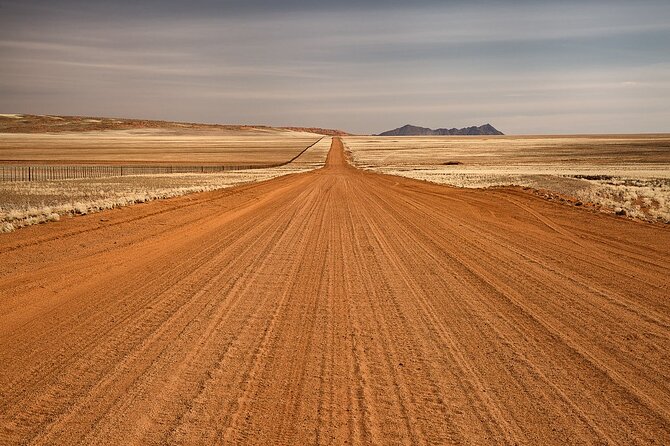
The road south brings a string of short but memorable stops. Kuiseb Pass is a rocky feature shaped by the Kuiseb River, which cut through the Namib Desert over time. You have about thirty minutes here, enough to appreciate the geology and take photographs.
The Tropic of Capricorn sign gets only ten minutes. It is a quick roadside stop, but it marks a real geographic line and makes for a classic Namibia road-trip photograph.
Solitaire allows another thirty minutes. This small settlement is a familiar stopping point for people heading toward Sossusvlei and the Namib-Naukluft National Park. The stop is brief, so treat it as a useful break during a long transfer rather than a major attraction.
Day 7 shows both the strength and weakness of this itinerary. You see several distinctive places in one day, but none receives much time. If you enjoy the movement of a road trip, that variety will suit you. If you prefer slow travel, the schedule may feel hurried.
Day 8: Sossusvlei, Deadvlei, Dune 45, and Sesriem Canyon
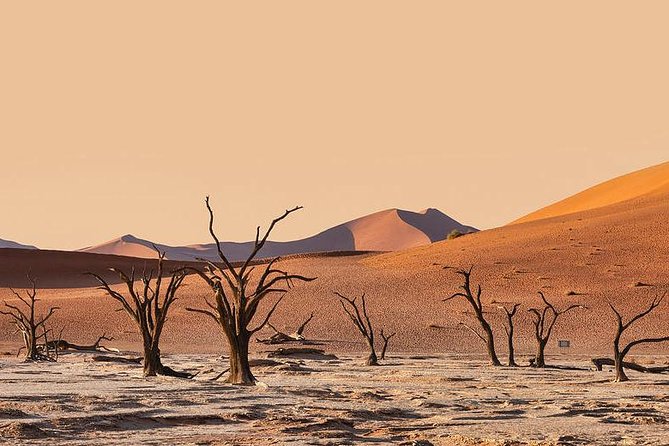
This is the visual high point of the tour. Sossusvlei lies in the Namib Desert within Namib-Naukluft National Park and is known for enormous dunes, dry salt-clay formations, and intense color.
You spend about three hours at Sossusvlei, followed by two hours at Deadvlei. Deadvlei is a stark white clay pan marked by dark, dead camel thorn trees. The contrast between the trees, pale ground, and orange dunes creates the scene many people picture when they think of Namibia.
Dune 45 gets an hour. Its regular shape and sweeping curves make it one of the most photographed dunes in the country. You can admire its form from below or climb as far as your energy allows. Sand walking is harder than ordinary walking, so do not underestimate a short-looking slope.
Sesriem Canyon receives another hour. The Tsauchab River carved this narrow formation through sedimentary rock, creating a canyon roughly one kilometer long and up to thirty meters deep in places. It offers a welcome change from open dunes and gives you a closer look at the forces that shaped the region.
Admission is included at Deadvlei, Dune 45, and Sesriem Canyon, while the Sossusvlei entry is listed without an admission charge. The full day is likely to be tiring. Bring water, protect your skin from the sun, and wear shoes suitable for sand and uneven rock.
Day 9: From the Namib Desert toward the Kalahari
The ninth day is described as a road day toward the Kalahari Desert, known for its red dunes. Sossusvlei is also listed for about three hours, but the description makes clear that the main purpose is moving on to the Kalahari.
This transition matters because the Kalahari looks and feels different from the Namib. The Namib is famous for extreme dryness, towering dunes, and salt-clay pans. The Kalahari is associated here with red sand and a broader desert setting. You should expect a long travel day rather than another full sightseeing program.
Breakfast is included on nine days, and dinner on seven. Since the package does not specify every meal or lodge detail, plan to confirm where meals are served and which expenses remain yours during the longer transfers.
Day 10: Namibia’s National Museum and the return to Windhoek
The final stop is the National Museum of Namibia, with about an hour devoted to Namibian history. After so much time outdoors, this gives you a chance to connect the places you have seen with the country’s wider past.
The tour ends back at the original meeting point in Windhoek Central. That return is convenient if you are staying in the city or arranging onward plans from there, but leave some flexibility around your departure time because the program covers long distances.
Does $4,842.28 offer fair value?
At $4,842.28 per person, this is not a budget tour. The price makes more sense if you value a private vehicle, a dedicated guide, lodge-based travel, fuel, parking, nine breakfasts, seven dinners, and a packed route through several regions.
The included Walvis Bay cruise with lunch and champagne adds useful value. So does the private format, especially for a route where a guide can explain wildlife, geology, culture, and local history as you go. Basile’s strong reputation for professionalism and teaching supports the case for paying more than you would for a basic transfer service.
Still, the inclusions need close attention. GST is not included. Okaukuejo waterhole admission and Dune 7 activities are not included, and the package does not provide WiFi or a restroom on board. The route also includes many long drives, so part of what you are buying is access to a well-organized circuit rather than constant activity.
Who should book this Namibia tour?
I would recommend it to you if this is your first visit to Namibia and you want the major regions in one trip. It suits people who like wildlife, photography, cultural learning, dramatic geology, and long scenic drives.
It is less suitable if you want a relaxed holiday with late mornings and plenty of free time. The itinerary is ambitious, and some stops are short. Families and older travelers should consider the long drives, outdoor heat, sand, and uneven ground before booking.
The tour is private, and most people can participate. Confirmation is received at booking. Free cancellation is available up to 24 hours before the start time for a full refund, while cancellations inside 24 hours are not refundable. Poor weather may lead to a different date or a full refund.
FAQ
Where does the tour start and finish?
It starts in Windhoek Central, Windhoek, Namibia, at 8:30 a.m., and ends back at the meeting point.
How long does the tour last?
The experience lasts approximately 10 days.
Is pickup available?
Yes. Pickup is offered, but the listed starting point is Windhoek Central.
Is this a private tour?
Yes. Only your group participates in the activity.
What meals are included?
Nine breakfasts and seven dinners are included.
Is the Walvis Bay boat cruise included?
Yes. The three-hour cruise is listed as included and features champagne and lunch.
Are admission fees included everywhere?
No. Admission is not included at the Okaukuejo waterhole and Dune 7. Other listed visits, including Otjikandero Himba Orphan Village, Twyfelfontein, Deadvlei, Dune 45, and Sesriem Canyon, are marked as included.
What happens if I cancel?
You can receive a full refund if you cancel at least 24 hours before the start time. Cancellations within 24 hours are not refunded, and poor weather may result in a different date or a full refund.
Should you book it?
Book this tour if you want a private, guide-led sweep through Namibia’s best-known wildlife areas, cultural sites, coastline, and deserts, and you are comfortable with long days on the road. The mix is excellent, and guide Basile’s praised professionalism could make a major difference at the cultural and historical stops.
Think twice if you want a slow, specialist safari or several quiet days in one lodge. For a first look at Namibia, though, the route offers impressive range, useful structure, and plenty of memorable stops for the price.
Written up most recently in Windhoek
- Windhoek: Okapuka Game Ranch Guided Tour★ 5.0 · 2 reviews
- Windhoek : Cheetah walk Experience★ 4.6 · 8 reviews
- Windhoek: City & Township tour. Vehicle, guide, kapana★ 4.2 · 4 reviews
- Windhoek: Katutura Township Tour with Local Guide★ 3.5 · 3 reviews
- Windhoek City Tour★ 3.5 · 7 reviews
- Knight Vibes: Bars, Shebeen, Clubs Crawl Windhoek★ 5.0 · 3 reviews
- Predator Encounter: Half-Day Carnivore Feeding Windhoek★ 4.0 · 5 reviews
- Discover the Routes of N/a’an ku sê.★ 4.0 · 6 reviews
Windhoek Tours, compared.
Half-Day Windhoek City and Township Cultural Tour
Read our review →
6-Day Dunes and Wildlife Accommodated Safari from Windhoek
Read our review →
10-Day Namibia Highlights Guided Tour from Windhoek
Read our review →
Browse the lists this tour appears in