
Reviewed · CITY TOURS
Windhoek: City Tour
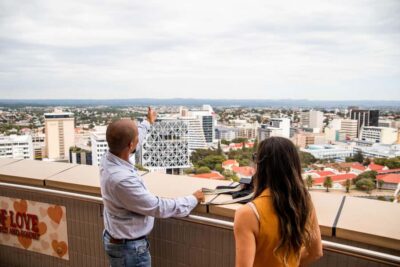
Windhoek makes more sense from street level. This 3.5-hour tour combines the city’s best-known sights with a visit to Katutura Township, giving you both Namibia’s formal capital and a look at everyday local life. I like the compact route and the chance to finish with food at Oshetu Community Market, rather than spending the whole outing inside a minivan.
I also like the small group size, limited to four people, which should make it easier to ask questions and hear the guide. Guides including Cliff, Nelson, and Benny have received especially strong praise for explaining Namibia’s past and present clearly. The main consideration is pace: major stops such as Christuskirche and Parliament Gardens are brief, while Katutura and the market receive most of the time.
In This Review
- Key points to know before booking
- Why this 3.5-hour tour works well
- Christuskirche: a quick look at Windhoek’s symbol
- Parliament Gardens and Namibia’s road to independence
- Alte Feste and the difficult layers of the past
- Katutura: the part that changes the picture
- Oshetu Community Market and the kapana finish
- What the guide adds to the experience
- Price, transport, and practical value
- Who should book this Windhoek tour?
- Should you book it?
- FAQ
- How long does the Windhoek city tour last?
- What places are included on the tour?
- Is hotel pickup included?
- What food can I taste?
- Are drinks and lunch included?
- How many people are in the group?
Key points to know before booking
- A 210-minute introduction to Windhoek: You cover central landmarks, colonial-era sites, independence history, and Katutura in one half-day outing.
- Katutura is the heart of the experience: Nearly an hour is set aside for the township, far more time than the city-center photo stops receive.
- Food tasting is included: Try kapana, a local barbecue-style meat dish, along with possible tastes such as mopane worms and mealie pap.
- The group is capped at four: This is a useful format if you want conversation and direct access to your English-speaking guide.
- Hotel pickup, transport, and water are included: You wait at your hotel reception or designated waiting area for an air-conditioned minivan.
- Bring cash and a hat: Cash is useful at the market, while shade can be limited during outdoor stops.
Why this 3.5-hour tour works well
Windhoek is often treated as a starting point for a Namibia safari, not as a destination worth time on its own. That is a mistake. The capital brings together German colonial buildings, South African rule, the independence struggle, modern government, and very different standards of living within one urban area.
This tour gives you a quick way to connect those pieces. It does not pretend to be a full study of Namibia, and the short stops mean you will not spend long inside each site. But the route makes sense. You begin with a famous church, move through national memory and government, then leave the central district for Katutura and a local market.
I would see this as a useful first activity in Windhoek. It helps you understand the city before you travel elsewhere, and it gives you questions to carry into the rest of your time in Namibia. The 4.8 rating from 31 bookings also reflects a clear pattern: the guide’s explanations are a major part of the value.
More City Tours in Windhoek
- Windhoek: City and Township Tour
★ 4.8 · 430 reviews - Half-Day Windhoek City and Township Cultural Tour
★ 4.5 · 187 reviews - Windhoek City Tour
★ 5.0 · 113 reviews
Christuskirche: a quick look at Windhoek’s symbol
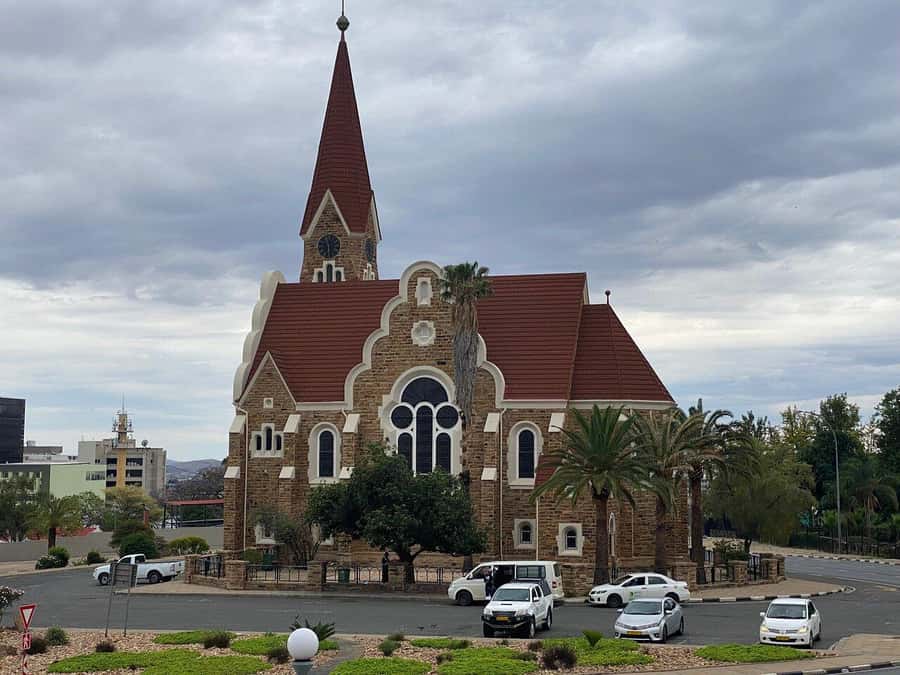
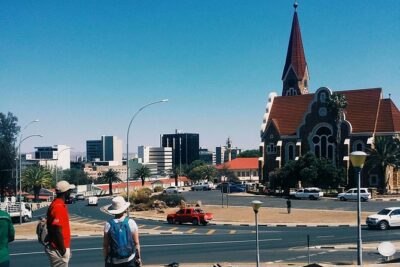
The first stop is Christuskirche, Windhoek’s most recognizable landmark. The tour allows about 15 minutes here, with a chance to look inside if the church is open.
That short visit is enough to appreciate the building and hear why its design is unusual. You should not expect a long architectural tour or a leisurely church visit. Instead, think of Christuskirche as the visual starting point for Windhoek, a central landmark that helps orient you in the city.
If entering the church matters to you, keep your expectations flexible. Opening access is not guaranteed, and the schedule leaves limited time even when the doors are open. Still, it is a worthwhile first stop because the guide can place the church within the city’s German colonial past, rather than leaving it as just another attractive photograph.
Bring a camera, but also listen to the explanation. The building itself is only part of the point. The wider story of who built Windhoek, who governed it, and who later fought to change that system gives the stop its weight.
Parliament Gardens and Namibia’s road to independence
Next comes Parliament Gardens, named for its position near Namibia’s Parliament. You spend roughly 15 minutes here, learning about the country’s political story and the people who fought for independence.
This is another short outdoor stop, so you will not get an exhaustive lesson. What you do get is a useful bridge between the old colonial center and the independent nation Namibia became in 1990. The guide’s role matters here. A basic sightseeing route can show you a garden and a government building. A good explanation tells you why the location matters.
The tour passes by the National Museum of Namibia, where you learn about Dr. Sam Nujoma, Namibia’s founding president, the independence struggle, and the country’s position about three decades after independence. The supplied information refers to the Museum of Independence, too, so the exact museum stop may depend on the route and timing. Treat this part as a guided pass-by and historical explanation rather than a guaranteed extended museum visit.
That distinction is important if you are hoping to spend time indoors with exhibits. The tour is designed to give you context across several places, not to provide a museum-by-museum visit. For many people, that tradeoff is sensible during a short stay.
Alte Feste and the difficult layers of the past
The route also passes Alte Feste, one of the key historical sites in central Windhoek. Here the guide explains more about German and South African involvement before independence.
This is where the tour’s history becomes less comfortable, and that is a good thing. Namibia’s story is not only about attractive buildings and national celebrations. It includes foreign rule, political control, and the long struggle that preceded independence.
You may not spend much time at Alte Feste itself. The value comes from the connection between the place and the wider story. I would pay attention to how the guide links the German period, later South African administration, and the creation of modern Namibia.
The strongest guide feedback is specific. Cliff is praised for answering questions about both history and current living conditions. Nelson is credited with adding stories and detailed explanations, while Benny is described as a strong source of information. Those comments suggest that you should use the small group to ask direct questions instead of treating the stops as a one-way speech.
More out of Windhoek:
- Windhoek: Bushman Walk with the San
★ 4.9 · 145 reviews - 6-Day Dunes and Wildlife Accommodated Safari from Windhoek
★ 5.0 · 123 reviews - 10-Day Namibia Highlights Guided Tour from Windhoek
★ 5.0 · 78 reviews - 12 Day Classic Namibia Camping Safari
★ 5.0 · 77 reviews
Katutura: the part that changes the picture
After the central sights, the minivan heads into Katutura Township. This is the main reason to book the tour instead of taking a standard city-center drive.
You spend close to an hour in Katutura, a large area made up of suburbs with different economic conditions. The tour explains that more than half of Windhoek’s residents live in the township. That fact gives the visit real importance: you are not simply adding a colorful neighborhood to your sightseeing list. You are seeing a major part of the city’s population and urban life.
Katutura also helps correct the polished impression that central Windhoek can create. Government buildings, historic churches, and formal gardens tell only part of the story. A visit here gives you a better sense of how the capital is lived in beyond its main monuments.
The wording of the experience is careful enough to note that Katutura includes different suburbs and income levels. That matters. You should not expect one uniform picture of poverty or one simple explanation of township life. The area is broad and varied, and the guide can help you understand those differences.
This is also the point where respectful behavior matters most. Listen before taking photographs, follow the guide’s instructions, and do not treat residents or homes as scenery. A small group makes the visit less intrusive than a large coach tour, but your conduct still matters.
The drawback is that the tour cannot explain every part of Katutura in an hour. You get an introduction, not a complete social study. Still, the time allocation is well judged. The central landmarks are easy to photograph on your own, while the township is where local guidance adds the most value.
Oshetu Community Market and the kapana finish
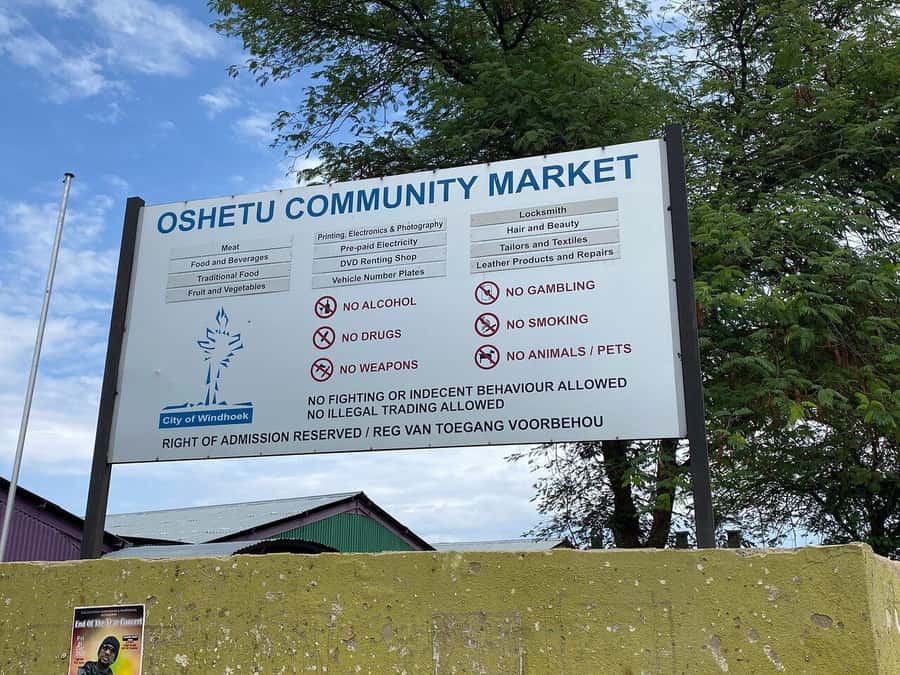
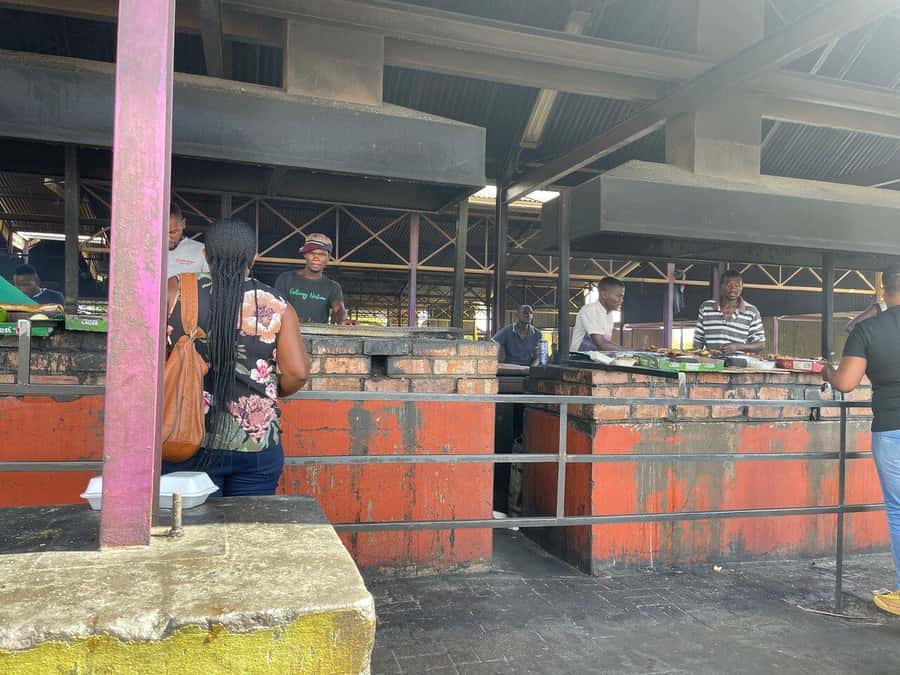
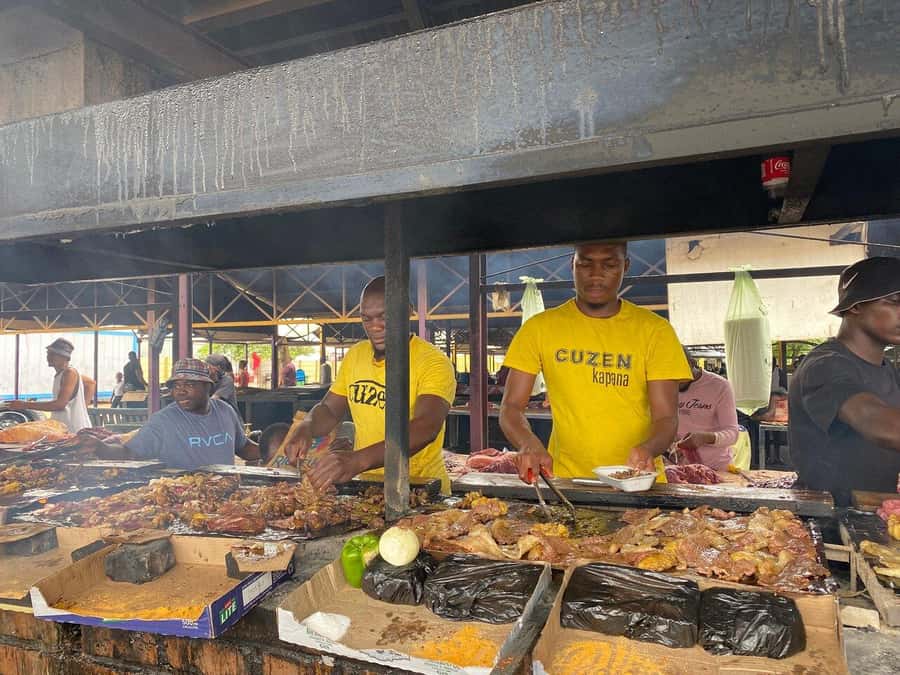
The final stop is Oshetu Community Market, with about 30 minutes to explore and taste local food. This is a lively way to end the outing because it turns the township visit into something more direct and sensory.
Kapana, grilled or barbecued meat, is the main food experience. You may also encounter mopane worms, mealie pap, and other local delicacies. Food tasting is included, but lunch is not, and drinks other than the supplied water are excluded. If you want a full meal or a beverage, bring cash and budget separately.
You should approach the tasting with curiosity, not pressure. Mopane worms are not for everyone, and nobody should feel obliged to try every item. Kapana and mealie pap may be the easier starting points if you prefer familiar flavors.
The market stop also gives you a chance to see how food is bought, prepared, and shared in an everyday setting. That is more useful than a staged cultural presentation because the market is part of local commerce, not a performance arranged only for tourists.
Thirty minutes passes quickly. You will have time to look around, try food, and ask questions, but this is not a long, relaxed market meal. If eating is your main goal, you may want to plan another meal afterward. If your goal is a first taste of local food and a brief look at market life, the timing works.
What the guide adds to the experience
The route is good, but the guide is what can make it memorable. The strongest feedback repeatedly points to clear explanations, personal stories, and the ability to answer questions about both Namibia’s past and current conditions.
Cliff is praised for being generous with his knowledge and for making the history of Namibia understandable. Nelson is credited with putting together a tour full of stories and useful information. Benny is also singled out as a strong guide. You cannot select a specific guide from the information provided, but these names show the level of guide service associated with the experience.
I would make use of the small group format. Ask about the independence struggle, the role of German and South African rule, the meaning of Katutura, and how Windhoek has changed since independence. The tour is only 210 minutes, so the guide will need to keep moving, but a group of four allows for a more natural conversation than a large bus tour.
The English-language format suits visitors who want historical explanation without relying only on printed signs. Since the tour moves through places with complicated political meaning, clear narration is more valuable than a long list of dates.
Price, transport, and practical value
At $35 per person, this is fairly priced if you want transport and a guided introduction rather than a self-guided walk. The fee includes hotel pickup and drop-off, an air-conditioned minivan, an English-speaking local guide, taxes, handling charges, one bottle of water, and food tasting.
You are paying for access to several parts of Windhoek in a short period. Central Windhoek is not difficult to explore independently, but reaching Katutura and understanding what you are seeing is easier with local transport and a guide. The small group limit also improves the value, especially if you are traveling with one to three companions.
Lunch and drinks are not included. That is not a problem, but you should remember that the market tasting is not a full midday meal. Bring cash for food or drinks and keep a little extra time afterward if you want to eat properly.
Hotel pickup is included, and you need to wait at your hotel reception or waiting area. Starting times vary, so check availability when booking. Free cancellation is available up to 24 hours in advance, and you can reserve now and pay later, which is useful if your Namibia plans are still shifting.
The activity lasts 210 minutes, or three and a half hours. That makes it easy to fit into a morning or afternoon, though the exact start time should be confirmed before you organize the rest of your day.
Who should book this Windhoek tour?
I would recommend it to first-time visitors who want a clear introduction to the capital without spending a full day on sightseeing. It suits people who enjoy history, local food, and social context more than shopping or luxury attractions.
It is especially useful if you have limited time in Windhoek. In one route, you see Christuskirche, Parliament Gardens, the National Museum area, Alte Feste, Katutura, and Oshetu Community Market. You will not explore each place in depth, but you will leave with a stronger sense of how the city fits together.
Families and small groups may also appreciate the four-person limit. Solo visitors can benefit from the included pickup and guided transport, while couples may like the balance between formal sights and local life.
I would hesitate only if you want long museum visits, extensive time at each landmark, or a full meal centered on local cuisine. The tour gives you a broad, brisk introduction. It is not designed for slow photography, detailed architecture study, or an entire afternoon at the market.
Should you book it?
Book this tour if you want Windhoek explained, not simply shown. The best parts are the shift from central landmarks to Katutura, the direct look at local food at Oshetu Market, and the guide’s ability to connect colonial rule, independence, and present-day life.
Bring a hat, camera, and cash. Wear something comfortable for a compact schedule, keep your plans flexible around the pickup time, and arrive ready to ask questions. At $35, the combination of transport, a four-person group, food tasting, and local guidance makes this a strong choice for a first look at Windhoek.
FAQ
How long does the Windhoek city tour last?
The tour lasts 210 minutes, or three and a half hours. Starting times depend on availability.
What places are included on the tour?
The route includes Christuskirche, Parliament Gardens, the National Museum area, Alte Feste, Katutura Township, and Oshetu Community Market.
Is hotel pickup included?
Yes. Hotel pickup and drop-off are included, and you should wait at your hotel reception or designated waiting area.
What food can I taste?
The tasting may include kapana, which is barbecue-style meat, as well as mopane worms, mealie pap, and other local delicacies.
Are drinks and lunch included?
One bottle of water per person is included. Other beverages and lunch are not included.
How many people are in the group?
The group is limited to four participants, with an English-speaking live guide.
Written up most recently in Windhoek
- Windhoek: Okapuka Game Ranch Guided Tour★ 5.0 · 2 reviews
- Windhoek: Katutura Township Tour with Local Guide★ 3.5 · 3 reviews
- Windhoek : Cheetah walk Experience★ 4.6 · 8 reviews
- Windhoek: City & Township tour. Vehicle, guide, kapana★ 4.2 · 4 reviews
- Windhoek City Tour★ 3.5 · 7 reviews
- Knight Vibes: Bars, Shebeen, Clubs Crawl Windhoek★ 5.0 · 3 reviews
- Predator Encounter: Half-Day Carnivore Feeding Windhoek★ 4.0 · 5 reviews
- Discover the Routes of N/a’an ku sê.★ 4.0 · 6 reviews
City Tours, compared.
Half-Day Windhoek City and Township Cultural Tour
Read our review →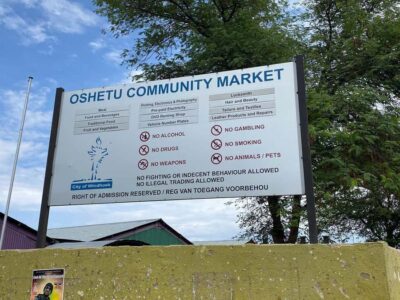
swakopmund city tour dune 7 pink lake pink flamingos
Read our review →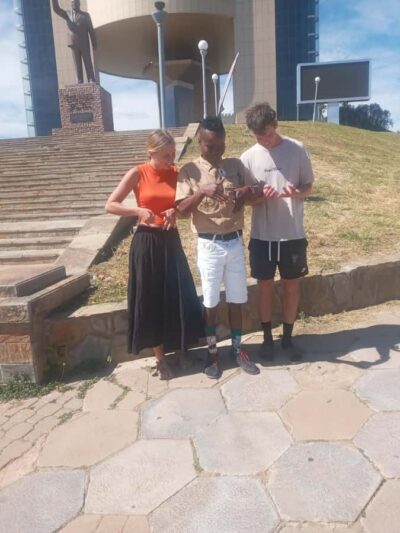
Walvisbay & Coastal Town City Private Local Guided Day Tour for Cruise Ships
Read our review →
Browse the lists this tour appears in